Uttarakhand Congress alleges Form-7 misuse to delete voters during SIR, approaches EC
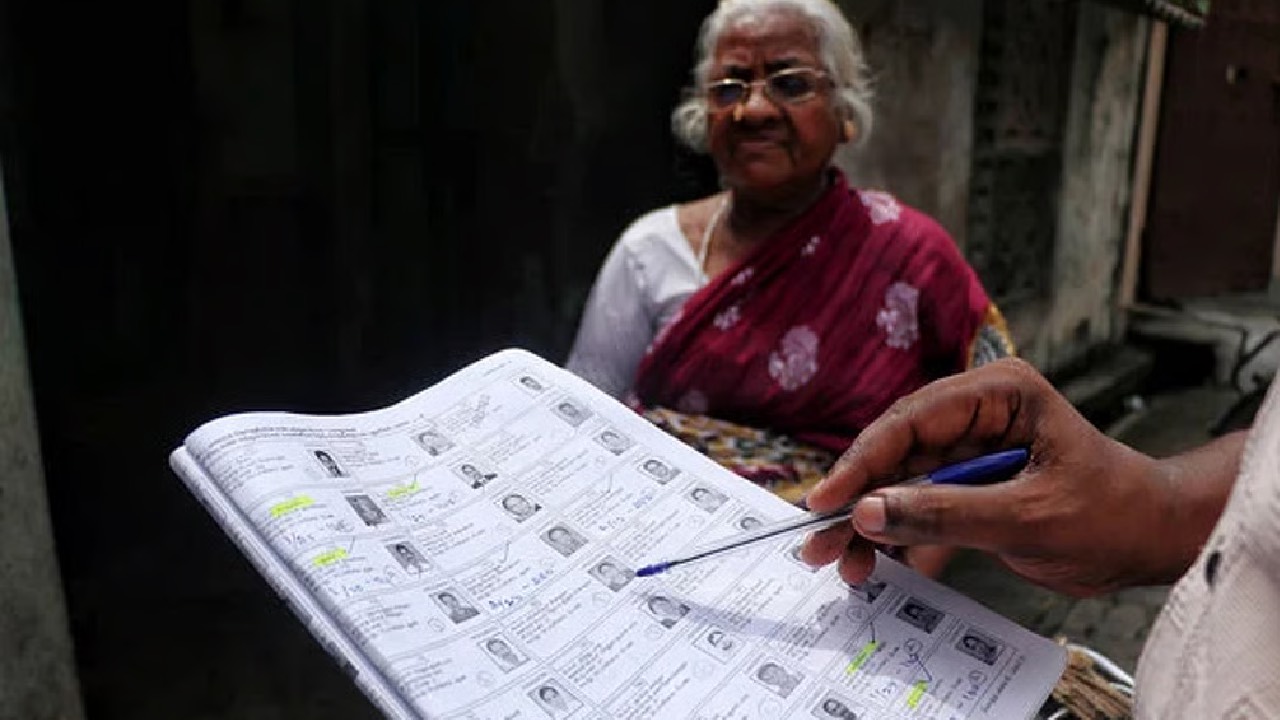
Amid the special intensive revision (SIR) of Uttarakhand's electoral rolls, the state Congress unit has raised concerns over a large number of objections filed via Form-7 seeking to remove voters' names, and has approached the Election Commission demanding an inquiry.
The party alleges that name-deletion applications have been filed in significant numbers, particularly in assembly constituencies where the Congress holds influence.
Congress leader Amrinder Bisht alleged that in some instances, a single individual had filed applications seeking the removal of hundreds of voters' names. He claimed attempts to contact some objectors found they were not present at the addresses provided, with some found to be residing outside Uttarakhand. The Congress said that if the EC does not address its grievances, the party may take to the streets and approach court in the first week of September.
A Congress delegation led by former MLA Manoj Rawat met Chief Electoral Officer V.V.R.C. Purushottam on Friday to register their objections. Rawat said the party had initially trusted the SIR process, but its concerns grew after the scale of Form-7 objections came to light.
"Our data analysis revealed that a single individual has filed objections against the names of approximately 6,400 people. There are about 1,200 individuals who have submitted more than 10 objections each. An objection has even been filed against the name of a sitting Congress MLA," Rawat said.
The delegation also raised concerns over roughly 1.02 lakh voters in Udham Singh Nagar district being flagged as "suspicious" under the categories "Demographically Similar Entries" (DSE) or "Photo Similar Entries" (PSE), alleging that political parties had not been given adequate information about these voters, raising fears their names could be wrongly deleted.
The Congress demanded that all fake objections be rejected before the final electoral roll is published on September 15, and that any valid voter wrongly removed be immediately reinstated.
Responding to the allegations, senior BJP MLA and spokesperson Vinod Chamoli said complaints about the SIR process were not limited to the Congress, noting the BJP had also raised objections. "If an objection is raised against a voter's name, it does not necessarily mean they are a Congress voter. Objections have also been raised against names associated with the BJP. Objections were even raised against my name and those of my family members," he said, accusing the Congress of turning the issue into a political narrative because it was in opposition.
On the Form-7 rules, Chamoli said a Booth Level Agent-2 (BLA-2) can file objections against a maximum of 50 voters, while an ordinary voter can raise objections against five names, and that objections exceeding this limit should not be accepted. He added that filing an objection does not automatically result in a name's removal, since the voter concerned is given a chance to respond with documentation. On objectors not being found at their stated addresses, he said such objections should not be accepted if identity cannot be verified, and that any procedural shortcomings should be fixed.
The CEO assured the delegation that the SIR process was being conducted strictly according to the rules, and that nine senior administrative officers had been additionally deployed as observers in districts receiving a high volume of claims and objections. Purushottam said the Garhwal and Kumaon divisional commissioners had also been assigned observer roles, and that all districts had been instructed to hold regular meetings with political parties.
Additional Chief Electoral Officer Vijay Kumar Jogdande said a separate Congress delegation had earlier met the CEO to seek information on notices issued during the special summary revision (SSR) and the process for resolving them, and that the election body had briefed them on the relevant rules. Jogdande clarified that if an individual files applications to remove more than five voters' names, it becomes the responsibility of the electoral registration officer (ERO) concerned to scrutinise such cases.