US ready to help end Ukraine war, but no quick deal: Rubio
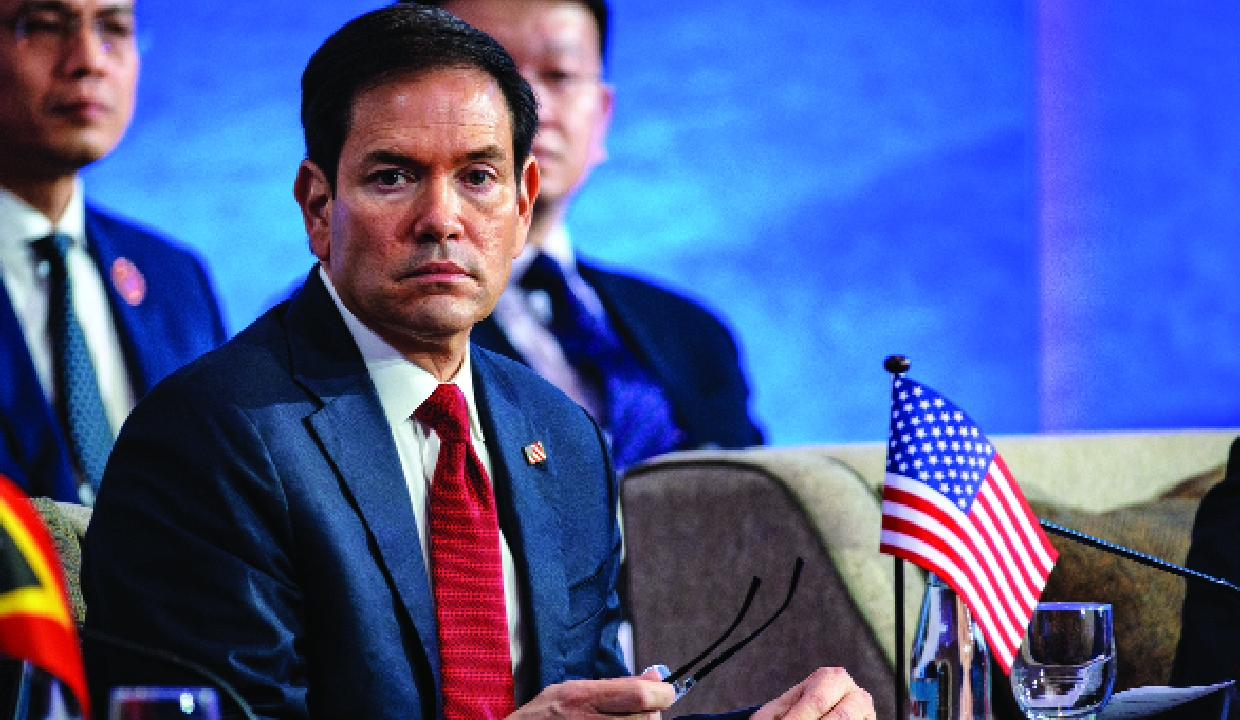
US Secretary of State Marco Rubio said on Thursday that the Trump administration is poised to help end the “senseless war” in Ukraine but acknowledged there is no quick path to a deal, saying diplomacy will require sustained effort and new ideas.
Rubio, who held talks with his Russian counterpart Sergey Lavrov in the Philippine capital, alluded to how US-mediated talks have stalled. He called them “unsuccessful or at least unfruitful” in the past, but insisted that President Donald Trump was committed to the work “if conditions and factors have changed to make that possible.”
“That’s been the challenge — an end that both sides can accept,” Rubio told reporters. “We’ve tried, and we’ll continue to try to see if we can, you know, find a middle ground that brings this about. And we’re prepared to play that role if the opportunity presents itself.”
Rubio met Lavrov and several other leaders, including China’s foreign minister, on the sidelines of an annual gathering by foreign ministers of the Association of Southeast Asian Nations in Manila. America’s top diplomat said the US is focused on Asia even as it steps up fighting with Iran, seeks a pathway to end Russia’s war in Ukraine and pressures the Cuban Government to make changes. Three days of closed-door talks that started Tuesday have centred on the escalating fighting in the Middle East and tensions in the South China Sea, where a new clash flared Thursday.
“There’s always going to be a concern that America is so focused on one place that it can’t focus on another,” Rubio said. But he noted that the US remains “engaged in Asia every single day,” citing strong partnerships and economic ties across the region.
After meeting with Rubio, Lavrov largely ignored questions from reporters. The Russian Foreign Ministry in Moscow said he emphasised to Rubio “the unacceptability of further arming” Ukraine and accused European countries of pursuing Russia’s “strategic defeat.”
Lavrov reiterated Russia’s readiness for “a political and diplomatic resolution of the conflict” and commitment to agreements reached at a summit between Russian President Vladimir Putin and Trump in Alaska last year, the Russian ministry said. But Rubio said, “We’ll have to find new suggestions and new ideas” that are acceptable to both sides. There has been no change to Washington’s military support for Ukraine, with weapons being purchased by NATO allies and transferred to the war-ravaged country, he said.
Separately on Thursday, Ukrainian President Volodymyr Zelenskyy reiterated that his priority is finding a way to get back to negotiations. US efforts to broker an end to the Russia-Ukraine war have been overshadowed by the outbreak of the Iran war earlier this year. Renewed strikes by Washington and Tehran have been intensifying after an interim ceasefire deal collapsed.
“The price will continue to get higher every single night until they come to their senses,” Rubio said. He insisted Tehran is “begging” for talks, but Trump does not see the use in responding because “Iran is clearly not ready to make a deal, at least not one they’re willing to live by.” Trump has warned Iran that the US will destroy one Iranian bridge or power plant each time Iran shoots at a ship in the Strait of Hormuz. Iranian Foreign Minister Abbas Araghchi responded by saying the country’s defence doctrine was an “eye for an eye.”
“The president’s policy is an eye for an eye,” Rubio said. “They will pay a very heavy price for the things they’re doing.” Australian Foreign Minister Penny Wong renewed her country’s alarm over the Chinese navy’s recent test-launch of a missile from a nuclear-powered submarine in the region, saying the lack of notification to the Philippines and Pacific nations where the missile flew over and landed was destabilising.
“It comes in the context of a rapid military build-up of China’s nuclear arsenal without the transparency or reassurance the region expects,” Wong told a university forum in Manila on Thursday. “This is why Australia has described the test as provocative and destabilising.” China has defended its actions, saying the launch was part of annual exercises.
Rubio met on Wednesday with Chinese Foreign Minister Wang Yi and said they discussed a new altercation this week between Chinese and Filipino forces in a disputed shoal in the South China Sea, which Beijing claims virtually in its entirety. Rubio called the incident “escalatory.”