Uganda, Burundi officials visit Israel to discuss Gaza troop deployment
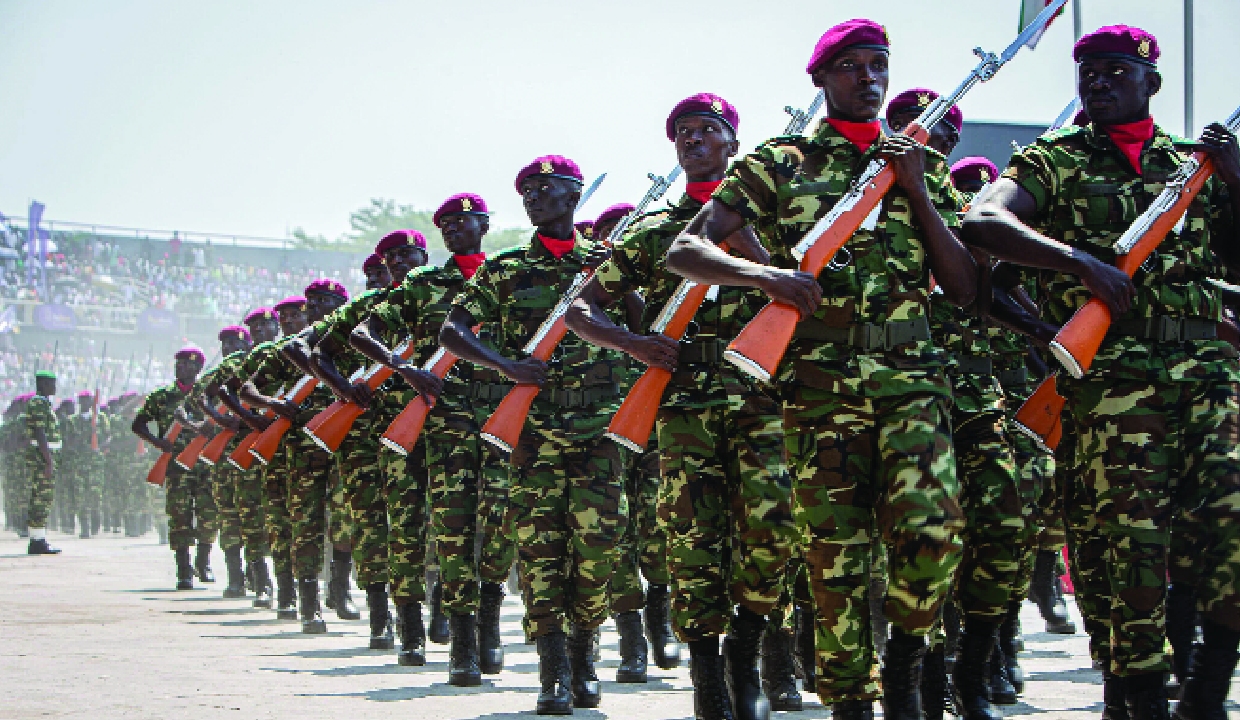
Military officials from Uganda and Burundi visited Israel last week to discuss deploying troops to Gaza as part of an international security force envisioned by US President Donald Trump’s Board of Peace for the fragile ceasefire, according to officials.
A Board of Peace official told that Ugandan officials joined a Burundian military delegation, and that Uganda is finalising details of its participation after its parliament approved the troop contribution this month.
Nothing has been finalised with Burundi, but the official said they look forward to starting the process. “We shared significant knowledge with one another, and the Burundi representatives expressed interest in our mission,” the official said, speaking on condition of anonymity because they weren’t authorised to discuss talks with potential troop-contributing countries ahead of any agreement. A Burundian military official told the AP that three other senior military officers led the delegation to Israel and that Burundi appeared intent on joining. The official spoke on condition of anonymity because he was not authorised to speak to the media.
It was not clear what Uganda or Burundi might be offering or what they might receive in return. Spokespersons for their militaries did not respond to requests for comment.
If Burundi moves ahead, the African nations would be the latest to join the international force for Gaza after Morocco, Kosovo, Kazakhstan and Albania made commitments. Uganda has committed around 1,200 personnel, and Morocco has committed up to 500. Kosovo, Kazakhstan and Albania in total have committed around 80.
Indonesia earlier said it was preparing to send 8,000 troops — by far the largest commitment -- but put that on hold after the US and Israel attacked Iran.
The 20,000-strong force would be led by US Maj. Gen. Jasper Jeffers. Troops committed remain far short of that goal.
Last month, Trump announced a deal for Hamas to disarm and for Israel to withdraw its forces from Gaza. According to the deal, the International Stabilisation Force would be deployed to areas of the Palestinian territory administered by an incoming technocratic committee, and Israeli forces would withdraw.
The force would help monitor the ceasefire, train Palestinian police and secure the delivery of aid, among other tasks. The ceasefire that took effect in Gaza last October has stalled due to disagreements regarding Israel’s withdrawal from the strip and Hamas’ disarmament. A US delegation met for hours earlier this month with the Hamas leader and then with Israeli Prime Minister Benjamin Netanyahu to press them forward. Hamas has agreed to the new US deal.
Netanyahu has rejected it, saying Israel will not withdraw from any of the roughly 60 per cent of the territory it controls in Gaza until Hamas has been completely disarmed. Even after Netanyahu’s meeting with the US team, which included negotiator Jared Kushner, officials offered no concrete commitment by Israel.