Trump orders Pentagon to scale back US-South Korea military exercises
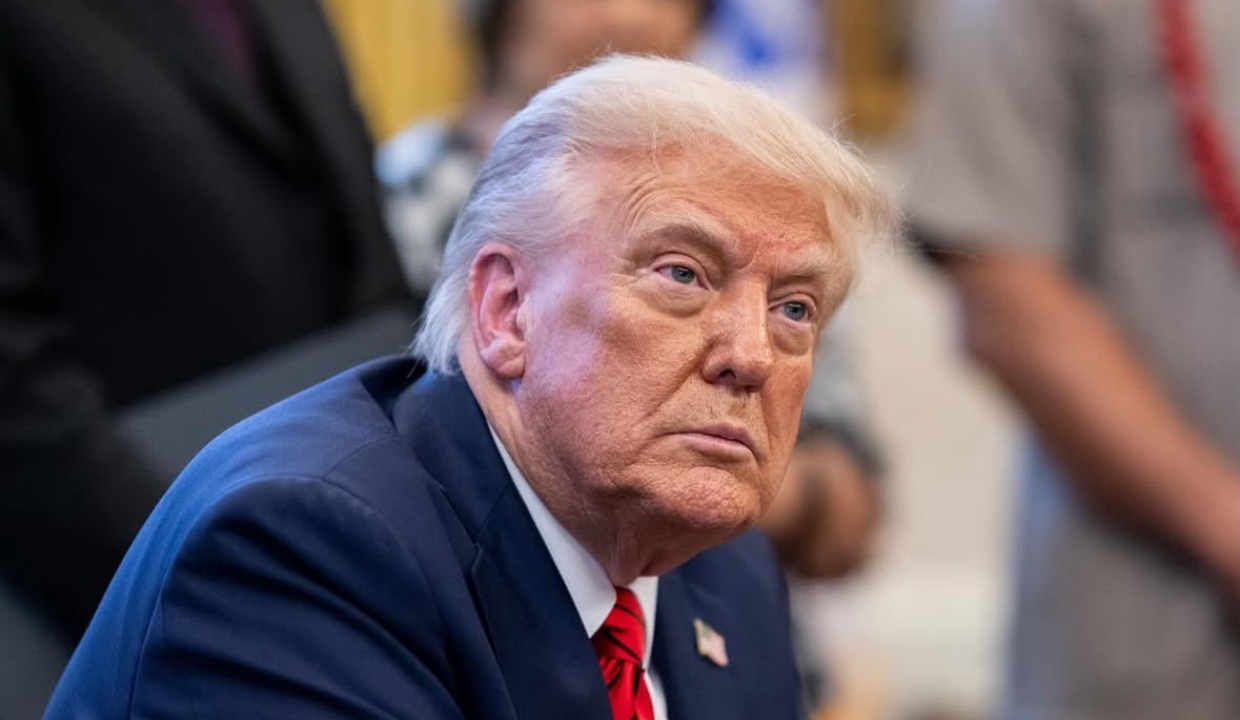
US President Donald Trump on Sunday ordered Pentagon to scale back planned joint military exercises with South Korea after he said it declined to help denuclearise Iran, adding that the joint wargames may be perceived as "hostile" by "unthreatening and respectful" North Korea.
Trump said in a social media post that he had recently asked South Korea's president to join the US in its efforts to denuclearise Iran, "and they said, No thanks!"
The US president further said the exercises, slated to begin this week, are not only costly but "send a signal that is totally inappropriate and hostile" to North Korea, which he said "has been unthreatening and respectful" during his time in White House.
"Therefore, and based on the fact that it is too late to cancel, I have instructed Secretary of War, Pete Hegseth, to substantially reduce the Joint Military Exercises!" Trump wrote.
The move is the latest example of the president appearing to side against an ally in favour of a leader that previous administrations have cast as an adversary.
Trump and others in his administration have also railed against NATO allies over perceived lack of support for his war against Iran, even as they seek to confront an increasingly aggressive Russia in the Baltic region.
The planned 11-day exercises involving 18,000 South Korean soldiers were designed to beef up readiness against North Korean threats.
The US military has said the summertime Ulchi Freedom Shield exercises reinforce "the role of the alliance as the linchpin for regional peace and security" and reaffirm "the ironclad commitment between the United States and the Republic of Korea to defend their homelands."
US and South Korean forces were expected to practice joint operations in complex scenarios, including a live-fire exercise to test joint precision targeting and maneuver, a wet gap crossing, and distribution of prepositioned military equipment, according to the US military.
The joint training is set to start days after North Korea resumed ballistic missile testing activities that are banned by the UN. Earlier this month, South Korea, the US and Japan detected launch of a short-range ballistic missile from North Korea in what was its first ballistic weapons testing activity since late June. The missile landed in the waters off North Korea's east coast.
North Korea has been pushing hard to enlarge its nuclear and missile arsenals since Kim's high-stakes diplomacy with Trump collapsed in 2019. Experts say Kim likely believes a bigger weapons arsenal would increase his chances for wresting more concessions from the US in future negotiations.
North Korea on Friday threatened unspecified stern steps against the US and South Korea, describing their military drills as a "a rehearsal for an aggressive war" that are triggering greater instability in the region.
The warning was typical of the harsh rhetoric that North Korea often deploys ahead of major US-South Korean military exercises. Experts say North Korea has often used its rivals' drills as a pretext to ramp up testing activities to expand its weapons arsenals and promote public support for the reclusive North Korean leader.
Trump's announcement came a day after he posted a photo of himself standing next to North Korea's Kim, writing that the two leaders get along great “despite the unfriendly look on this particular picture.”
Trump met with the North Korean leader three times during his first term to discuss the country's nuclear programme, most recently in 2019. Since returning to office, Trump has expressed interest in continuing those discussions.
This is not the first time that Trump has sought to end the exercises. During his first term he also issued a surprise announcement that called the wargames "provocative".
"We will be stopping the war games, which will save us a tremendous amount of money, unless and until we see the future negotiation is not going along like it should," Trump told reporters after his 2018 meeting with Kim in Singapore.