The vanishing value of repair
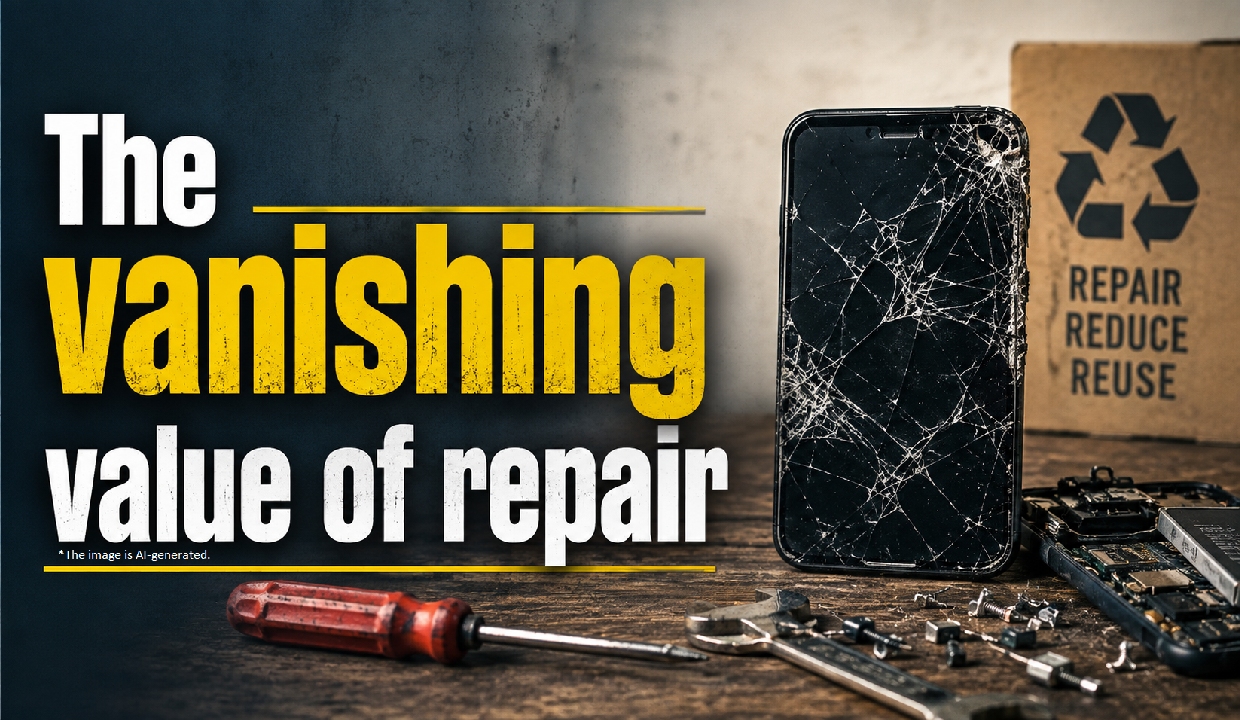
A broken mixer once meant a visit to the neighbourhood repairman. A torn shirt went to the tailor, a watch to the watchmaker, and a damaged chair to the carpenter. Today, the instinct is often different: search for a replacement online. The convenience is undeniable, but something significant is being lost - the habit of repair.
Modern consumer culture has made replacement economically and psychologically attractive. Products are cheaper, fashions change faster, and technology evolves. Many devices are difficult to open, batteries are sealed, and spare parts can be expensive. In such a marketplace, repairing can appear irrational when a new one promises immediate satisfaction.
Yet the apparent efficiency of replacement hides its costs. Every new product embodies minerals, energy, water and manufacturing. When discarded prematurely, these resources do not disappear; they become waste. Electronic waste is revealing. The world consumes sophisticated devices rapidly while struggling to recover valuable materials. It reflects a bigger change in how value is understood.
Repair demands patience. It requires accepting that something can be imperfect and still worth preserving. It recognises skilled labour. The electrician, cobbler, mechanic and carpenter were once familiar figures in Indian neighbourhoods because extending an object’s life was considered sensible.
India’s rapid economic transformation has weakened this repair culture. A growing middle class, rising purchasing power and digital commerce have made consumption easier than ever. The traditional repair ecosystem is also under pressure. The irony is that a country with a long history of thrift and ingenuity is increasingly embracing disposability.
The consequences extend beyond possessions. A culture accustomed to replacing things can subtly influence attitudes towards other forms of commitment. Not every relationship, institution or career can or should be preserved indefinitely. Some must end when harmful or obsolete. But there is a difference between recognising genuine failure and abandoning something simply because repair requires effort.
Sustainability, therefore, cannot be reduced to recycling after consumption. It must also involve designing products for durability, ensuring access to spare parts, supporting repair businesses and making manufacturers accountable for the life of what they sell. The right-to-repair movement matters because it challenges an economic model built around replacement.
But policy alone cannot restore the value of repair. Consumers must recover a different relationship with possessions. Before asking what something costs to replace, we should occasionally ask what it would take to restore it.
That question has implications far beyond household economics. Repair is an ethic of patience, responsibility and stewardship. It acknowledges that value does not disappear merely because something is damaged.
Perhaps that is the lesson modern consumer society most needs. Progress should not mean acquiring the newest thing as quickly as possible. A mature economy should also know how to preserve what already exists.
A civilisation that remembers how to repair its objects may also become better at repairing its institutions, communities and public spaces. Sometimes, what needs saving is not the object itself, but our willingness to care for it.
The writer is a consultant to Rashtriya Raksha University under the Ministry of Home Affairs, a short story writer, columnist and contemporary affairs commentator; Views presented are personal.
Leave a Comment
Comments (1)
Extremely needed in this world to the save the family and friends. Thank You..