The UN needs peace, not endless speeches
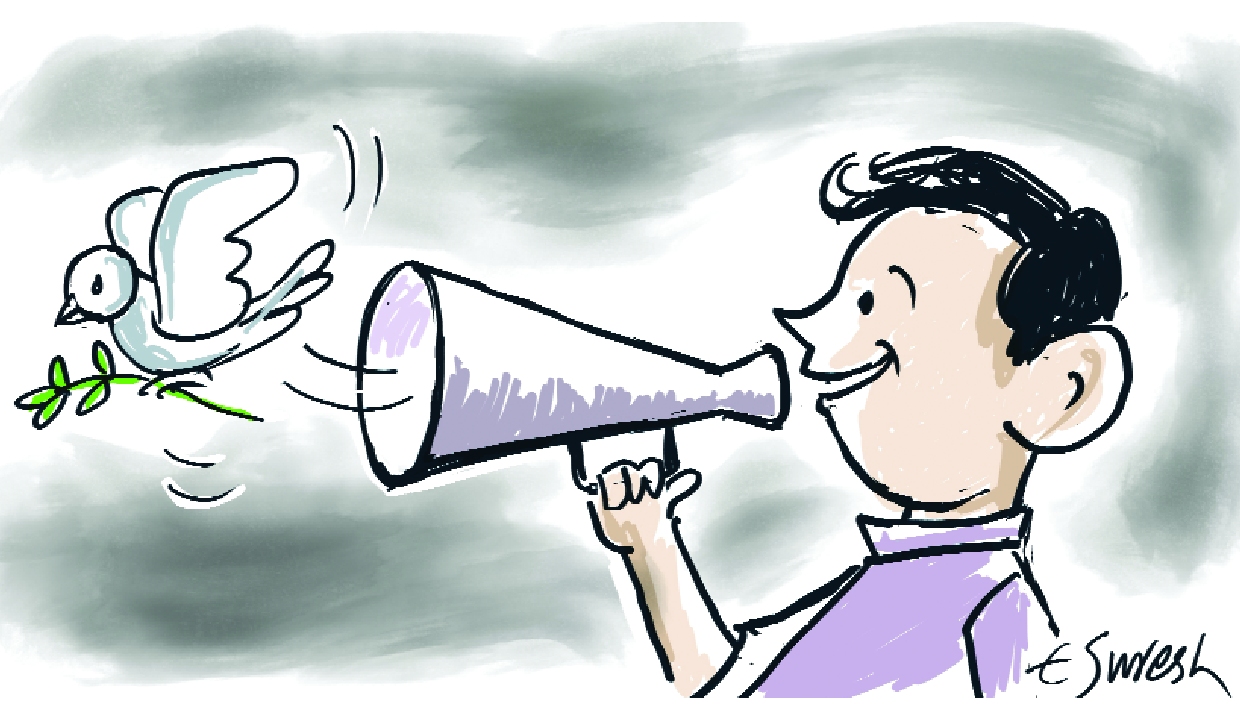
As the UN General Assembly opened its 81st session on the International Day of Peace, the world faced a familiar spectacle of speeches on war, conflict and humanity’s crises. But diplomacy cannot end at the podium. The credibility of the UN will increasingly depend on what follows the speeches: negotiation, implementation and action
September 21 is the International Day of Peace. This year, the message deserves to be heard inside the United Nations itself: the world needs action, not endless speeches. As the 81st session of the UN General Assembly begins in New York, leaders and diplomats will once again take turns at the world’s most famous international podium. They will speak about war and peace, security and development, terrorism and climate change, poverty and human rights. The speeches will be important. The question is what happens after the microphones are switched off.
The United Nations was born from the terrible experience of two world wars. Its founding vision was clear: disputes between nations should be addressed through dialogue rather than destruction. Speaking is therefore not a problem at the UN. Dialogue is essential to diplomacy. The problem begins when dialogue turns into repetition, delay and obstruction. When words prevent action, diplomacy loses its purpose.
This is where the idea of filibustering becomes relevant. The word “filibuster” is most closely associated with the United States Senate. It developed from the Senate’s tradition of allowing senators considerable freedom to speak. The word itself has a colourful history, linked to terms meaning freebooter or pirate. In political practice, it came to describe efforts to delay or prevent legislative action through prolonged debate.
The classic picture of a filibuster is a senator continuing to speak while legislation waits. The objective can be to delay a vote, force negotiations or prevent a proposal from moving forward. American political history has produced several famous examples of marathon speeches. The modern Senate has developed procedures, including cloture, to bring extended debate towards a conclusion.
The United Nations is not the US Senate, and the General Assembly does not have an identical filibuster system. Still, the underlying problem can appear in international diplomacy: when the time spent speaking becomes greater than the progress made towards solving the problem.
The UN itself has witnessed extraordinary examples of lengthy diplomatic interventions. India’s V. K. Krishna Menon became famous for his marathon intervention on Kashmir before the Security Council in January 1957. His intervention extended across several meetings and lasted more than eight hours. It remains one of the best-known examples of endurance in UN diplomacy.
Krishna Menon’s performance belongs to another era and another diplomatic context. It should not be mechanically described as a General Assembly filibuster. Its significance today lies in the question it raises: how much time should international diplomacy spend on speaking when the world is waiting for solutions?
That question is especially relevant when the United Nations discusses war. A ceasefire cannot be achieved by a speech alone. A refugee cannot return home because of a resolution alone. A destroyed city cannot be rebuilt by a statement from the podium. Food cannot reach a starving population through rhetoric. Peace requires negotiation, monitoring, humanitarian assistance, reconstruction and political courage.
The General Assembly has rules for managing debate and speaking time. Countries are expected to respect agreed limits during the General Debate, and the President has powers to maintain order and manage proceedings. These procedures are not designed to silence countries. They are designed to give every country a fair opportunity to speak.
A good speech should open the door to negotiation. A good diplomatic intervention should identify a problem and suggest a way forward. A good resolution should lead towards implementation. If the same accusations are repeated year after year without producing movement, the UN risks becoming a place where international problems are described more efficiently than they are solved. The world has no shortage of words. It has an abundance of declarations, resolutions, statements and appeals. What is often missing is implementation. The credibility of the United Nations will increasingly depend on its ability to convert diplomatic language into practical outcomes.
This does not mean that countries should surrender their right to speak. Smaller nations, in particular, depend on the UN platform to make their concerns visible. Countries involved in conflicts need an international forum where their positions can be placed on record. Silence cannot produce peace. Suppressing disagreement cannot produce peace either.
The answer is disciplined diplomacy: speak clearly, listen seriously, negotiate patiently, decide when necessary and implement what has been decided.
On the International Day of Peace, this should be the spirit of the UN’s 81st session. The world does not need another competition over who can speak the longest. It needs countries willing to spend less diplomatic energy on repeating positions and more energy on finding areas of agreement.
The UN General Assembly remains indispensable because it brings almost the entire international community into one room. That opportunity should not be wasted. Every speech should be treated as the beginning of a conversation, not the end of one. The great challenge before the UN is not finding more words for peace. The world already has enough words. The challenge is turning those words into ceasefires, negotiations, humanitarian corridors, reconstruction, reconciliation and lasting peace.
From filibustering to action - that should be the message of the International Day of Peace 2026. Let nations speak, let them disagree, let diplomacy remain open. But after the speeches, let action begin. The world is not waiting for another long speech. It is waiting for peace.
A good speech should open the door to negotiation. A good diplomatic intervention should identify a problem and suggest a way forward. A good resolution should lead towards implementation. If the same accusations are repeated year after year without producing movement, the UN risks becoming a place where international problems are described more efficiently than they are solved
The writer is Professor at Centre for South Asian Studies, School of International Studies & Social Sciences Pondicherry Central University; Views presented are personal.