The tragic Partition of India
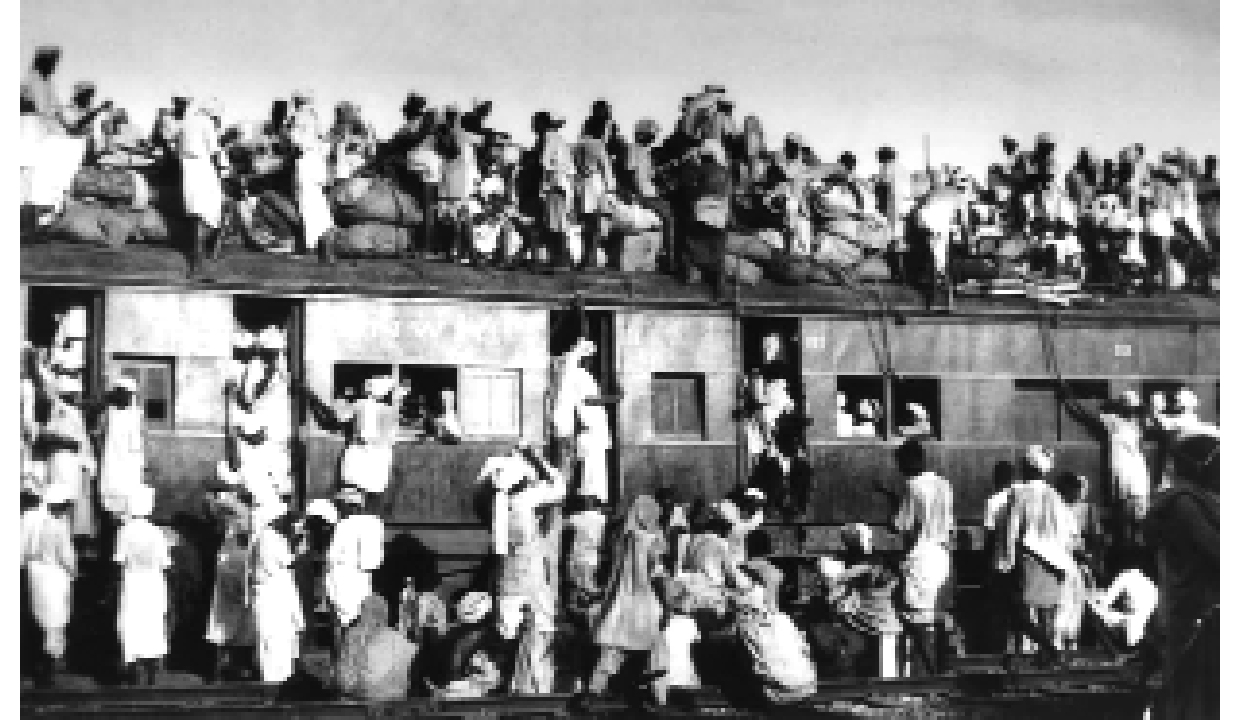
On 14th August 1947, India was partitioned into three parts. The main actors of this tragic partition were the British, the Muslim League and the Indian National Congress. On the request of Liaquat Ali Khan, Mohammad Ali Jinnah returned from London in 1934 and assumed leadership of the Muslim League. Under Jinnah’s leadership, the Muslim League passed the Pakistan Resolution at its Lahore session on March 23, 1940. While addressing this session, Jinnah gave the ‘Two-Nation Theory’. He said, "By any definition, Muslims are a nation. It is nothing short of a nightmare to imagine that Hindus and Muslims could coexist as citizens of the same nation. In reality, they represent two distinct civilisations. Muslims will not accept any constitution of India that results in a Hindu-majority government."
The foundation for the country’s partition was laid much earlier, with the Partition of Bengal on October 16, 1905, and the establishment of the Muslim League on December 30, 1906. With the partition of Bengal, Muslim elites began to believe that, based on demographics, they could establish dominance and rule over certain regions of the country. The League became the proponent of it. The Congress responded to the Muslim League’s separatist policies with a policy of Muslim appeasement; the Lucknow Pact and the Khilafat Movement are some examples of this approach.
Dr Keshav Baliram Hedgewar, the founder of the Rashtriya Swayamsevak Sangh (RSS) and an active member of the Congress began to perceive that the rhetoric of "Hindu-Muslim Bhai Bhai" is, in fact, a policy of Muslim appeasement and an attempt to make Hindu society forget its true history. The consequences of the idea would prove disastrous for the nation.
Although the increasingly toxic atmosphere in the country since 1940 had instilled a fear of impending calamity within Hindu society, people still placed their trust in the triumvirate of Mahatma Gandhi, Pandit Jawaharlal Nehru, and Sardar Vallabhbhai Patel, believing they would not allow the country to be partitioned. To force the Congress and British government to accept the demand of separate Pakistan, the Muslim League, under the leadership of Muhammad Ali Jinnah, gave a call to the Muslims to observe August 16, 1946, as Direct Action Day: ‘The Muslims of India would not rest contented with anything less than the immediate establishment of an independent and sovereign state of Pakistan... Now the time has come for the Muslim Nation to resort to the direct action.’
As 16th August 1946 approached, meetings, processions and calls for Jihad against Hindu were held in all big cities. On 16th August 1946, the massacre of Hindus was carried out in Kolkata under the leadership of Bengal premier Hussain Suhravardy. Later, Hindus were massacred in Noakhali and other parts of the country.
On 22nd March 1947, Lord Mountbatten arrived in India, and the fate of India was sealed. 3rd June 1947, in the House of Commons, British Prime Minister Attlee announced the partition of India. In his book ‘The Tragic Story of Partition’, HV Sheshadri writes, ‘Between the date of announcement of partition 3rd June and 15th August, hardly 72 days were left for carrying out the stupendous task of division of the vast country... The idea was to jostle a settlement through either Congress or the Muslim League had too much time to think about it, and before any really effective opposition to the partition of the country had time to develop.’ The basis for the demarcation of boundaries was 1941 census figure. Congress had issued a call to the people to boycott the Census of 1931 as it entailed communal enumeration. Same repeated in 1941. This resulted in tilting the balance in favour of Muslim in several districts.
According to Prof A N Bali, it was a mistake on the part of the Congress leadership to accept a one-man boundary commission and Sir Cyril Redcliffe as its chairman, who was legally incompetent and also politically biased. The partition of India became the biggest tragedy of humanity. Overnight, crores of innocent people became homeless. The fate of Sikhs and Hindus in the whole of West Pakistan was left entirely to the mercy of murderous Pakistani jehad monger. Not a single Congress leader felt it was their duty to hasten to their rescue in that hour of grave peril.
During this period, the Sarsanghchalak of the Rashtriya Swayamsevak Sangh, Madhav Sadashivrao Golwalkar: Shri Guruji, was in Sindh and Punjab. He urged all the Swayamsevak to defend the Hindus and Sikhs by scarifying their own life. He asked the Swayamsevak not to leave undivided India until every Hindu and Sikh reached India safely.
In the book Now It Can Be Told, Prof A N Bali writes, ‘Who else came to the rescue of the people of this state but a band of young selfless Hindus, popularly known as the RSS? They organised the work of evacuation of the Hindus and the Sikhs, women and children from the dangerous pocket to the comparatively safe centre.
They ensured and arranged for their clothing and health care. Arranging transport from Pakistan to India was a task. The young man were the first to come. The horror of the partition of India should not be forgotten. We have to remember this so that it can never be repeated. The solution to this partition is Akhand Bharat.
The author is journalist and political analyst, president of Centre for Policy Research and Studies (CPRS) and editor of Nitipost; Views presented are personal.