The foundations we cannot see
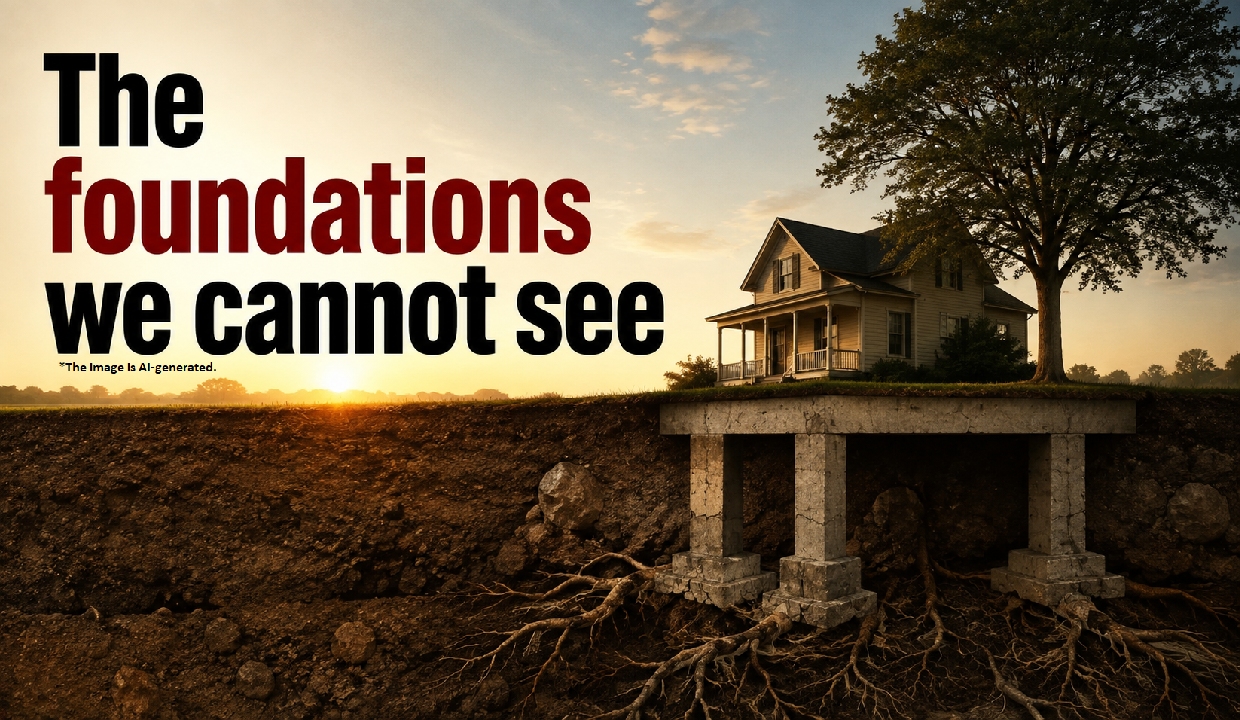
A building announces itself to the world through its height, shape and façade. Its foundation, however, remains buried in darkness. No passer-by admires the concrete below the ground or pauses to photograph the piles carrying the weight of a tower. Yet if the foundation is weak, the most beautiful structure is living on borrowed time.
As a civil engineer, I find this a powerful metaphor for human life. We spend much of our lives constructing what others can see: careers, homes, achievements, reputations and social identities. We rarely devote the same attention to what remains invisible - character, patience, integrity, compassion and the quiet discipline that holds a person together.
A structure is not tested on a calm morning. Its real test comes when the wind rises, the earth moves or an unexpected load is placed upon it. Human beings, too, reveal their foundations during storms. Bereavement, failure, humiliation, financial hardship and uncertainty strip away appearances. At such moments, neither wealth nor reputation can provide the strength that character must supply.
Engineering teaches another humbling lesson. A foundation cannot be designed merely by looking at the building one wishes to construct. It must respond to the ground beneath it. Human beings often forget this. We compare our lives with others and attempt to reproduce their successes without knowing the soil on which those lives were built. But every person stands on different ground different circumstances, responsibilities, vulnerabilities and dreams.
There is a similar danger in the life of a society. A nation may celebrate highways, skyscrapers, digital networks and impressive economic numbers. But beneath these visible achievements lie less glamorous foundations: functioning institutions, public trust, education, social cohesion, justice and ethical leadership. When these weaken, development can become little more than an impressive façade.
The tragedy is that foundations are usually noticed only after they fail. A crack in a wall may appear suddenly, but the weakness responsible for it may have developed silently for years. Likewise, the collapse of a relationship, institution or public trust is rarely caused by one moment alone. It is often the final expression of stresses that were ignored for too long.
Perhaps this explains why some of the strongest people are not necessarily the most conspicuous. Their strength has been built quietly - in promises kept when nobody was watching, in kindness offered without expectation, in failures endured without bitterness and in principles maintained when compromise would have been easier.
Modern life encourages us to polish the façade before strengthening the foundation. We ask how successful we appear, how quickly we are progressing and how high we can rise. Perhaps we should occasionally ask a more difficult question: What is holding us up?
Every structure eventually encounters a storm. Every life does too. And when that day comes, the world does not examine the façade. It tests what lies beneath it.
The deepest lesson of engineering may therefore be a profoundly human one: the things that matter most are often the things nobody sees.
The writer is a consultant to Rashtriya Raksha University under the Ministry of Home Affairs, a civil engineer, short story writer, columnist, public policy expert and contemporary affairs commentator; Views presented are personal.