Teaching cannot run on sacrifice

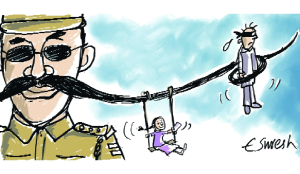
A job where competence is regularly rewarded with greater labour is essentially flawed. The trustworthy instructor will soon be required to oversee challenging classes, fulfil deadlines, plan activities, offer student counselling, deal with parents and step in when necessary. What starts out as extraordinary effort soon turns into a regular expectation. We refer to educators as mentors and nation-builders, yet we keep increasing duties without considering what ought to be eliminated. In the same constrained working day, teaching now faces competition from assessment, documentation, coordination, counselling and continuous digital availability. No one’s responsibility is the issue. It is a system that frequently increases rather than decreases the role of the teacher.
Since practically everything is significant in the schools we have created, teachers are eventually responsible for almost everything. Recently, our Honourable Prime Minister, Shri Narendra Modi, called on educators to engage with children’s lives rather than just textbooks and curricula. The aspiration is unquestionably valuable. Education cannot be reduced to completing chapters. A teacher should notice the child whose marks are falling because something at home has changed, the adolescent hiding anxiety behind aggression or the student whose silence is asking for help. But noticing requires time. Listening requires mental space. A system cannot expect teachers to remain patient, attentive and emotionally present while keeping them buried in administrative work. Yet when exhaustion begins to show, the response is often to place the burden back on the teacher. We speak of resilience, wellbeing and work-life balance, but these ideas can become substitutes for structural reform. A mindfulness session cannot lighten an excessive workload, and a motivational workshop cannot create more hours in the day.
There is also an uncomfortable economic question at the heart of this debate. If teaching is truly one of society’s most important professions, why is ‘passion’ so often used where other professions would speak of pay, working conditions, autonomy and career growth? These days, schools promise global standards, holistic development, technology-rich classrooms, individualised instruction and emotional well-being. It is reasonable for parents to anticipate that these commitments will be fulfilled. However, the instructor in front of the classroom is ultimately responsible for all such promises.
How the instructor was treated prior to that moment has a big impact on its quality. Thus, teacher well-being is not a sentimental issue. It is essential to the quality of education. Planning time is lost due to needless paperwork. Attention that could have been given to students is competing with avoidable tasks. When the classroom bell rings, exhaustion does not go away. The message that institutions deliver to their best instructors may be the most detrimental: if you can demonstrate your abilities, you will be expected to do more. Eventually, some depart. Others continue, but they no longer voluntarily put in the extra effort. Institutions then inquire as to the status of the commitment. What we did with that commitment while we still had it is a better question.
Appreciation needs to go beyond rituals and catchphrases if India wants teaching to become a career of desire. Salary, staffing, reasonable workloads, planning time, professional autonomy and growth possibilities must all demonstrate it. Excellent educators will always go above and beyond the call of duty. However, there is a significant distinction between creating a system that requires continuous sacrifice and appreciating dedication. Sacrifice is no longer a virtue when instructors must make tremendous sacrifices for the school to function normally. It is now the operational model.
The writer is an educator and councillor; Views presented are personal.