SSB told to return to village, rebuild intelligence
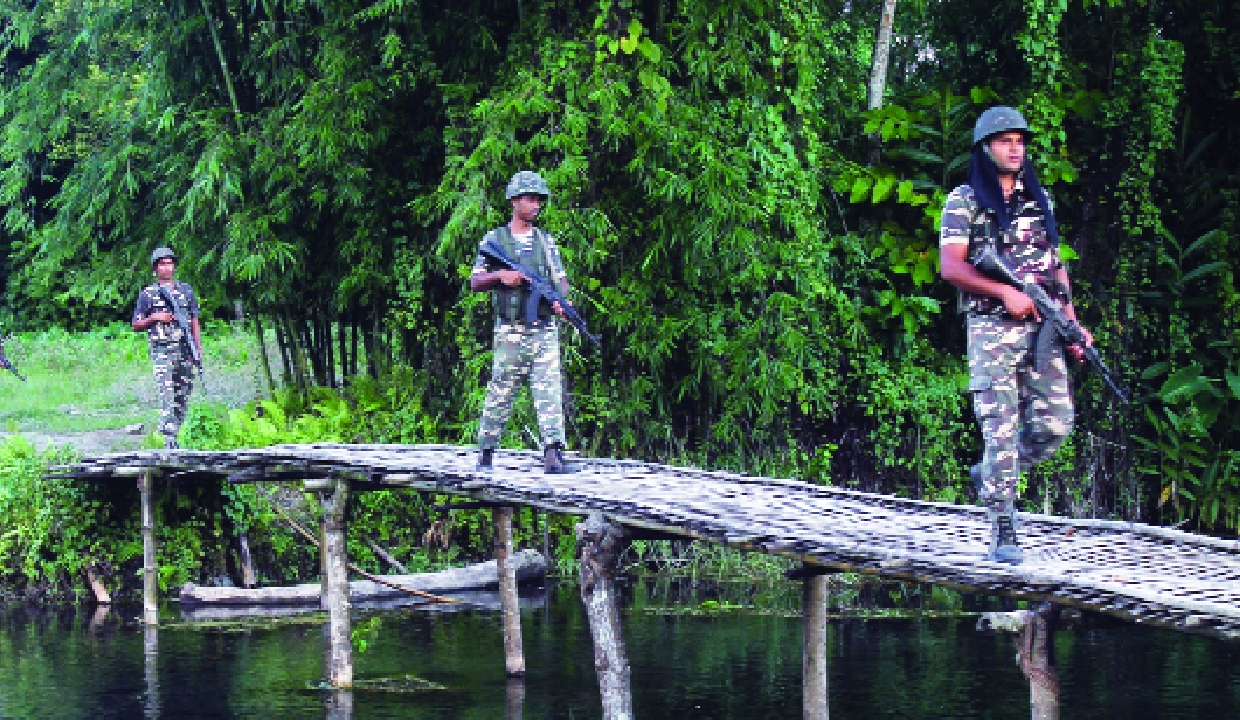
On Tuesday, Union Home Secretary Govind Mohan urged the Sashastra Seema Bal (SSB) to focus again on its original mission. He called for the force to live among border villages, build goodwill for India, and involve residents in intelligence efforts, while still policing the open borders with Nepal and Bhutan.
At the SSB investiture ceremony at Vigyan Bhawan, where 18 personnel received medals for gallantry and distinguished service, Mohan described the force’s job as “unique.” He explained that the SSB guards two open borders with friendly neighbours: 1,751 km with Nepal and 699 km with Bhutan. Unlike hostile borders, these cannot be sealed and must be managed through both people-to-people work and border posts.
The SSB was set up after the 1962 war and officially formed in March 1963 as the Special Service Bureau. It was not meant to be a typical armed border force. Its main job was to build unity in remote villages, maintain a network during wartime, and collect intelligence from locals. After the Kargil conflict and the ‘one border, one force’ policy, the SSB moved to the Ministry of Home Affairs (MHA), got its current name, and took charge of the Nepal and Bhutan borders. Over time, armed duties increased while community work decreased.
Mohan said that over the years, the SSB has become more focused on armed border guarding. However, its original role of working closely with border communities, building trust, and strengthening intelligence has faded. The ministry now wants to bring back that original mission through a formal system so that the force can fulfil its founding vision. Armed duties will still be important, but they are not enough on their own.
The call sits inside a new “quadrangular” frontier security plan that the MHA says is the first comprehensive border framework in independent India. The four legs are: the border-guarding force itself; state machinery in the border districts, district magistrates, police and the local administration; a clutch of 15 to 20 Central agencies that track narcotics, fake currency, customs evasion and economic crime; and the civilian population living on the line. Without the fourth leg, the other three stay blind.
Mohan explained that this approach was first tried about six or seven months ago along the India-Nepal border near Kishanganj in Bihar. Follow-up meetings took place in Gujarat, Rajasthan, Tripura, and about a month ago in West Bengal, near the Bangladesh border. More border districts will be included in the future. He said, “Unless we can continuously monitor and effectively secure nearly 15,000 kilometres of India’s borders… our goal of ensuring internal security also remains incomplete.”
He praised the SSB for using drones, radars, and facial-recognition tools to fight trafficking in people, drugs, and weapons. However, he stressed that technology cannot replace trust along open borders. He also said he is confident that Director General Sanjay Singhal will lead these changes.
Mohan read a message from Home Minister Amit Shah, who could not attend the event. Shah paid tribute to flood victims in Nepal and praised the SSB’s rescue efforts there. He also honoured the 51 SSB personnel who lost their lives in service and reminded the force of its motto: ‘Service, Security, Brotherhood’. Shah said that along friendly borders, the SSB’s real strength lies in balancing security with the needs of ordinary people. New Delhi wants this approach to be central to the SSB’s daily work, not as a return to the past, but as a key part of a modern security system.