Smoke swallowed stairways, exits, any path to survival: Neighbours
The fire did not just burn a home. It sealed it. By the time neighbours realised what was happening inside a multi-storey building in southwest Delhi’s Palam, the smoke had already swallowed stairways, exits, and any clear path to survival. What followed was not just a race against flames but against time, equipment, and design failures.
Nine members of a joint family died in the blaze on Wednesday morning. But accounts from the ground now point to a rescue that struggled to keep pace with the fire. The first alarm came not from sirens, but from a flower seller who spotted flames around 6:30 am and alerted residents. By the time police received a call at 7:04 a.m. and teams rushed in, the fire had already spread through the lower floors.
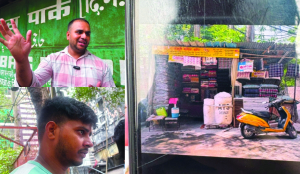
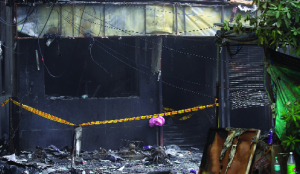
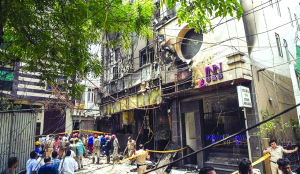
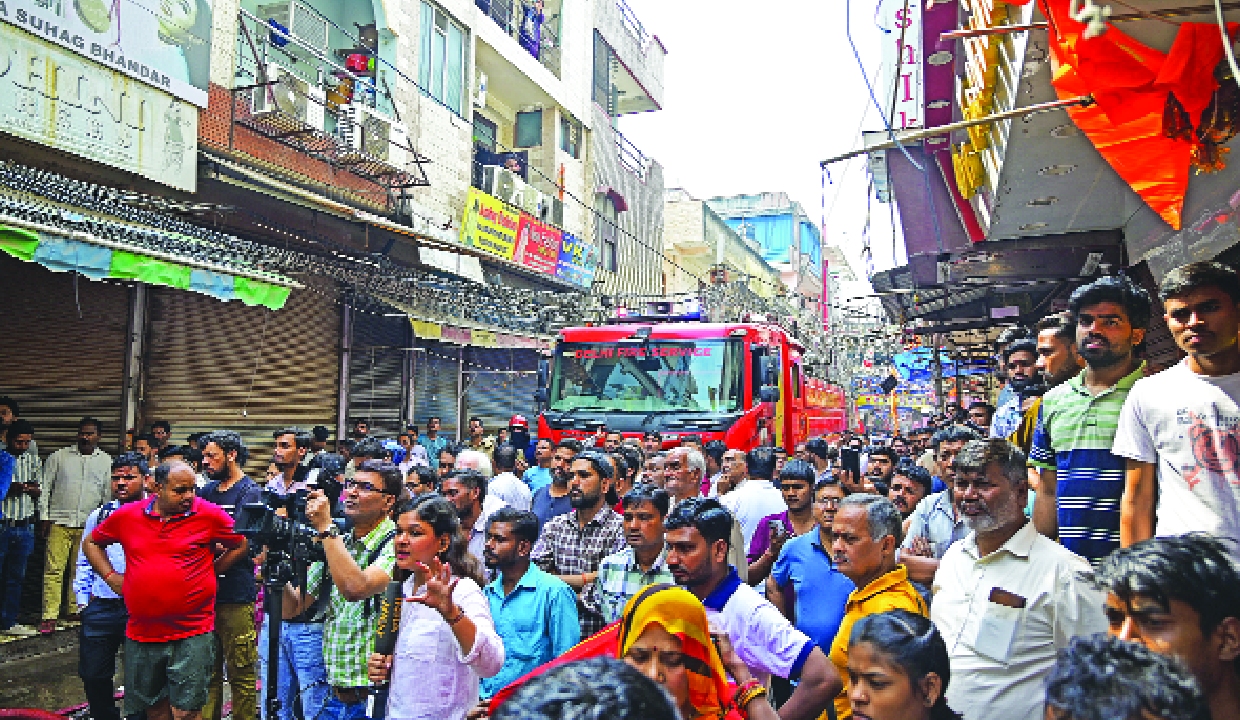
Locals said nearly 40 people, including residents and emergency responders, tried to break open the shop shutters to reach those trapped inside. The shutters now lie twisted and charred, with burnt wiring hanging loose: a sign of how quickly the fire intensified. But reaching the upper floors proved nearly impossible. Neighbours said a rescue ladder was initially positioned only up to the second floor. Those trapped above had no way down.
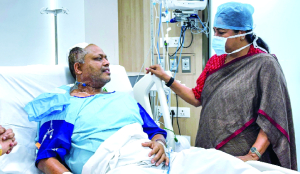
Anil, trapped on the third floor with his toddler, tried to climb down using that ladder. It did not reach it. With flames rising behind him, he attempted to lower the child in his arms. In the chaos, she slipped. She hit the ground hard, fracturing both her legs. Moments later, Anil jumped, striking a parked vehicle and suffering head injuries. Both are now under treatment.
Residents allege there were no safety nets or cushioning arrangements below, a gap that turned desperate escape attempts into life-threatening falls. Another survivor, Sachin, managed to reach the rooftop and jump to an adjacent building. He escaped, but not without severe burns to his hands.
Around them, the building was turning into a sealed chamber of heat and smoke. Neighbours said they tried to break into the building from all sides. Some climbed onto adjacent rooftops and hammered through a shared wall. Others attempted to smash windows. But the smoke was too dense. “It was impossible to even take a step inside,” one resident said, describing how visibility dropped to near zero.
Several locals alleged that firefighting equipment malfunctioned at a critical moment. They claimed the first fire engine faced pressure system issues, delaying operations. The hydraulic ladder, they said, did not function properly for nearly 45 minutes.
Another fire tender equipped with a functional ladder arrived much later, nearly 50 minutes after the first response, according to residents. Officials have not confirmed these claims but said all aspects, including possible equipment failure, are under investigation.
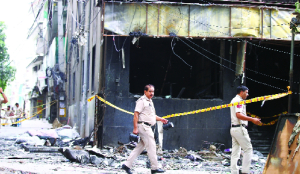
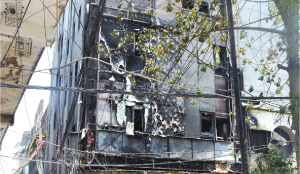
The building itself offered little margin for survival. It had a single entry and exit point. Packed with goods from the shop below and lacking ventilation, it allowed smoke to accumulate rapidly. Residents said the fire spread faster because of the stock inside garments, cosmetics and other flammable materials stored in large quantities. The structure has now been gutted from the inside. Blackened walls, collapsed interiors, and melted fixtures stand where a large joint family once lived.
Locals described the victims as a close-knit household. An elderly woman, who used a wheelchair, was among those trapped, making escape even harder. Some family members survived only because they were not there. One son was away in Shimla with his family when the fire broke out.
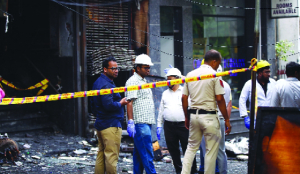
Authorities have cordoned off the area. A forensic team is examining the site. The cause of the fire is still being probed, with suspicion of an electrical short circuit. But beyond the cause, questions remain about response time, equipment readiness, and building safety. In Palam, residents say, the fire did not just expose a tragedy. It exposed how quickly lives can be lost when escape routes fail and rescue falters.