
Zeus’s rule of law in Nolan’s The Odyssey
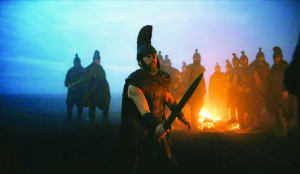
In Christopher Nolan’s The Odyssey, a king returns from a long war to his hometown Ithaca to find his palace consumed by free-riders. Along the way, gods and monsters demand their price. Columbia University professor Adam Tooze quote-tweeted Nolan’s film as a commentary on a world “where rules have collapsed.” It is a powerful reading. When reciprocity weakens, cooperation becomes fragile. Enforcement eventually returns to its most primitive form- force.
The story is three thousand years old. Yet Nolan makes it feel contemporary. At its centre is Zeus’s law-the film’s condensed version of xenia, the ancient Greek obligation of hospitality between host and guest. Treat the stranger as you would wish to be treated. A traveller may even be a god in disguise. Hospitality, then, is not merely kindness. It is an institution.
Economists would recognise the logic immediately. Zeus’s law lowers the cost of dealing with strangers when contracts are incomplete, and enforcement is weak. It creates trust, facilitates exchange and lengthens the shadow of the future. Strangers become potential partners rather than immediate threats. Civilisation begins with that expectation that vulnerability will not be exploited.
The Trojan Horse as Institutional Rupture
Nolan turns the Trojan Horse from military cunning into institutional betrayal. After ten years of war, the Greeks leave a wooden horse outside Troy as an apparent offering to Athena. The Trojans accept it and bring it inside. Hidden soldiers emerge at night, open the gates and destroy the city.
In Homer, it is strategic deception. In Nolan, the deeper violence is the corruption of trust itself. The gift-the instrument of peaceful exchange-becomes an instrument of predation. Trust becomes the weapon. This changes Odysseus. He is less the celebrated strategist and more a man haunted by his own ingenuity. Guilt replaces cunning.
The gods, too, recede. They become less characters than elemental forces-fear, desire, guilt, fate. Odysseus’s island sojourns become tangible manifestations of these transient forces.
The same institutional logic returns in Ithaca. Telemachus cannot simply remove the suitors consuming his household’s resources. Property rights are uncertain. Enforcement is weak. The household becomes an open-access resource.
The suitors free-ride. Penelope’s endless weaving is a private response to institutional failure. She buys time while guarding the “empty throne” of Ithaca, waiting for Odysseus’s return.
The massacre that follows is therefore not merely revenge. It is the violent restoration of authority after informal rules have failed. Force becomes the residual institution. This is where the ancient story becomes political economy. Openness of households, cities or economies creates gains from exchange and specialisation only when supported by credible reciprocity. When reciprocity weakens, risk rises, monitoring becomes costly and time horizons contract. Trust retreats. So does exchange.
Modern markets are built on these invisible institutions. Trade, migration and global supply chains cannot be governed entirely through contracts. They depend on economics of trust. When such expectations collapse, the economics changes to higher risk premia. That is perhaps Nolan’s most contemporary insight. Emily Wilson, however, is unhappy about his deviations from the classic. Her translation of the epic was Nolan’s inspiration to take this movie, though.
The Odyssey is not only a story about a man trying to return home. It is a story about what happens when the rules that make cooperation possible disappear.
Societies rarely notice institutions when they work. They notice them when they fail. And when reciprocity is exhausted, and powerful leaders’ instincts run the global order, violence becomes the norm. Civilisation dies off. This is resonating in contemporary times of geopolitical uncertainties and wars.
Nolan has taken a three-thousand-year-old poem and made its oldest institution speak to the political economy of our time. That is no small achievement.
Yet at the heart of this entire drama is the “complicated man”, Odysseus. He returns to his wife, but return does not restore what was lost. After violence, deception and years of wandering, he leaves Ithaca once more, “chasing the escaping sun”, to honour the dead, leaving the kingdom to his son.
There is an economics here that is not about accumulation, but about irredeemable debts. Some debts cannot be settled by return. Some losses cannot be compensated by victory. The past carries a value that no present exchange can extinguish. Perhaps this inner haunting is the metaphysics of economics: that what matters most cannot always be repaid. In the end, perhaps the only solace left to the living is to remember and honour the dead.
Author is an economist and a professor, NIPFP and Research Affiliate of Levy Economics Institute of Bard College, New York and Member, Governing Board of International Institute of Public Finance (IIPF) Munich; Views presented are personal.