
Yogi Govt’s dual strategy: Curb adulteration, boost dairy
For years, the people of Uttar Pradesh — farmers, cattle-rearers and ordinary consumers — endured the twin scourges of rampant food adulteration, administrative neglect and policy inertia. This was not merely an administrative failure; it constituted a profound assault on the State’s economic fabric and cultural ethos.
Milk, a substance regarded as pure and life-giving, was routinely contaminated with water, harmful chemicals and starch. Under previous regimes, lax law enforcement and the absence of political will allowed adulterators to operate with complete impunity, while the hard-working cattle-rearer who nourished society struggled for a fair price. At the same time, indigenous cows — symbols of the State’s cultural heritage — wandered the streets in distress, and the dairy sector languished in neglect.
A dual mandate: Uncompromising action against adulteration and a vision for inclusive development
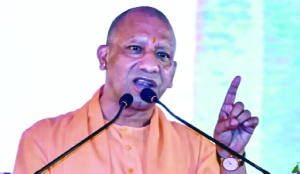
Today, the landscape of Uttar Pradesh has undergone a fundamental transformation. Under the leadership of Chief Minister Yogi Adityanath, the Government has charted a new developmental trajectory guided by a robust and nationalist vision. This far-sighted policy rests on two complementary pillars: first, the uncompromising application of the law against adulterators to safeguard public health; and second, the comprehensive revitalisation of the dairy sector so that cattle-rearers and farmers may achieve economic self-reliance.
The strategy is not a mere exercise in administrative reform; it is a transformative campaign that seeks to translate the national resolve of “healthy citizens, prosperous farmers and a strong India” into lived reality. A powerful nation remains an incomplete aspiration for as long as every citizen is denied pure food and the village farmer is denied a just return for his produce.
Enforcing a zero-tolerance regime against adulterators
The Yogi Government’s campaign against adulteration is neither a fleeting drive nor a public-relations exercise; it is a sustained and uncompromising policy offensive. Figures from the Food Safety and Drug Administration Department themselves testify to the rigorous establishment of the rule of law across the State.
Official data spanning nearly the last decade reveal that the department has conducted more than 14.49 lakh intensive inspections and carried out over 2.10 lakh raids. In the course of this extensive surveillance, more than 1.37 lakh food samples failed to meet prescribed quality standards. By instilling a genuine fear of the law among offenders, the Government has recovered penalties exceeding Rs 368 crore.
In addition, more than 1.29 lakh criminal cases have been filed in the courts, several of which have resulted in rigorous imprisonment for the convicted.
Eradicating counterfeit products and toxic contaminants from the food chain
Special emphasis has been placed on preserving the purity of milk and milk products. Over the past two years, thousands of targeted inspections and raids have been conducted. As recently as June, July and August 2026, intensive statewide drives were launched in key districts including Ghaziabad, Mathura, Saharanpur, Meerut and Varanasi. During these operations, thousands of quintals of adulterated khoya, chemical milk, counterfeit paneer and unsafe materials were seized and destroyed on the spot.
Reinforcing its unwavering commitment to public health, the Government has imposed a complete ban on the manufacture and sale of “analogue” products — fake paneer, khoya and ghee manufactured from palm oil and synthetic substances. This stringent regulatory grip sends an unambiguous message: no mafia that tampers with the health of citizens will be spared in Uttar Pradesh.
Ascending to National Leadership in Milk Production
Alongside punitive action, the second and equally vital dimension of the Government’s nationalist vision has been the systematic transformation of the dairy sector so as to invigorate the State’s economic cycle. Nutritional self-reliance constitutes the true strength of any nation, and today Uttar Pradesh stands as the undisputed leader in milk production across India.
According to figures for the financial year 2024-25, the State recorded a historic output of more than 388 lakh metric tonnes of milk — approximately 16 per cent of the country’s total production. This landmark achievement is no accident; it rests on revolutionary initiatives such as the Nand Baba Dugdh Mission, through which defunct cooperative societies in villages across the state have been revived and strengthened.
Building a robust and transparent village-level dairy ecosystem
The most tangible outcome of this policy shift has been a dramatic expansion in rural milk-processing capacity — an increase of nearly 39 lakh litres per day. Modern, technology-enabled dairy units are being established across the State, attracting substantial national and international investment. Transparent systems of milk collection, chilling and marketing at the village level have liberated farmers from dependence on distant urban markets or exploitative middlemen. With the monopoly and exploitation of intermediaries dismantled, prosperity and economic stability are returning directly to the rural economy.
Conserving indigenous cattle breeds and empowering the rural producer
In this journey towards economic self-reliance, the Government has placed the cattle-rearer at the centre of policy design and devised interventions that deliver direct financial benefit. Through visionary schemes such as the Nandini Krishak Samriddhi Yojana and the Chief Minister’s Indigenous Cattle Promotion Scheme, farmers and cattle-rearers are being provided substantial subsidies for the purchase and maintenance of high-quality cows. Special emphasis is being laid on the conservation and promotion of indigenous breeds —Gir, Sahiwal, Tharparkar and others. Indigenous cattle are not only emblems of the State’s cultural and spiritual consciousness; their milk is also regarded as superior in quality and nutritional value. As toxic, chemical and counterfeit milk products are driven out of the market, demand for pure and authentic milk multiplies, delivering direct economic gains to the hard-working cattle-rearers whose every drop of milk now commands a fair and remunerative price.
From Streets of Neglect to Sanctuaries of Care: The Gaushala Transformation
Where once abandoned cattle wandered the State’s roads, prey to hunger, disease and accidents, today a robust network of shelters, gaushalas and proper nutrition has been established. Cattle conservation is being integrated with rural development and natural farming to create a circular economy. From the commercial utilisation of cow dung and urine to the production of organic manure, animal husbandry is ceasing to be a loss-making activity and is evolving into a highly profitable enterprise. This transformation is not confined to paper claims; it is visible in the improved living standards of ordinary cattle-rearers in every village of Uttar Pradesh, in the better education of their children, and in the prosperity that has entered their homes.
Forging the foundations of a prosperous and self-reliant Uttar Pradesh
The Yogi Government’s dual strategy is, in essence, the practical expression of the national ideal of “security and prosperity,” in which strict enforcement of rules and public welfare advance hand in hand. On the one hand, a firm regulatory grip on adulterators is protecting the health and lives of ordinary families; on the other, the strengthening of dairy infrastructure is working to double the income of the village farmer. The urban consumer is reassured by the availability of pure food, while the rural producer, assured of a fair price, grows in self-respect and strength. Where earlier regimes were characterised by corruption, adulteration and policy vacuum, today the authority of the law and welfare-oriented policies are together elevating the state to new heights. This is the genuine transformation that is propelling Uttar Pradesh towards becoming a leading and self-reliant state of the nation.
The author is a professor at Allahabad University and writes on social, political issues; Views presented are personal.