
Yemen conflict risks spiralling into wider regional crisis
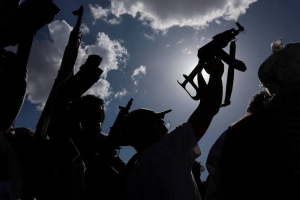
Yemen is once again at risk of being consumed by a major civil war, with the escalating conflict between the Iran-backed Houthis and Yemen's internationally recognised government threatening to draw in Saudi Arabia and other regional powers, according to an expert.
The renewed fighting comes against the backdrop of the broader US-Iran confrontation, adding another layer to an already complex conflict involving Iran, Saudi Arabia and their respective allies.
Iran backs the Houthis, also known as Ansar Allah, while Saudi Arabia supports Yemen's Presidential Leadership Council (PLC), the internationally recognised government. The United States has aligned itself with Riyadh, while Russia and China are aligned with Iran, wrote Amin Saikal, an adjunct professor at Victoria University, in The Conversation.
Saudi Arabia's newly strengthened security ties with Turkiye and Pakistan could further widen the conflict. The two countries have agreed to activate a mutual defence pact and deploy troops to Saudi Arabia if it comes under attack.
The Houthis control around one-third of Yemen, including the capital Sanaa, and entered the wider regional confrontation earlier this year in support of Tehran. They have also tightened their hold around the Bab al-Mandab Strait, a key maritime route connecting the Red Sea with the Gulf of Aden and the Indian Ocean.
The Houthis have made territorial gains in Yemen since July and have targeted Saudi oil facilities, tankers and Riyadh's main airport. A recent attack again disrupted oil pumping through Saudi Arabia's East-West Pipeline, which has assumed greater importance for exports amid disruption in the Strait of Hormuz.
Yemeni and Saudi forces have launched a counteroffensive to recover territory held by the Houthis, raising fears of a return to a large-scale civil war and a worsening humanitarian crisis.
Saudi Arabia has sought US airstrikes against the Houthis, but President Donald Trump has so far declined to directly intervene, instead offering intelligence and military support.
Washington's reluctance reflects concerns about becoming further entangled in another conflict while the confrontation with Iran remains unresolved.
The renewed fighting has already exacted a heavy toll in Yemen. More than 800 people have been killed, around 3,000 injured and about 158,000 displaced, according to the article. That comes on top of the hundreds of thousands of deaths recorded since Yemen's civil war and the Saudi-led intervention began in 2014-15, including deaths caused indirectly by hunger, disease and the collapse of healthcare and infrastructure.
Wider economic risks
The conflict also threatens to compound disruptions to global energy supplies.
The Strait of Hormuz, through which about 20 per cent of the world's daily oil and liquefied natural gas supply passed before the war, remains partially inoperable because of fears of attacks on shipping. Some tankers have nevertheless continued to pass through after reaching arrangements with Iran's Persian Gulf Strait Authority or securing US escort protection.
US Energy Secretary Chris Wright recently claimed that 13 million barrels of crude were moving through the strait each day, a figure disputed by Iran.
Iranian parliamentary speaker Mohammad Bagher Ghalibaf said on October 4 that the strait would not fully reopen until Washington met Tehran's demands, including a ceasefire on all fronts, the lifting of the US blockade of Iranian ports and the unfreezing of Iranian assets.
Meanwhile, the Houthis' announcement of a blockade of Saudi ports and attacks on Saudi-linked shipping in the Red Sea since July could further disrupt global oil supplies.
Saikal said the expanding crisis remained closely tied to the US confrontation with Iran. Tehran has warned that US allies in the Gulf could face more severe attacks if Washington escalates the conflict.
With multiple regional and global powers now involved, further escalation in Yemen could therefore have consequences well beyond its borders, including for shipping, energy markets and the wider Middle East.
The situation could still be contained if Washington and Tehran step back from further escalation and pursue a negotiated settlement, although such an outcome remains uncertain, Saikal wrote.