
Women’s T20 WC gets bigger, mirrors changes
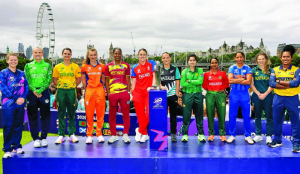
Bigger and more competitive than ever, the ICC T20 Women’s World Cup begins here on Friday with the ever-improving India, England and South Africa expected to challenge Australia’s traditional dominance in the tournament.
The Aussies, who have won six of the last nine tournaments, will be eager to displace reigning champions New Zealand for a seventh title, but that is no longer a yawn-inducing formality.
The Kiwis themselves are a formidable unit, and then there are India, who landed their maiden global title last year in the 50-over World Cup.
England, strong as ever in home conditions, and South Africa, finalists in the last three ICC events, would be no pushovers either.
In that context, this iteration of the showpiece, beginning with a match here between England and Sri Lanka, is the most open yet in its existence, and it is also the first World Cup in the UK since the first edition in 2009.
The event is also the biggest in terms of the number of participants — 12 — with the addition of Ireland and Netherlands to the mix from 2024.
That expansion itself is a sign of the women’s game getting a stronger foothold across nations, but even more satisfying is the development of a level-playing field and the emergence of some raw but exciting talent.
Young talent
It starts with England’s Alice Capsey, Tilly Corteen-Coleman and Freya Kemp while their opponents tomorrow, Sri Lanka, field the likes of Vishmi Gunarathne, Imesha Dulani, Kavisha Dilhari and Kawya Kavindi.
New Zealand skipper Amelia Kerr, one of the youngest leaders in the international circuit at 25, is a key player for her side. She is also a heart-touching story of resilience after surviving depression and suicidal thoughts during the 2020-21 season.
Strong contenders India come with promising N Sree Charani, Yastika Bhatia and Nandani Sharma in their ranks.
The Aussies are still banking on their veterans to reclaim the title, but they also have two exceptional young stars in their ranks — batter Georgia Voll and left-arm seamer Lucy Hamilton.
The Proteas, led by the redoubtable Laura Wolvaardt, have Kayla Reyneke and Annerie Dercksen leading the march of Next-Gen players, despite bringing back experienced pacer Shabnim Ismail and Dan van Niekerk from retirement.