
When excellence begins to erode
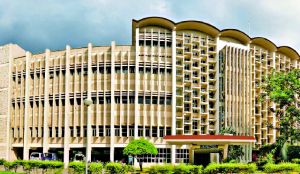
India’s great Centres of Excellence-from Nalanda and Takshashila to the IITs-were built over generations through exceptional teachers, academic freedom, integrity, rigorous standards, and courageous leadership, not merely through funding, infrastructure, or selective admissions. Yet excellence rarely disappears overnight; it erodes gradually when reputation substitutes for performance, dissent becomes inconvenient, governance turns reactive, and institutions lose the capacity for self-correction and invite police onto campus. Recent developments at some IITs, therefore, invite a larger question: what makes a Centre of Excellence endure-and what happens when the culture that created it begins to weaken?
India’s tradition of Centres of Excellence-from Takshashila and Nalanda to Allahabad University, once called the “Oxford of the East”, and JNU-was built on scholarship, intellectual exchange, academic freedom, and a culture of questioning. Their history also carries a lesson: excellence is not permanent; it must be continuously renewed. Institutions can gradually lose vitality when autonomy weakens, dissent becomes inconvenient, leadership stops listening, and internal mechanisms of correction falter.
The events surrounding JNU in 2016 brought the use of police and criminal-law mechanisms in campus disputes into the national debate.When this happens, universities risk losing a defining strength: the ability to accommodate disagreement, question authority, and correct themselves from within.
Building and sustaining excellence
A Centre of Excellence is not created merely through funding, infrastructure, or selective admissions. These provide the foundation; excellence is built over generations through academic freedom, rigorous standards, integrity, quality teaching, mentoring, and courageous leadership. At its core is the teacher. Research and innovation bring visibility, but sustained excellence also depends on teaching, mentoring, fair evaluation, and meaningful faculty-student engagement. Students must learn not only knowledge and skills, but also to question, accept criticism, and take responsibility. Equally vital are academic freedom and responsible dissent. Institutions remain intellectually vibrant when questioning is encouraged, and criticism is not treated as disloyalty. Leadership must have the courage to listen, make difficult decisions, and uphold standards fairly, while governing bodies provide meaningful oversight and stakeholders recognise their responsibilities. Ultimately, excellence depends on an institution’s capacity for continuous self-renewal-to question itself, correct shortcomings, and preserve the values that created it.
Students entering a Centre of Excellence come from a wide spectrum of intellectual ability, academic preparation, aptitude, and social and regional backgrounds. Some enter with exceptionally high scores, while others are admitted at the lower end.
Yet admission scores do not necessarily predict performance during the programme; students can perform very differently once they enter. Much depends on dedication, academic discipline, peer learning, faculty mentoring, the institutional environment, and the student’s own ability and willingness to learn. Teachers play a critical role by designing meaningful curricula, making courses engaging, setting challenging assignments and projects, encouraging inquiry, and ensuring that students learn what matters-not merely what is needed to pass examinations. Admission is therefore not a certificate of continuing excellence, but the beginning of an academic journey. The responsibility of a Centre of Excellence, particularly its faculty, is to create an environment in which diverse student potential, supported by effective teaching and the student’s own capacity to learn, develops into knowledge, capability, professional competence, and responsible conduct.
The IIT Bombay incident: Institutional culture?
The recent IIT Bombay incident brings these questions into sharp focus. A student died by suicide after allegedly being found using a mobile phone during an examination. The Institute stated that he was counselled and assured that the incident would not affect his academic career. Following his death, the family raised, among other concerns, an allegation of caste-based discrimination by a faculty member involved in the examination process. An FIR was subsequently registered, bringing the matter into criminal investigation; the allegations remain to be tested through due process.
The episode raises a broader institutional question: how should a Centre of Excellence respond when academic discipline, student vulnerability, allegations of discrimination, and accountability converge? Academic standards must be upheld alongside fairness, sensitivity, and due process.
Students need legitimate avenues for redress; faculty need confidence to discharge their duties within the rules; and leadership must examine competing claims without allowing immediate pressures to overshadow either academic integrity or human concerns. A Centre of Excellence is more than rankings, funding, publications, infrastructure or selective admissions. Its deeper measure is the quality of teaching and research, academic integrity, intellectual freedom, fair evaluation, mentoring, and accountable governance. It must also have the capacity for self-correction-protecting students without compromising standards, enforcing rules fairly, encouraging responsible dissent, and enabling faculty to discharge their duties with confidence. Equally, it must uphold institutional dignity through the dignity of every stakeholder-students, faculty, staff, and leadership-ensuring fairness, respect, and due process.
India has invested enormously in building Centres of Excellence.
Their future depends not merely on continued investment, but on renewing the academic culture that created them-through quality teaching, integrity, intellectual freedom, fair processes, and meaningful avenues for students and faculty to raise concerns. Leadership must have the courage to confront uncomfortable questions, while all stakeholders recognise that rights and responsibilities go together. Institutional dignity must be reflected in fairness, respect, and due process for everyone. Institutions will inevitably make mistakes.
What matters is their capacity to acknowledge, learn, and correct them. Centres of Excellence endure not through reputation alone, but by keeping excellence a living, continuously renewed culture. The real question is not how many Centres of Excellence we create, but whether we have the institutional courage to keep them excellent.