
What Do HDR, Dolby Vision and Dolby Atmos Mean for TV Viewing?
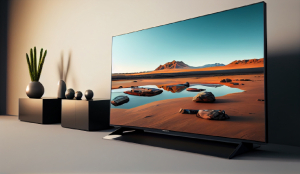
If you have recently shopped for a television, you have likely seen phrases like HDR, Dolby Vision and Dolby Atmos printed on the packaging. Not everyone knows what they mean or how they affect your viewing experience.
However, if you want to buy yourself a new TV, especially an OLED TV, understanding what these terms mean and their impact on your television’s performance is necessary to make an informed decision.
In this guide, we explain what each of these terms means and why they matter for anyone who watches TV regularly.
HDR stands for High Dynamic Range. It means your TV can display more colours, deeper blacks and brighter whites than an older, traditional television. Without HDR, bright scenes can look washed out, and dark scenes can look flat.
HDR is not a singular entity. It is a category, and other forms of high dynamic range (HDR), including HDR10 and Dolby Vision, each operate in somewhat different ways behind the scenes.
If you switch on high dynamic range (HDR), a sunset will look more realistic, and a night scene will show more detail rather than a black layer.
Dolby Vision is a more sophisticated form of high dynamic range (HDR). Dolby Vision changes the image scene by scene, and sometimes even frame by frame, rather than using a single fixed brightness level for the whole movie. This means:
- Bright scenes stay detailed instead of blowing out
- Dark scenes keep texture instead of turning pure black
- Colours look more natural and smooth across different lighting
For this to work properly, your television must support Dolby Vision, and the program or movie must also be produced in that format. Because of their high contrast and deep blacks, many recent displays, like an LG OLED TV, handle Dolby Vision image quality particularly well.
While Dolby Vision is about picture, Dolby Atmos is all about sound. It is an audio technology that treats each sound as its own separate object, rather than locking it into fixed left, right or rear channels like older sound systems. This means:
- A helicopter can sound like it is flying above you
- Rain can feel like it is falling all around the room
- Explosions and footsteps feel more directional and real
You don't necessarily need a large speaker setup to notice the difference. However, a soundbar or home theatre system properly equipped with Atmos compatibility will deliver the most impact.
Dolby Vision vs Dolby Atmos: Key Differences
Here is the easiest way to remember it:
- Dolby Vision = for your eyes (picture quality)
- Dolby Atmos = for your ears (sound quality)
Dolby Vision needs a supported screen, while Dolby Atmos needs supported speakers or a sound system. They are not competing technologies; they are actually meant to work together, one improving what you see, and the other improving what you hear, at the same time on shows and movies that support both.
Why This Matters for Everyday TV Viewing
You may question whether this matters. Since most people stream movies and TV every day, both systems matter.
Improved HDR and Dolby Vision will make your favourite TV program appear designer-made. On the other hand, even in a small living area, Dolby Atmos speakers make conversation clearer and action scenes bigger.
This is also why screen type matters. Panels such as LG OLED TV models are often emphasised in this domain because OLED pixels can be turned off completely to achieve pure blackness. This functionality fits well with Dolby Vision's goals. It is thus more effective for the technology and the display type to function together rather than independently.
HDR, Dolby Vision and Dolby Atmos are not just marketing buzzwords pasted on an OLED TV box. High Dynamic Range (HDR) boosts overall brightness and colour, Dolby Vision fine-tunes the image scene by scene, and Dolby Atmos brings sound to life in three dimensions.
Whether you are watching a movie, a match or catching up on a program after a long day, they make your viewing experience feel more genuine, detailed and enjoyable.
Which is better, Dolby Vision or Dolby Atmos?
Neither is “better,” since they do different jobs. Dolby Vision improves what you see on screen, while Dolby Atmos improves what you hear. If your setup supports both, you get the best result: a sharper picture with richer, more immersive sound.
Do I need a soundbar if my TV has Dolby Atmos?
Not always, since some TVs have built-in Atmos-supported speakers. However, TV speakers are small and limited. Hence, a proper Atmos soundbar or home theatre system delivers a fuller, more accurate three-dimensional sound experience than standard built-in TV audio.
Does Netflix use Dolby Vision?
Yes, Netflix supports Dolby Vision on many of its shows and movies. You will need a Dolby Vision-compatible TV, a strong enough internet connection and the right Netflix plan, since not all subscription tiers stream in this format.
Does Dolby Vision work with gaming consoles?
Yes, newer consoles like PlayStation 5 and Xbox Series X support Dolby Vision for gaming. This requires a compatible TV, updated console software and a game title that includes Dolby Vision support to display properly.
Can I use Dolby Atmos with wireless earphones?
Yes, many wireless earphones now support Dolby Atmos through virtual surround processing. It is not identical to a full speaker setup, but it still creates a noticeably wider, more spacious sound compared to regular stereo audio playback.