
West Bengal Govt seeks inputs from businessmen for new industrial policy
The West Bengal Government on Tuesday held a nearly three-hour meeting with leading industrialists and representatives of business chambers as it moved towards finalising a new industrial policy.
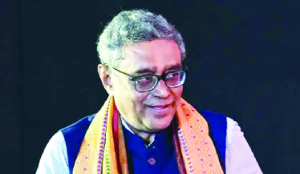
The meeting at state secretariat Nabanna was attended by Chief Secretary Manoj Agarwal, Commerce and Industries Minister Tapas Roy and Labour and Transport Minister Arjun Singh. Finance Minister Swapan Dasgupta and Tourism Minister Shankar Ghosh also joined the deliberations briefly.
The consultation assumes significance as the BJP-led Government of Chief Minister Suvendu Adhikari seeks to position West Bengal as an investment destination and restore industrial activity and employment in a State where land acquisition has long remained a politically sensitive issue.
The Government has been working on a new industrial policy as well as a new incentive policy, with the stated objective of attracting investment and creating jobs.
Speaking to reporters after the meeting, Roy said the Government sought the views of the industry before finalising the policy.
“We listened carefully to everyone’s views and noted them. All these important suggestions will be incorporated into the proposed industrial policy,” he said.
Roy said such consultation was a positive initiative that had not been undertaken earlier in the State in this manner.
The meeting also brought the politically fraught issue of land for industry back into focus, with participants discussing the challenges involved in land acquisition.
Roy sought to reassure the industry that the Government would proceed with caution and transparency in this regard.
He said the Government would not take any step that hurt the interests of industry or breached the trust of the people, adding that all decisions would be taken with a “transparent and positive approach.”
The BJP Government has made industrial revival and investment a key plank of its economic agenda, contrasting its approach with the previous TMC administration, which had moved away from several industrial incentives and maintained that public resources should instead be directed towards socio-economically disadvantaged sections.
The State Government had earlier indicated that it was considering a fresh package of industrial incentives, including measures to make investments more attractive.
The political messaging around the new industrial policy is also significant. The Adhikari Government, which came to power this year, ending the TMC’s 15-year-long rule in West Bengal, is seeking to combine a more investor-friendly policy framework with a narrative that the State can once again emerge as a major industrial hub. Arjun Singh, meanwhile, pointed to the Centre’s interest in sectors with a large employment footprint in West Bengal.
Referring to his recent discussions with Union Finance Minister Nirmala Sitharaman, Singh said she had a clear understanding of the state’s economic situation and had shown particular interest in two areas: the development of tea garden workers and protection of the textile sector and weavers.
“Nirmalaji has always been deeply connected with the situation in West Bengal. She has visited the State several times in connection with BJP’s campaign and to oversee the overall situation. Apart from financial matters, she also has a clear understanding of the State,” Singh said.
He said the Centre’s specific interest in tea garden workers and the textile and handloom sectors could prove beneficial for workers dependent on these industries.
The emphasis on tea and textiles also carries political and economic significance for the BJP Government, given the concentration of tea plantations in north Bengal, the party’s stronghold, and the large number of workers and traditional artisans dependent on the textile and handloom economy across the State.
The State Government’s outreach to the industry comes at a time when it is attempting to rebuild investor confidence through policy changes, industrial incentives and infrastructure expansion.
For the BJP Government, the challenge is to demonstrate that West Bengal can offer investors predictable rules, access to land, administrative support and a stable policy environment — areas that have often figured prominently in debates over the State’s industrial decline.
The new policy is therefore expected to be closely watched by both industry and political opponents as an early test of the Government’s promise to make investment and job creation central to its economic agenda.