
Wearing our Oxidised nomadic past
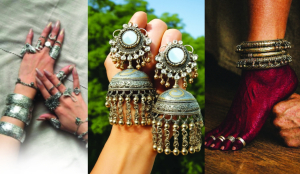
Uncovering how the heavy silver of nomadic tribes became today’s boldest oxidised street style obsession
Open Instagram or YouTube, and massive oxidised jewellery hauls completely dominate the screen. Young women are eagerly stacking thick tribal rings, piling on heavy bangles, and wearing layers of chunky neckpieces all at once. This dark, tarnished metal carries a deep past, forged originally by nomadic tribes centuries ago. The frantic rush to secure the perfect oversized jhumka entirely consumes the crowded alleys of Sarojini Nagar, Dilli Haat, and Janpath. The same shopping madness takes over Mumbai’s Colaba Causeway, Pune’s FC Road, and Bangalore’s Commercial Street. Pairing these raw, vintage-finish ornaments with everyday street fashion requires genuine skill. It brings ancient Indian heritage right into the middle of modern city life.
You can’t really grasp this modern obsession without tracing the dark metal straight back to the tribal belts of Rajasthan, Gujarat, and Madhya Pradesh. For nomadic communities like the Banjaras and Rabaris, piling on these heavy, clinking pieces was never just a look; it was a bold, walking declaration of their wealth and rank. Their entire cultural identity was literally cast in silver. The original craftsmen sat in cramped workshops, using sulfur to burn a deep black tarnish onto bright metal. They were the ultimate record keepers, carving the stories of their people into every heavy choker. But as we see too often, societies eventually fail to support the very artists responsible for keeping their history alive.
True oxidised jewellery happens when sterling silver decays chemically. As silver prices exploded over the decades, the market completely changed. Traditional artisans hit a wall. Facing shrinking heritage spaces and with almost zero stage left to stand on, they had to adapt fast to survive. They shifted to German silver, white metal, and brass, manipulating these cheaper metals to mimic that exact ancient finish. They refused to accept the forced silence that so many masters in artistic communities face. By fiercely guarding their old motifs, the peacocks, temple gods, and tribal geometry, they made sure their craft survived. When young women stack these vintage-finish pieces, they are literally keeping the pulse of those original creators beating.
On Cultural Respect vs Commercialisation:
“Oxidised jewellery is rooted in India’s tribal, nomadic, and regional craft traditions, preserved by artisans across generations. As designers, our responsibility is to honour this legacy, reinterpreting its artistry through a contemporary lens while paying homage to the past.”
On Gen Z Layering Traditional Silver with Western Wear:
“Gen Z effortlessly blends cultural roots with global influences. Chunky oxidised jewellery makes a bold statement, adding character to contemporary looks. Its craftsmanship and connection to India’s artistic traditions make heritage relevant and wearable for a new generation.”
Desginer Aditi Khandelwal, Co-founder, Kicky & Perky Jewellery