
Vijay Kumar questions NRAI coaching appointments, federation says he had also appeared in interview
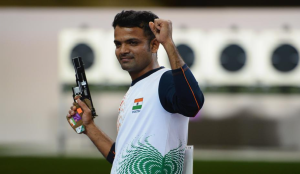
Olympic silver medallist Vijay Kumar has sought an independent review of the National Rifle Association of India's (NRAI) coaching appointments, questioning the transparency of the selection process, but the sport's governing body asserted that appointments are made strictly on merit.
In a letter addressed to the Sports Ministry and Sports Authority of India (SAI), Kumar, a Khel Ratna recipient, sought a review of the eligibility criteria, appointment procedures, deployment and performance assessment of the current NRAI coaching panel.
Kumar, who had earlier approached the Prime Minister's Office over his non-selection for a coaching position with the NRAI, added that his latest representation was not directed against the federation or any individual, but sought systemic scrutiny of the national coaching programme.
"My sole objective is to ensure transparency, fairness, accountability and the appointment of genuinely capable coaches for Indian shooting," Kumar said in the letter.
When contacted, NRAI secretary Rajiv Bhatia described it as what appeared to be a case of sour grapes.
"He had also appeared before the (selection) committee for an interview. The selections are done following the established criteria. He is saying this now because he was not picked by the committee.
"Being a good athlete does not necessarily mean that you would also be a good coach.
"After he has written this, the sports ministry sought our response to this and we gave the appropriate reply. It ended there," Bhatia told PTI on Thursday.
The shooter, however, said his intervention should not be viewed merely as a personal grievance arising from his own non-selection.
"Having represented India at the highest level and having won an individual Olympic medal, I believe I have a responsibility to raise concerns which may affect the development of the next generation of Indian shooters," he said.
The former shooter sought greater scrutiny of potential conflicts of interest involving national coaches who may simultaneously operate or own private shooting academies, provide private coaching or have commercial interests in shooting facilities and equipment.
Referring to recent media reports about complaints concerning alleged conflicts of interest and private coaching involving shooting coaches, Kumar said such reports should be independently verified through a proper process.
"I also urge SAI and NRAI to undertake due diligence before appointing or retaining coaches facing pending criminal, disciplinary, vigilance or other serious proceedings relevant to athlete safeguarding."
Kumar cited the Supreme Court's rejection of coach Ankush Bhardwaj's anticipatory-bail plea in a POCSO case, while stressing that the court order does not amount to a finding of guilt and that the legal rights and due process of the concerned individual must be respected.
The Olympic medal winner has separately sought details of appointments made after the death of coach Jaspal Rana on June 12, including the appointments of Harpreet Singh and Vivek Singh.
"If the appointments were made under an emergency/exceptional provision, the applicable rule and reasons may kindly be disclosed," Kumar said, while questioning what he described as the possibility of "backdoor entry".
Kumar has also requested SAI to obtain and examine the complete records relating to the selection and appointment of every national coach and verify their competitive records, coaching experience and qualifications.
Another issue raised by Kumar is the utilisation of SAI-funded coaches.
He has sought records detailing the number of working and coaching days of each coach, camps attended, athletes trained, competitions accompanied, training programmes undertaken and performance outcomes.
He has also asked SAI to examine whether coaches, who are paid throughout the year from public funds, have been utilising the funds properly, particularly if they are deployed only for limited periods.
Kumar has also proposed a formal minimum eligibility framework for national coaches, suggesting that preference be given to candidates with international competitive experience and successful representation at events such as the Olympics, Asian Games, Commonwealth Games, World Championships and ISSF World Cups.
He has also called for coaching appointments to be based on demonstrable technical competence and measurable coaching outcomes rather than merely federation recommendations.