
UP sarpanch's push brings free sanitary pads to Ballia village schoolgirls
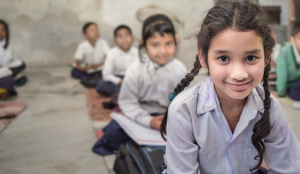
In a village in Uttar Pradesh's Ballia district, young sarpanch Smriti Singh is trying to ensure that schoolgirls do not have to choose between their health and education every time they get their periods.
Singh, sarpanch of Ratsar Kala, was alarmed to learn that several girls and women in her village were using ash, wheat stubble and tattered rags during menstruation because they could not afford or access sanitary pads. Some girls were also facing health problems and missing school as a result.
Determined to address the problem at the grassroots, Singh began collaborating with feminine hygiene brands for help. Responding to her appeal, everteen organised a rural menstrual hygiene camp and distributed free sanitary pads, period trackers, period calendars and awareness material to hundreds of girls studying at Government School, Ratsar Kala, and Government Ratsar Inter College.
The initiative aimed to give adolescent girls from economically weaker families greater access to safe menstrual products and encourage them to manage their periods with dignity and confidence.
"On speaking with girls and women from my region, I learnt that during their periods, many are forced to use ash, wheat stubble and tattered rags. As a result, they struggle to maintain menstrual hygiene, face health problems and even drop out of school. From the bottom of my heart, I am thankful to everteen for responding to my appeal and sending free sanitary pads, period trackers and period calendars for these girl students," Singh said.
Chirag Pan, CEO, PAN Healthcare, said the company was inspired by the young sarpanch's initiative. "When we saw the email from young village sarpanch Smriti Singh requesting support for the girls of her village, we were deeply inspired by her proactive efforts to improve menstrual hygiene standards in her community. Leaders like her demonstrate how meaningful social change often begins at the grassroots. At everteen, we believe that access to menstrual hygiene is fundamental to health, dignity, education and gender equality, and we are honoured to partner with her in advancing menstrual health in rural India," Pan said.
Dr Alpna Kansal, president of the Indian Medical Association (IMA), Ghaziabad, said menstrual hygiene should be treated as an essential public health issue. An analysis of NFHS-5 data, published in the PeerJ journal, found that women using hygienic menstrual materials reported a lower prevalence of reproductive tract infections, she said. "From a clinical perspective, we routinely see preventable health problems arising from poor menstrual hygiene practices. Improving access to quality menstrual hygiene products, together with accurate education, is one of the simplest and most effective public health interventions for adolescent girls," she said.
Singh has emerged as a grassroots leader with a focus on women's empowerment and education. She first came into the national spotlight after reportedly setting a record for the highest victory margin in a Gram Pradhan election. She has also received the Deendayal Upadhyay Panchayat Sashaktikaran Puraskar, instituted by the Ministry of Panchayati Raj, and has been honoured by Uttar Pradesh Chief Minister Yogi Adityanath.
She represented India at a SAARC conference in Nepal and participated in UN Women's "She Leads" programme on women's leadership and public policy.
Over the years, everteen has conducted menstrual hygiene awareness programmes in schools and colleges and supported sanitary pad vending machines. Its campaigns, including #FixYourPeriods, #SheNeedsPad, #PadHerLife and #BloodyHypocrisy, have sought to encourage conversations around menstrual health and challenge taboos and myths.
For girls in Ratsar Kala, however, the message is more immediate: that menstruation should not prevent them from going to school, participating in daily life or dreaming of a better future.
(With inputs from PTI)