
Understanding the law beyond the controversy
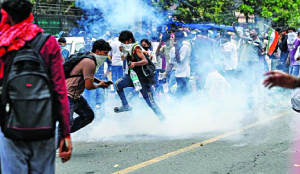
The recent controversy surrounding the alleged use of pellet guns during the CJP-led agitation at Delhi's Jantar Mantar has once again ignited a nationwide debate on police use of force. Allegations and counter-allegations have dominated television debates, social media and political discourse, yet the larger issue remains poorly understood: the legal framework governing the use of force by the police.
Public opinion is often shaped more by emotions than by law. As someone who has spent decades in policing and public order management, I believe it is important to explain what the law actually says, what powers have been conferred upon the police, what safeguards exist against misuse, and why, in exceptional circumstances, the use of force becomes both lawful and necessary. India is a constitutional democracy where every citizen enjoys the fundamental right to peacefully assemble and express dissent.
Peaceful protest is an essential feature of democratic governance. However, this right is neither absolute nor unconditional. Once a gathering turns violent or threatens public order, its legal character changes entirely. Earlier, an unlawful assembly was defined under Section 141 of the Indian Penal Code (IPC). The same concept is now covered under Section 189 of the Bharatiya Nyaya Sanhita (BNS), 2023. An unlawful assembly consists of five or more persons sharing a common unlawful object, such as resisting lawful authority, obstructing the implementation of law, committing an offence, damaging property, forcibly taking possession of property, or compelling someone to do an act not required by law. A gathering that begins peacefully can subsequently become unlawful if it resorts to violence, attacks public servants, indulges in arson, damages public property, or endangers public safety. At that stage, the law places a clear responsibility upon the police to restore order. The Bharatiya Nyaya Sanhita also prescribes punishment under Sections 189, 190 and 191 for members of unlawful assemblies.
The next logical question is: what are the police expected to do when such an assembly refuses to disperse? The answer lies in the Bharatiya Nagarik Suraksha Sanhita (BNSS), 2023, particularly Sections 148 to 151, which have replaced Sections 129 to 131 of the erstwhile Code of Criminal Procedure. The law provides a graded mechanism. A police officer not below the rank of Sub-Inspector may order an unlawful assembly, or even an assembly likely to disturb public peace, to disperse. If the crowd refuses to comply, the police may disperse it by using civil force, including arrest, wherever necessary. Most importantly, the law requires that only the minimum force necessary be used. Modern democratic policing follows the principle of graded response. Crowd control ordinarily begins with persuasion, public announcements and repeated warnings. If these measures fail, the police may employ water cannons, tear smoke and other non-lethal methods. If violence escalates further, a controlled lathi-charge may become necessary. Only when these measures prove inadequate and the mob continues to pose a serious threat to life or property, may specialised anti-riot equipment, such as rubber projectiles, plastic pellets or pump-action anti-riot guns, be considered.
Their objective is not to inflict fatal injuries but to disperse violent crowds while minimising the risk of loss of life. Their use nevertheless requires trained personnel, strict supervision and adherence to established standard operating procedures. Only where civil force proves insufficient does the law permit requisitioning assistance from the armed forces, and even then, such deployment is regulated and ordinarily takes place under the direction of the Executive Magistrate or a police officer vested with the powers of an Executive Magistrate under the commissionerate system.
Pellet-based anti-riot systems have been part of India's crowd-control mechanism for over two decades. They gained prominence during prolonged stone-pelting incidents in Jammu and Kashmir. Their operational purpose has always been to disperse violent mobs before circumstances compel the use of live ammunition. In practical policing, they are regarded as an intermediate option between conventional crowd-control measures and lethal force. Every use-of-force decision involves difficult choices. Officers often have only seconds to decide whether to permit a violent mob to torch buses, attack public institutions, assault police personnel or destroy public property, or to intervene using lawful force. During my policing career, I witnessed several incidents where violent mobs resorted to arson, vandalised government property, attacked police personnel and endangered innocent citizens. In such situations, failure to act would itself amount to dereliction of duty. The State has a constitutional obligation to protect the life, liberty and property of every citizen, including those who are not part of the protest. Another legal safeguard that is often overlooked is that the prosecution of police officers for actions taken in the discharge of their official duties requires prior sanction from the Government under Section 151 of the BNSS. This safeguard does not provide immunity for unlawful acts; rather, it protects officers from frivolous or motivated prosecution arising from bona fide operational decisions taken under difficult circumstances.
Equally important is the human dimension of policing. Every police officer deployed during riots is also a citizen and a public servant performing a constitutional duty. Violence against police personnel cannot be justified merely because it occurs during a protest. Assaulting police officers, damaging police vehicles or attempting to overrun security barricades is ultimately an attack on the authority of the State and the rule of law.
None of this should be interpreted as a licence for indiscriminate use of force. Democratic policing demands restraint, professionalism and accountability. Every allegation of excessive force deserves an impartial investigation, and any officer found to have exceeded the limits prescribed by law must be held accountable. At the same time, police personnel acting within the authority conferred by law should not be judged solely through the prism of public emotion. The principle, therefore, is straightforward. The police are legally empowered to use force against an unlawful and violent assembly. Such authority includes graduated measures like lathi-charge, tear smoke, water cannons and, where operationally justified, specialised anti-riot weapons, including pellet-based systems. In the rarest situations involving imminent threats to life, even firearms may lawfully be used, subject to strict legal safeguards. In a democracy, however, force must always remain proportionate, necessary and the last resort. The ultimate objective of policing is not to overpower citizens, but to restore peace, protect lives and uphold the rule of law with the least possible use of force.
The writer is a former DGP; Views presented are personal.