
UAE halts all trade with Iran after accusing Tehran of missile attack
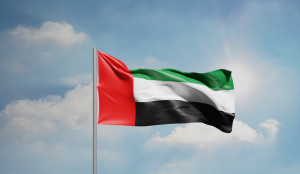
The United Arab Emirates has suspended all trade, commercial exchanges and financial transactions with Iran after accusing Tehran of launching two ballistic missiles towards the Gulf state.
The UAE defence ministry said its air-defence systems detected two ballistic missiles launched from Iran on Tuesday. The ministry's assessment indicated the missiles had been targeting maritime traffic. One missile fell into the sea outside the UAE's territorial waters, the other within them. No damage or injuries were reported.
The incident triggered an emergency alert on residents' phones. It was described as the first direct Iranian attack on the UAE since May.
Iran denied the accusation. Foreign Ministry spokesperson Esmaeil Baghaei "completely rejected" the UAE's claim and described the allegation as unfounded and harmful to regional efforts to rebuild trust, according to a statement issued by the Iranian Foreign Ministry. "This behaviour is contrary to the principle of good neighbourliness and disrupts ongoing efforts to strengthen trust between regional countries and prevent the escalation of insecurity in the region," Baghaei said.
The spokesperson also called on regional parties to refrain from making "baseless accusations" against Tehran. He cited the "ongoing evils of the US and the Zionist regime against regional peace and security, especially the history of numerous false flag operations", according to the statement.
Following the missile incident, the UAE foreign affairs ministry announced a sweeping suspension of economic engagement with Iran. It said that "in light of regional escalations that undermine regional and international peace and security, all trade, commercial exchanges, and financial transactions with Iran have been halted until further notice".
The decision threatens to disrupt the gradual restoration of economic and diplomatic links between Abu Dhabi and Tehran. Trade between UAE and Iranian ports had resumed in some areas, while certain Iranian flights to the UAE had also quietly returned. Emirati authorities had started allowing some 20,000 Iranian residents who were outside the country when the war began to return to the UAE. The emergency alert issued on Tuesday was the first such warning in several months, apart from a false alert in June.
The confrontation follows more than two months of efforts by Abu Dhabi and Tehran to reduce tensions that had escalated sharply after the US and Israeli war against Iran began on February 28. During the conflict, Iran launched repeated missile and drone attacks against neighbouring Gulf states, including the UAE. The UAE was among the Gulf states most heavily targeted, sustaining almost 3,000 missile and drone attacks. Abu Dhabi also carried out scores of strikes against Iran.
Tensions subsequently eased after Washington and Tehran reached a memorandum of understanding in June. The agreement began to unravel in early July, after which Iran shifted much of its military focus towards Bahrain, Kuwait and Jordan. In recent months, the UAE had sought to rebuild diplomatic and economic channels with Iran while maintaining close military ties with Israel and the United States.
The missile incident is part of a broader confrontation over the Strait of Hormuz, one of the world's most important maritime routes for oil and gas shipments. The UAE accused Iran earlier this month of attacking ships operated by Abu Dhabi National Oil Company in the strategic waterway. Tehran has also maintained restrictions on traffic through the strait while issuing increasingly aggressive military rhetoric.
On Tuesday, an unidentified projectile struck a ship as it sailed out of the Strait of Hormuz off the coast of Oman. The United Kingdom Maritime Trade Operations centre said the strike damaged the vessel's engine room and caused a casualty, while the Omani Coast Guard assisted other crew members. Another cargo vessel was struck by multiple projectiles about 74 kilometres southeast of Mokha in Yemen and was declared a "constructive total loss", according to the British maritime monitoring agency.
The maritime tensions have also drawn Oman into a dispute between Washington and Tehran. US President Donald Trump threatened to bomb Oman after becoming dissatisfied with an emerging agreement between Muscat and Tehran aimed at managing ship traffic through the strait, according to two regional officials cited by The Associated Press. Trump later posted a map on social media depicting the Strait of Hormuz as US territory.
Iranian Deputy Foreign Minister Kazem Gharibabadi responded to Trump's remarks on social media. "Just as Trump correctly wrote the name of the eternal Persian Gulf, his delusion regarding the Strait of Hormuz will soon either be corrected, or we will correct this deluded man's delusions for him," he wrote on X.
(With inputs from PTI)