
Tunnel collapse: Safety cannot be an afterthought
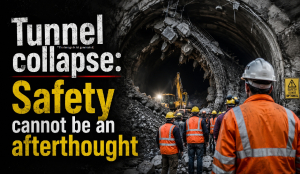
The tragedy at the Teesta Stage-VI project in Sikkim already feels depressingly familiar — we fail to prioritise safety systems
The tunnel — part of NHPC’s 500 MW Teesta Stage-VI hydropower project, built by contractor Patel Engineering - caved in on July 20 after workers reportedly tried to vent a pocket of naturally occurring methane gas trapped in the rock. That attempt is suspected to have triggered an explosion, which set off a landslide, sealing the tunnel’s mouth. Of the 27 people inside, only two could escape.
Days on, NDRF, SDRF and mine-safety teams are still fighting low oxygen, carbon monoxide and blocked debris to reach those unaccounted for, as the confirmed toll keeps climbing. What makes this tragedy so hard to accept is how familiar the warning signs look in hindsight.
Methane pockets trapped in young Himalayan rock are a known hazard in this terrain, and standard practice calls for careful monitoring and controlled release — not an on-the-spot venting attempt near a live worksite. That such an attempt could trigger an explosion powerful enough to bring down the tunnel roof points to a breakdown in monitoring, ventilation or protocol — questions the promised inquiry must answer honestly, not defensively. This is not an isolated failure.
In 2023, all 41 workers trapped in Uttarakhand’s Silkyara tunnel were pulled out alive after a globally watched 17-day rescue. In 2025, a similar collapse at Telangana’s SLBC tunnel ended far worse, with most trapped workers never recovered alive. Each time, officials promise inquiries and stricter norms; each time, the cycle repeats at the next site, and another list of names is read into a moment of silence — as Sikkim’s Assembly did this week for the Samardung victims. Preventing a repeat needs more than compensation cheques, necessary as those are for grieving families.
India needs mandatory, real-time gas monitoring and ventilation on every underground worksite, not only coal mines; independent safety clearances that precede construction rather than follow disaster; enforceable protocols for handling suspected gas pockets; and public, time-bound accounting of past inquiries, so contractors understand negligence carries consequences beyond a bad headline.
Migrant workers — Samardung’s victims came from West Bengal, Assam, Punjab and Uttarakhand, and Sikkim itself — deserve written safety briefings, accident insurance and enforced contracts, not just an ex-gratia cheque after they are gone.
The men who died at Samardung were building the power lines meant to light homes hundreds of kilometres away —infrastructure the rest of the country will use without a second thought.
They deserved a worksite built with the same urgency now spent on their rescue. Until India treats tunnel safety as non-negotiable rather than an afterthought, the next collapse isn’t a possibility. It’s a schedule.