
Trump targets Indian IT giants
US suspends Infosys, Tata, Wipro, HCL from green card programme
The Trump administration has widened its crackdown on foreign-worker programmes, suspending major Indian IT companies, including Infosys, Tata, Wipro, and HCL, along with Cognizant and Capgemini, from the US programme employers use to sponsor skilled foreign workers for permanent residency.
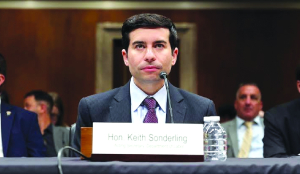
US labor secretary Keith Sonderling said the Department of Labor was suspending the companies from the Permanent Labor Certification (PERM) programme, citing alleged misuse of the system. The department also suspended Microsoft and Adobe and said it would not process new or pending labour-certification applications from the affected companies.
The action matters for Indian technology professionals because PERM is a key step in the employment-based green-card process. It is separate from the H-1B programme, but many foreign technology workers use H-1B status for temporary employment before their employers seek permanent residency on their behalf.
Vice President JD Vance, announcing the action, accused companies of abusing the immigration system and said the administration wanted US employers to prioritise American workers. Sonderling separately named Cognizant, Infosys, Tata, Wipro, HCL and Capgemini among the major IT outsourcing companies being suspended. The allegations have not been established in court.
The action adds to pressure already building on Indian technology companies and their employees. USCIS data for FY2025 showed that 283,772 of 406,348 approved H-1B petitions involved beneficiaries born in India, or nearly 70%. Computer-related occupations accounted for 252,088 approvals, or about 62% of the total.
The Trump administration has also renewed a $100,000 payment requirement for certain new H-1B workers seeking entry to the US from abroad, although the measure is facing legal challenges. A second federal judge blocked the fee on September 30, after an appeals court upheld an earlier ruling.
Under the wage-weighted system introduced for FY2027, higher-paid positions carry more weight in the selection process, increasing the relative advantage of higher-wage workers.
The impact is already visible among major technology services companies. An analysis of USCIS data showed H-1B approvals for six major IT services companies fell about 40% to 11,041 by March 2026, down from about 18,469 a year earlier.
The US is also considering an additional $103,265 fee for each cap-subject H-1B petition.
The proposal, which would add to existing charges, has not yet become a permanent requirement.
For Indian IT companies, the cumulative effect could accelerate a shift away from large-scale routine onsite deployment. Firms could rely more on US-based hiring for roles requiring a local presence, expand India-based delivery, and reserve foreign-worker sponsorship for specialised roles in AI, engineering, cloud, data, and cybersecurity.
For Indian professionals already in the US, the immediate impact of the PERM suspension is different from an H-1B restriction. It does not by itself cancel existing H-1B status or employment. But delays or suspension of employer-sponsored labour certification could complicate the longer-term path to permanent residency.
The latest action therefore takes the US immigration crackdown beyond temporary work visas. For Indian IT professionals, the uncertainty is increasingly extending from getting a US work visa to securing a permanent career path in America.
The Department of Labor was suspending the companies from the Permanent Labor Certification (PERM) programme, citing alleged misuse of the system — US Labor Secretary Keith Sonderling