
Trump announces US-Iran peace deal, Israel balks
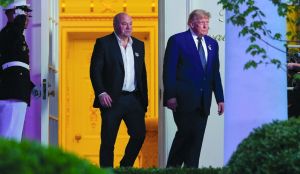
After 107 days of war and global turmoil, Trump announces reopening of Strait of Hormuz, halt to military operations, calming global markets
US President Donald Trump announced that the United States and Iran have finalised an agreement to end their 107-day conflict, a breakthrough that sent oil prices lower and global stock markets higher amid hopes of easing disruptions to energy supplies.
“The Deal with the Islamic Republic of Iran is now complete. Congratulations to all,” Trump said in a post on Truth Social on Sunday evening.
The announcement came shortly after Pakistan Prime Minister Shehbaz Sharif, whose country helped mediate the talks, said an agreement had been reached. According to Sharif, the memorandum of understanding is scheduled to be formally signed in Switzerland on June 19.
US and Iranian officials said they had agreed on a framework that would end hostilities, halt the US blockade of Iran and reopen the Strait of Hormuz, a vital route for global oil and gas shipments.
Trump said the Strait of Hormuz would reopen following the signing of the agreement and that he had ordered an end to the US blockade of Iranian ports.
“Ships of the World, start your engines. Let the oil flow!” Trump wrote.
The precise terms of the agreement have not been made public.
Sharif said the pact called for “the immediate and permanent termination of military operations on all fronts, including in Lebanon.”
In a statement, Iran’s Supreme National Security Council said military operations on all fronts, including Lebanon, would end permanently starting Monday night.
Iran’s deputy foreign minister Kazem Gharibabadi, said broader negotiations would continue during a 60-day ceasefire period, including discussions on sanctions relief and the future of Iran’s nuclear programme.
The nuclear issue remains one of the most contentious aspects of the negotiations. Sources had previously told Reuters that it would be addressed in the follow-up talks.
The war had become a growing political challenge for Trump ahead of the US midterm elections, with rising fuel prices weighing on public sentiment.
Republican Senator Lindsey Graham welcomed the agreement but said scrutiny would now shift to the nuclear negotiations.
“Under our law, any nuclear deal with Iran will be sent to Congress for review and a vote,” he said. “Congratulations to all in getting us to this point.”
Vice President JD Vance said the agreement had already been signed electronically over the weekend and rejected suggestions that Iran would receive immediate financial benefits.
“We already signed the deal digitally yesterday, and there’s been no money released. And that won’t change,” Vance said on ABC’s Good Morning America.
However, Trump has said the formal signing ceremony will take place in Switzerland on June 19 and that the reopening of the Strait of Hormuz will follow that signing.
Iran also signalled that shipping through the Strait could involve service-related charges.
Foreign Ministry spokesman Esmaeil Baghaei said Iran was not seeking transit tolls but would collect fees for services such as navigation support, environmental protection and potentially ship insurance provided jointly with Oman.
“We have always said that we are not seeking to collect transit tolls. However, in return for the services that we will provide - including navigation services, environmental protection, potentially ship insurance and other services offered by Iran and Oman - the necessary costs will be covered and the corresponding fees will be collected,” Baghaei was quoted as saying by the state-affiliated Tasnim news agency.
In a joint statement, the United Kingdom, Germany, France and Italy said they were prepared to lift sanctions on Iran in response to “clear, verifiable steps” to limit its nuclear programme.
“We are clear that toll-free freedom of navigation must now be restored in the Strait of Hormuz,” British Prime Minister Keir Starmer said. “Iran must never have a nuclear weapon.”
The coming weeks are expected to determine whether the ceasefire framework can be converted into a broader agreement covering sanctions, nuclear restrictions and long-term regional security arrangements.
Iran’s deputy foreign minister said broader negotiations would continue during a 60-day ceasefire period, including discussions on sanctions relief