
Tibet’s next test: Keeping the cause alive after Dalai Lama
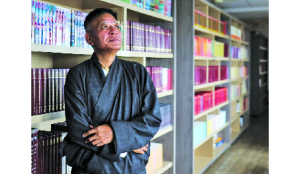
“Hope for the best, but prepare for the worst.” So Sikyong Penpa Tsering sums up the Tibetan cause. “We are prepared to carry on this movement, even if it will take several more decades in the future,” he says.
After more than six decades in exile, the movement faces a double test: whether Tibetans can ever bring Beijing to the table and, increasingly, whether the cause can stay politically relevant while China grows stronger and the generation shaped by the 14th Dalai Lama approaches an uncertain handover.
I recently spoke to Tsering about the Middle Way Approach, talks with China, life after the Dalai Lama and the interests of India and others. His reading is unsentimental. “Every country has their national interest at heart,” he says. “We don’t expect any other country, including India or the United States, to leave aside their national interest for the sake of Tibet.”
Tsering became Sikyong of the Central Tibetan Administration (CTA) in 2021 and won a second term in the 2025-26 election. A veteran of the exile movement’s institutions, he remains convinced that the Middle Way is the right framework. The policy seeks genuine autonomy for Tibetans within China, with room to protect their language, religion, culture and environment. “We find nothing wrong in the Middle Way policy,” he says. “The Middle Way policy addresses China’s main concerns of sovereignty.”
The trouble lies elsewhere: no Chinese government is prepared to negotiate on it. According to Tsering, dialogue took place between 2002 and 2010 and then stopped. Since he took office, back-channel exchanges have passed messages along but have not restarted formal talks. “Under these circumstances, it doesn’t look like there is much space for dialogue,” he says. He refuses, however, to treat that silence as proof of failure.
The wider world has made the task harder. Tsering says Tibet is caught up in the “whole reshaping of the global order”, and the CTA must “watch every single step that China is taking at every multilateral forum”. India sits at the most delicate point. Tsering accepts that New Delhi will not put Tibetan concerns ahead of its own strategic priorities. The task, as he sees it, is to find where the two sets of interests meet. “How do we bring our interests and that nation’s interests together?” he asks.
The Tibetan Plateau offers one such meeting point. Its importance, Tsering argues, extends far beyond politics, since it feeds the river systems much of Asia depends on. Rivers rising there flow towards China, South Asia and Southeast Asia, and dams affect populations downstream. “When we talk about the environment of Tibet, we are not talking only about Tibet,” he says. He concedes that Himalayan floods have tangled causes, including global warming. His narrower claim is that downstream governments have a legitimate stake in what is decided upstream.
Within Tibet, the fight is bound up with cultural survival. Tsering points to the resettlement of nomads into permanent communities and the spread of residential schooling, both of which worry him chiefly for their effect on language. He calls the schools “colonial-style boarding schools” and says Tibetan children are increasingly raised in surroundings where Chinese dominates. International bodies have raised similar concerns, though the policies remain contested. Beijing presents them as regional ethnic autonomy, development, education, cultural protection and national unity.
Tsering places Tibetan identity in a longer lineage. “The Tibetan language, the script came from India. Tibetan Buddhism also came from India,” he says, calling Tibetans the keepers of “one part of ancient Indian wisdom”. Yet he has no wish to freeze the tradition in time. “We should be 21st century Buddhists,” he says, echoing the Dalai Lama’s call to engage with modern science.
The exile community is changing too. Tibetans now live in roughly 27 countries, which makes cohesion steadily harder. Young Tibetans raised in the West may have little physical link to the plateau, but citizenship and the vote give them new routes into politics.
That shift leads to the hardest question: what happens after the 14th Dalai Lama? “None of us, including myself or anybody who comes after me as Xi Jinping, would have the personal charisma as His Holiness does,” he says. More than a globally known figure is at stake. The question is whether institutions built during his lifetime can hold their legitimacy and unity through the passage to a 15th Dalai Lama.
The CTA, therefore, must function without leaning wholly on one person. Communication, information systems and administrative capacity will matter more as the community spreads out, and technology, including AI and e-governance, is part of the answer. But the aim is political: keeping Tibetans’ trust. “If we maintain that, then people’s trust will be naturally there in the administration,” he says.
Tsering is blunt about China’s political system, calling it “an autocratic capitalist under the garb of communism” and tying its strength to surveillance and internal security. These are his characterisations; Beijing rejects the exile leadership’s account and describes Tibet as an autonomous region within a unified, multi-ethnic state.
Nor is he relaxed about Beijing’s reach abroad. His reference to Sri Lanka and Hambantota points to a wider argument: governments should weigh the strategic consequences of Chinese engagement rather than judge each deal in isolation. “Nothing comes for free,” he says, adding that “Sri Lanka has learned its lesson through the Hambantota port.”
Throughout, Tsering keeps returning to nonviolence. “As we speak, there are so many violent conflicts going on in this world,” he says. “The major strength is the nonviolent nature of our struggle.” It guarantees no settlement, in his view, but it has given the movement continuity without ever dropping its central goal. “As long as we keep ourselves united, I’m sure we’ll be carried through difficult times,” he says.
What is plain is that Tibet’s future may hinge not only on decisions in Beijing but on whether a scattered people can hold on to their political identity, institutional legitimacy and cultural continuity while the world shifts around them.
The writer is a columnist based in Colombo; Views presented are personal.