
Endangered Sumatran tiger cubs born in Greece as zoos build safety population
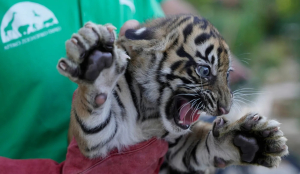
Three Sumatran tiger cubs born at a zoo near Athens are offering fresh hope for one of the world's most endangered tiger species, as zoos work to maintain a backup population for possible future reintroduction into the wild.
The two-month-old cubs received identification microchips and their first vaccinations on Tuesday at Attica Zoological Park as part of a global conservation effort to build a safety population of the species.
The Sumatran tiger is classified as critically endangered by the United Nations and conservation groups and is found only on Indonesia's Sumatra island, which is slightly larger than Sweden. As few as 400 are estimated to remain in the wild, with aggressive forest clearing among the main threats to their survival.
“The Sumatran tiger is one of the most threatened tiger species in the world, and among felines in general,” said Theodoros Babilis, head keeper of cats and monkeys at Attica Zoological Park.
European zoos and others around the world are maintaining a safety population of the species, he said, “so that in the future there can be potential reintroductions of this species into the wild.”
The Sumatran tiger is the world's smallest tiger species, although males can grow up to 2.55 metres (8.4 feet) long and weigh as much as 140 kilograms (309 pounds).
Known as skilled swimmers and climbers, the tigers use dark stripes unique to each animal, much like a fingerprint, to blend into dense forests while hunting deer, wild pigs and smaller mammals.
The cubs, born in early July to mother Toba and father Argos, have already developed sharp claws and teeth, making even routine handling challenging, Babilis said. Argos has since died of cancer.
The two males and one female were restless during Tuesday's vaccinations, requiring veterinary staff to work with assistance and transport the cubs back and forth in carriers on electric buggies.
The surviving cubs are expected to be named after characters from Homer's “The Odyssey”, zoo staff said.
“The tigers don't like to be handled. They're very wild,” said Dr Arsenoi Psaroudaki, a zoo and wildlife veterinarian, explaining that staff have to complete procedures quickly to minimise stress.
The cubs were fitted with microchips that were logged in a shared database and given a vaccine similar to one commonly administered to cats, protecting them against three diseases.
For Psaroudaki, the demanding work is worthwhile because it offers “some hope for safeguarding these really rare cats.”
“It's very humbling to be able to work with the rarest tiger species in the world,” she said.