
“The relations between the two countries have reached an exceptional level”
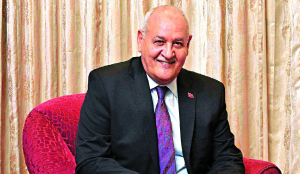
Regarding the presence of Indian companies in Morocco, the number has risen from 13 at the time of the Royal visit to more than 45 companies
First, how would you describe the current state of relations between the two countries compared to previous years or even decades?
Moroccan-Indian relations date back to 1957, shortly after Morocco gained its independence. For many decades, these relations remained cordial and stable, yet relatively limited in terms of depth and diversity. The two countries maintained good diplomatic ties and cooperated primarily within multilateral frameworks-such as the Non-Aligned Movement-with the relationship based largely on political goodwill rather than a sophisticated strategic partnership.
However, following New Delhi's recognition of the fictitious entity in October 1985-prompted by certain states hostile to Morocco's territorial integrity-Morocco downgraded its diplomatic representation in Delhi, and bilateral relations came to a near-standstill. A turning point occurred with the visit of former Indian Prime Minister Atal Bihari Vajpayee to Morocco in February 1999. During this visit, he held extensive talks in Rabat with the late King Hassan II-may God rest his soul-covering various topics of mutual interest and focusing on the future prospects of cooperation between the two nations; subsequently, Morocco restored diplomatic representation to the ambassadorial level. This visit was followed by a trip to India in February 2000 by his Moroccan counterpart, the late Prime Minister Abderrahmane Youssoufi.
This exchange of high-level visits led India to withdraw its recognition of the fictitious republic on June 26, 2000, and to announce its support for United Nations efforts regarding the issue of the Moroccan Sahara. Within this dynamic context, these relations reached a significant turning point through the royal visits of 2001 and 2015. These visits served as pivotal milestones that injected new momentum into bilateral ties and ushered in a more dynamic phase, thereby fostering fresh political and economic impetus and encouraging the expansion of cooperation between the two nations.
Since then, bilateral relations have gained increasing momentum, evidenced by a surge in high-level official visits-exceeding thirty at the ministerial level-as well as strengthened military cooperation, marked by the appointment of a military attaché to the Moroccan Embassy in New Delhi.
You served as Morocco's Ambassador to India for nearly a decade; how would you describe the evolution of the partnership between the two countries since the Royal visit to India in 2015?
I consider myself very fortunate to have had the honor of welcoming His Majesty the King-may God preserve him-and being appointed as His Majesty's Ambassador to the Republic of India, in addition to being accredited as a non-resident ambassador to four other nations: the Republic of Maldives, the Kingdom of Bhutan, the Democratic Socialist Republic of Sri Lanka, and the Republic of Nepal. This appointment came at a significant juncture, occurring just over a year after His Majesty the King's historic visit to India to participate in the Third India-Africa Forum Summit in October 2015. The importance of this milestone lies in the fact that the leaders of both countries-His Majesty the King and the Prime Minister of India-met on the sidelines of the summit and decided to elevate bilateral relations to the level of a strategic partnership, building upon the substantial momentum already achieved across various fronts. Following this decision, the governments of both countries-alongside their diplomatic missions in Rabat and New Delhi-were tasked with laying the foundations for this strategic partnership in a manner befitting their mutual ambitions. This effort focused particularly on areas of strategic cooperation-such as counter-terrorism, military collaboration, and the space sector-as well as on the economy, trade, and investment.
Since then, the two nations have worked within the framework of this partnership, propelling their bilateral relations to an advanced strategic level characterized by significant momentum and diversity. It is worth noting that India has become central to the foreign policy direction established by His Majesty the King during the second decade of his reign-a policy based on diversifying partners and opening up to emerging nations of regional and global significance, while simultaneously strengthening existing ties and building upon past achievements in traditional relationships. This approach has imbued Moroccan-Indian relations with a clear strategic dimension, which the leaders of both countries seek to reinforce in a way that serves their mutual interests and aligns with their shared aspirations.
It can be stated with confidence that relations between the two countries have reached an exceptional level. This is evidenced by the frequency of high-level reciprocal visits and the growth of trade, which has surged from an annual average of approximately $1.5 billion to over $4 billion.
Regarding the presence of Indian companies in Morocco, the number has risen from 13 at the time of the Royal visit to more than 45 companies operating directly in the Kingdom, alongside approximately 200 companies operating indirectly-thereby contributing to job creation and the strengthening of investment within the Kingdom. Under no circumstances can these results be viewed as the work of a single individual or a small group of people; rather, they are the product of political will at the highest level and the sustained efforts of both governments. This has been supported by a suitable legal framework and a sophisticated investment climate in Morocco-a country that is increasingly attracting the interest of Indian investors. In this light, I view the Embassy's role as part of an integrated institutional ecosystem; each entity, from its respective position, works to implement the wise policy of His Majesty-may God grant him victory-and to strengthen the Kingdom's international presence and strategic relations.
Amidst global geopolitical shifts, how does Morocco view India's role as a strategic partner, and which areas does Rabat consider vital for strengthening this alliance?
Against the backdrop of the transformations the world has witnessed since the start of the third millennium, and under the enlightened leadership of His Majesty King Mohammed VI, Morocco has pursued a policy of diversifying its international partnerships to serve its strategic interests. India has emerged as a key partner, given the relations...
...the strong ties uniting the two nations and the immense potential they possess. Morocco plays a pivotal role in supplying India with fertilizers and their raw materials, thereby contributing to India's food security. Furthermore, thanks to its geographical location and growing economic presence in Africa, Morocco serves as a key partner for India in accessing the continent's markets, particularly in West and Central Africa.
Today, Moroccan-Indian relations are anchored in several key pillars-including economic, political, and cultural cooperation, as well as coordination within multilateral frameworks. The two countries have also intensified diplomatic engagement through the exchange of official visits and the signing of numerous agreements across diverse sectors. These agreements have moved beyond traditional trade to encompass education, renewable energy, information technology, and technical cooperation, gradually transforming the relationship into a deeper and more dynamic partnership.
How would you describe the current level of trade between the two countries? How can it be elevated to truly reflect the nature of the partnership that the leadership in both nations seeks to establish?
Bilateral trade between Morocco and India has experienced significant growth, particularly in recent years; trade volume hovered around $2 billion annually after 2020, eventually reaching a record high of over $4 billion in 2022. Based on preliminary data, trade volume is projected to reach approximately $4.5 billion by 2025. This momentum reflects the efforts of both countries to diversify the range of traded products and to strengthen and develop the dynamics of their economic relations. Moroccan exports to India consist primarily of phosphates, phosphoric acid, fertilizers, scrap metal (aluminum, copper, iron, steel, lead, and zinc), as well as certain electrical and electronic components and textile products. India's exports to Morocco, meanwhile, mainly comprise petroleum oils, mechanical and electronic equipment, automobiles, textiles, pharmaceuticals, chemical products, cotton, spices, coffee, and rice.
High-level reciprocal visits-most notably the visit by His Majesty the King to India in 2015-have played a pivotal role in elevating the relationship between Morocco and India to a strategic level across multiple fronts. Nevertheless, there remains immense potential to expand bilateral trade by diversifying commercial sectors and encouraging investment. Indian economic stakeholders are well aware of Morocco's logistical strengths and its robust infrastructure-including ports and airports-which enable the Kingdom to serve as a hub that facilitates and stimulates trade and investment both domestically and globally.
In this context, economic actors from both nations are showing growing interest in strengthening cooperation within promising sectors such as renewable energy, pharmaceuticals, modern technologies, and the agri-food industry. Furthermore, Morocco's strategic location as a gateway to African and European markets acts as a magnet for Indian investors seeking to expand their presence in these regions. Strengthening business partnerships and increasing the frequency of economic forums and trade missions would open new avenues for expanding economic exchange and consolidating a more balanced, sustainable partnership between Morocco and India. 5. Morocco possesses a strategic geographic location, serving as a logistics hub connecting Asia, Africa, Europe, and the Americas. In this context, how can India leverage Morocco's location to strengthen its presence in Africa?
Despite India's growing presence in several English-speaking African economies and in the east of the continent, its economic footprint in West and Central Africa-particularly within the Francophone sphere-remains below the level of its industrial and technological capabilities. This is due to linguistic and regulatory factors, as well as historical business networks that still favor other, traditional players. Against this backdrop, Morocco emerges as a natural partner capable of serving as a strategic platform to boost India's economic presence in West and Central Africa. Over the past two decades, the Kingdom has established a robust institutional, financial, and banking presence across many Francophone African nations, through both its banking institutions and companies operating in sectors such as telecommunications, fertilizers, insurance, and infrastructure. Furthermore, Morocco's advanced logistics infrastructure-led by the Tanger Med port and the future Dakhla Atlantic port-combined with extensive air connectivity provided by Royal Air Maroc, creates an ideal base for re-export and joint manufacturing aimed at African markets within the framework of more integrated regional value chains. Moroccan banks also play a pivotal role in financing and facilitating trade and investment transactions.
Developing joint Moroccan-Indian projects and initiatives specifically targeting West African markets-in sectors such as electrification, potable water, pharmaceuticals, digital technology, renewable energy, and manufacturing-would enable India to facilitate market access, reduce associated costs, and overcome linguistic and regulatory barriers. It would also allow India to leverage the trust Morocco enjoys within its African environment, particularly given the high priority both nations place on the continent's development under the "Agenda 2063" framework. Adopting a trilateral approach (Morocco-India-Africa)-based on joint investment, technology transfer, and local capacity building-could transform Morocco into a strategic lever for enhancing India's presence across Africa, and specifically in West and Francophone Africa, within a balanced and sustainable South-South cooperation framework. This is especially relevant as the implementation of the African Continental Free Trade Area opens up promising prospects, and given the shared desire of both countries to develop Africa's capabilities, including continent-wide electrification and the expansion of high-speed internet and banking services. Therefore, it is crucial to explore ways to develop joint programs aimed at the African continent.
India is advanced in several fields, including digital technology and the pharmaceutical industry; what are Morocco's plans to tangibly leverage this expertise in its national projects?
Morocco seeks to deepen cooperation with India in areas such as digital transformation, cybersecurity, innovation, and the pharmaceutical and vaccine industries. India's experience can be leveraged through technology transfer, the establishment of joint research and development centers and service outsourcing firms, and by encouraging more Indian companies to set up operations in Morocco for production aimed at local, African, and international markets. In the pharmaceutical sector, boosting the local production of medicines and active pharmaceutical ingredients is a strategic priority for the Kingdom; Indian expertise can help bolster the country's health sovereignty-particularly amidst global shifts in supply chains-as Indian investment facilitates technology transfer and human resource training within a "win-win" framework.
It is also worth noting that Morocco is collaborating with India to develop the Unified Social Registry (RSU). This system will enable the rational management and targeting of social support for needy families who require it most. This collaboration stems from a technical and institutional partnership between the Moroccan Ministry of the Interior and various Indian institutions specializing in digital governance-supported by the World Bank-aimed at utilizing India's experience with digital systems for identifying social program beneficiaries. The system rests on two fundamental pillars: the National Population Registry (RNP) and the Unified Social Registry (RSU). Individuals are first registered in a national database that assigns each citizen a unique civil and social digital identifier, enabling the interconnection of various government databases. Subsequently, the socioeconomic status of registered households is assessed using an index based on criteria such as income, housing conditions, and family size. This process aims to identify the most vulnerable groups and precisely target them for public support programs. This system is expected to enhance the effectiveness of social policies in Morocco by minimizing targeting errors and reducing the waste of public resources, while also promoting social equity by directing support straight to those who truly need it.
Morocco could also benefit from India's experience with mobile-based payments-specifically the Unified Payments Interface (UPI) system. UPI has radically transformed India's payment landscape, effectively turning every smartphone into a portable "mini-bank" that enables instant, round-the-clock financial transfers between bank accounts. Launched in 2016 by the National Payments Corporation of India (NPCI), the system rapidly became the backbone of the country's digital payment ecosystem. In recent years, the volume of UPI transactions has soared to hundreds of billions annually, representing a massive financial value and accounting for the largest share of digital payments in India. With hundreds of millions of users and millions of daily transactions, the system has played a pivotal role in reducing reliance on cash and fostering financial inclusion, particularly among populations previously underserved by traditional banking. Its ease of use-allowing payments or transfers in seconds via QR code scanning or simply by using a phone number-has established the Indian experience as a global model for financial innovation and the transition to a digital economy. This system would also serve to better formalize the informal economy, which accounts for more than 30% of total national income.
Do you believe that the rapprochement between Morocco and India aligns with shifts in the international order, the rise of Asian powers, and Morocco's strategy of diversifying its partners?
In addition to what I mentioned earlier, and within the framework of its partnership diversification policy, Morocco views India-a major rising Asian power-as a natural choice for a "win-win" partnership.
This rapprochement is driven by circumstances and geopolitical shifts, as well as a mutual recognition of the opportunities each side offers. For instance, Morocco sees significant potential in India regarding technology. Conversely, the Kingdom offers India and its companies a gateway to African markets.
Furthermore, this rapprochement extends beyond economic and commercial aspects to encompass strategic areas such as energy security, scientific research, and innovation. With its accumulated expertise in pharmaceuticals and digital technology, India is a key partner capable of supporting the development transformation Morocco seeks to achieve. In return, Morocco offers a stable investment environment, a prime geographical location, and advanced infrastructure, all of which enhance its appeal as a reliable partner for India in the region.
Moreover, this rapprochement aligns with major trends in the international order, which is witnessing an increasing multiplicity of power centers, meaning international relations are no longer the exclusive domain of traditional axes. In this context, Morocco seeks to consolidate its position by opening up to various partners and leveraging the dynamism of emerging powers like India. This enables the Kingdom to strengthen the autonomy of its strategic decision-making and expand the horizons of its South-South cooperation, thereby serving national interests and keeping pace with global transformations.
Regarding territorial integrity, how do you view India's stance on this issue?
Morocco considers India's latest position on the national cause to be positive; it advocates addressing the matter within a UN framework and prioritizes dialogue to reach a political solution satisfactory to all parties. Morocco is working with India to achieve a position that is even bolder and more significant for the Kingdom, in light of international resolutions-particularly the recent Security Council Resolution 2797-which enshrines the autonomy proposal as the framework for resolving this artificial dispute.
It is worth noting that Morocco and India share very important principles, including... These include, but are not limited to, respect for the sovereignty and territorial integrity of UN member states, the principle of non-interference in their internal affairs, and the preference for resolving international disputes and conflicts through dialogue.
It is also worth noting that India is a contributor of personnel to the "Blue Helmets" (UN peacekeeping forces), specifically for the MINURSO peacekeeping mission.
What is the significance of Tata opening a factory near Berrechid, and how is Rabat viewed as a partner in developing the military industrial sector?
Tata Advanced Systems' decision to open an industrial unit in Berrechid represents a significant step that reflects Indian investor confidence in the Moroccan business climate. This initiative goes beyond its economic dimension; it holds strategic significance regarding defense industries, technology transfer, and the strategic nature of bilateral relations. The success of this venture is crucial for both countries, as this facility marks India's first military manufacturing unit outside its own territory. It is an undertaking backed by favorable conditions and the necessary means for success, given the confidence it will instill in India regarding overseas investment in this sector. Consequently, Tata's choice of Morocco for this inaugural facility serves as a guarantee of the venture's success-not only for the Indian group but for India as a whole. It is quite possible that this defense industry investment will pave the way for similar ventures in Morocco; following this success, numerous Indian companies have expressed interest in investing in the Kingdom within the defense industry and other sectors. It is also worth noting that the Indian company Tata is renowned for its integrity and transparency, which reflects the high quality of Morocco's business environment. For our country, this experience serves as a catalyst for companies from other nations to invest in a sector to which Morocco-under the wise leadership of His Majesty the King, may God grant him victory-attaches paramount importance. The goal is to achieve national sovereignty in the defense industry, not only to meet the Royal Armed Forces' requirements for defense products but also to acquire technology and bolster the "Made in Morocco" brand. It is also worth noting that the Tata defense manufacturing facility is the first production plant of its kind in this sector in Morocco.
As for the prospects of defense cooperation between Rabat and New Delhi, they are promising, given the evolution of India's defense industry and Morocco's desire to diversify its strategic partnerships. The visit to Morocco last year by Indian Defense Minister Rajnath Singh-and the signing of a memorandum of understanding on defense cooperation with his Moroccan counterpart-exemplifies the promising potential in this field. This cooperation can be further strengthened through joint manufacturing, enhanced training programs, and the exchange of technical expertise, all serving the mutual interests of both nations.
With a view to bolstering cooperation in this sector, both sides have moved to appoint military attachés in each other's capitals; a military attaché was appointed to the Moroccan Embassy in New Delhi in 2022, and India has decided to appoint a military attaché to its embassy in Rabat starting this year. These steps reflect a desire to elevate this strategic partnership, recognizing that military cooperation represents the highest level of trust between two friendly nations.
Today, Moroccan-Indian relations are anchored in several key pillars-including economic, political, and cultural cooperation
Dr Waiel Awwad is Secretary-General IACCIA & FICCI Arab Head; Views presented are personal.