
The missing workforce in India’s EV transition
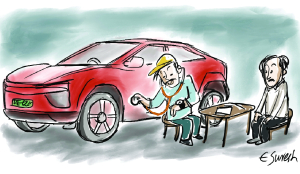
The success of India’s green mobility mission will ultimately depend not only on how many electric vehicles it produces, but also on how effectively it equips its workforce to thrive in the new economy
India’s EV transition is gathering significant momentum, as is evident from impressive figures showing EV sales, expanding charging infrastructure, ambitious manufacturing targets, and a vision of clean and sustainable mobility solutions. However, beneath this narrative lies a less visible yet critical question: who will power this transition?
While much of the discourse has focused on the environmental and economic benefits that this transition offers, its implications for the workforce that underpins India’s mobility ecosystem call for equal attention. This is particularly noteworthy for a country where nearly 80 per cent of the non-agricultural workforce is concentrated in the informal sector. Among them are an estimated 4.29 million roadside mechanics and professional garage owners who provide repair services across the country. As EV technologies become more advanced and demand for EVs increases across the white- and blue-collar segments, particularly among the aspiring middle class, these informal workers risk being left behind unless they are equipped with the skills and empowered to participate in the emerging EV ecosystem. Therefore, it is imperative that the workforce be made future-ready to adapt to changing technologies, which will be critical in enabling a transition that is not only environmentally sustainable but also socially inclusive.
While certain occupations associated with ICE vehicles are expected to decline over time, the EV ecosystem is simultaneously creating demand for a diverse range of new skills and services. Beyond vehicle manufacturing, jobs are emerging across charging infrastructure deployment and maintenance, battery swapping, fleet management, diagnostics and repair, battery recycling, and digital mobility services. Recent estimates suggest that employment in the EV service and repair ecosystem alone could create between 3.7 million and 5.6 million jobs by 2047.
The rapid expansion of e-commerce, app-based mobility services, and electric two- and three-wheelers is creating new avenues for gig workers, delivery personnel, charging operators, local service providers, and small entrepreneurs. The transition therefore presents an opportunity not only to generate employment but also to diversify livelihoods within India’s broader mobility ecosystem.
Despite this significant employment potential, the emerging opportunities cannot be accessed equitably without targeted interventions. Unlike conventional ICE vehicles, EVs rely heavily on advanced electronics, battery management systems, software diagnostics, and high-voltage components, necessitating specialised knowledge, software, and equipment.
Evidence suggests that nearly 93 per centof workers in the service and repair sector lack formal technical training, while a majority continue to rely on skills acquired through informal apprenticeships and on-the-job experience. Limited access to EV-specific training, inadequate infrastructure at vocational institutions, potential income loss while undertaking training, and financial constraints in procuring specialised tools further compound these challenges. As a result, the principal concern is not a shortage of employment opportunities, but the absence of accessible pathways that enable informal workers to participate in the evolving EV ecosystem. Without deliberate and targeted investments in skilling, certification, and workforce transition mechanisms, there is a risk that those who have long sustained India’s mobility sector may be excluded from its future.
The transition to electric mobility also presents an opportunity to address long-standing gaps in workforce participation within the automotive sector.
Historically, occupations across vehicle servicing, repair, and transport operations have remained overwhelmingly shaped by patriarchal values, and much more needs to be done in terms of critical thinking and promoting a conducive environment to reverse the exclusion of women. As a matter of fact, the evolving nature of EV technologies has the potential to diversify the workforce, and it is imperative to address structural and socio-economic barriers to facilitate women’s participation across the value chain.
Realising this opportunity will require deliberate policy interventions rather than assuming that inclusion will occur organically. Targeted skilling programmes, financial support for women-led enterprises, mentorship networks, and gender-responsive workplace practices can enable greater participation in emerging roles. Several state policies have already begun recognising this need.
For instance, Tamil Nadu’s EV policy provides enhanced training incentives for women and other underrepresented groups, signalling a significant shift towards embedding equity within workforce development and the deployment of human capital. Integrating women into the EV ecosystem from its formative stages will not only strengthen labour force participation but also contribute to a more resilient and inclusive mobility transition.
A sustainable transition is not only about reskilling and upskilling the existing workforce but also about creating a more inclusive and responsible EV ecosystem. Reflecting on emerging initiatives demonstrating an inclusive transition may open the way for deeper reflection and innovation. Social enterprises such as eBik have enabled street vendors, waste pickers, and daily wage workers to adopt affordable electric mobility solutions, improving productivity and reducing physical strain. Internationally, Singapore’s Progressive Wage Model illustrates how linking skills development with wage progression and career mobility can support workforce transitions.
Together, these examples highlight the value of replication. As India stands at the threshold of significant EV adoption and mainstreaming in the mobility sector, industry, O&M, academia, and think tanks need to deliberate on and demonstrate viable EV transition models that are both environmentally sustainable and socially inclusive.
A sustainable transition is not only about reskilling and upskilling the existing workforce but also creating a more inclusive and responsible EV ecosystem. Pondering over emerging initiatives demonstrating an inclusive transition may open a space for a deeper reflection and innovation
Jayanta Mitra is Senior Fellow, Electricity & Renewables, at TERI. Gati Kochar is a Consultant at TERI; Views presented are personal.