
The future of Islamic NATO
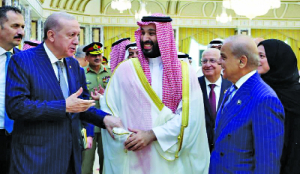
A defence treaty agreed in Mecca on August 7 binds Saudi Arabia, Turkey, and Pakistan to a single mutual-defense promise: an armed attack on one nation will be viewed as an attack on all three.
The agreement is already being called "Islamic NATO," although that isnt its official name. The comparison rests on its central pledge, which resembles NATOs Article 5. Yet the pacts real importance will depend less on its language than on whether the three governments build the structures needed to act together in a crisis.
Saudi Crown Prince Mohammed bin Salman, Turkish President Recep Tayyip Erdogan, and Pakistani Prime Minister Shehbaz Sharif signed the Makkah Joint Defence Agreement in Mecca. Its stated goals include deterrence, military cooperation, regional peace, security, and stability.
The three countries have different strengths. Pakistan has a nuclear arsenal, a large army and combat experience. Türkiye has the second largest military in NATO, a booming defence industry, armed drones, missiles and naval forces. Saudi Arabia has substantial financial resources, energy leverage and a pivotal position in the Arab and Muslim worlds.
That combination explains the NATO comparison. However, there is no public evidence that the agreement creates an automatic troop deployment rule, a standing joint force, or a unified command. Mutual-defense language carries political weight, but it doesnt create an integrated military by itself.
The timing reflects rising security fears in the Gulf. Missile attacks, threats to energy facilities, and dangers to shipping near the Red Sea and the Strait of Hormuz have pushed regional defense planning higher on the political agenda.
The pact builds on the Saudi-Pakistan Strategic Mutual Defence Agreement signed in September 2025. Holding the ceremony in Mecca gave the agreement additional religious and political significance. It didnt, however, create military obligations beyond the terms of the document.
Saudi and Turkish officials have described the pact as defensive rather than an anti-Iran alliance or a sectarian bloc. Iranian lawmaker Ebrahim Rezaei called it a "paper agreement," though that was his personal comment and not a formal response from Tehran.
Pakistans hand is clear. Its military has trained and fought alongside Saudi forces for decades, and its nuclear arsenal provides an additional layer of deterrence. Türkiye has traditional military strength, defence technology and a growing domestic arms industry with increasing export potential. Saudi Arabia can finance weapons, infrastructure and joint programs. It can use its geographic location and diplomatic clout.
Those resources could support a durable partnership. They dont answer the hardest questions about collective defense. If one member is attacked, who responds first? What assistance is required? Who commands the operation? Would the response involve intelligence and weapons, air defense, logistics, troops, or direct combat?
A shared threat can bring governments together quickly. It cant produce a common war plan overnight.
Pakistans Foreign Minister Ishaq Dar said on August 9 that the agreement is open to countries willing to accept its principles. He also said it doesnt replace existing bilateral or multilateral security arrangements.
That language leaves room for expansion. Qatar, the United Arab Emirates, Egypt, and Jordan could all see value in closer military cooperation, particularly in missile defense, maritime security, and intelligence sharing. None, however, has been confirmed as an applicant. No official list of potential members exists, and no accession process has been announced.
Further members could improve practical cooperation. Exchanges of intelligence could improve warnings about missiles, drones, militant networks and cross-border attacks. Smaller militaries could obtain Pakistani and Turkish training thru joint exercises. Ports, energy facilities and shipping lanes could be protected by coordinated air-defence and maritime patrols. The richer Gulf countries could also help pay for equipment, maintenance and military infrastructure. A broader grouping would carry diplomatic value as well. Muslim-majority states could gain a stronger voice in regional security discussions that are often shaped by the United States, China, Russia, and other outside powers.
Membership would also bring risk. A country that joins a mutual-defense pact could be expected to support a crisis it didnt start and cant control. Each government would have to balance the new commitment against relationships with Washington, Beijing, Tehran, Israel, and neighboring states.
Their policies already differ on Syria, Yemen, Gaza, Iran, and relations with Western powers. Türkiyes membership in NATO adds another layer of complexity. Saudi Arabia maintains wide Gulf and international ties, while Pakistan faces domestic political pressure and depends on external economic support. Those constraints could limit each governments freedom of action when a real conflict begins.
The signing ceremony was the easiest part. The agreements credibility will depend on what follows. Reports indicate that the pact may establish a Saudi-based secretariat, regular meetings of foreign and defense ministers, and consultations among military chiefs. The published Arabic text also refers to cooperation in training, logistics, and intelligence sharing.
Important details remain unclear. Public reporting hasnt explained how the three countries would make decisions during a crisis, what forces each would provide, or how Pakistans nuclear status fits into the arrangement. The agreement also doesnt define the military response that an attacked member could expect.
That ambiguity matters because "defense" can mean many things. It can involve diplomatic support, intelligence, weapons, logistics, air defense, or combat troops. Without agreed procedures, governments may interpret the same promise in very different ways.
The first signs of seriousness would be concrete. The three members would need a permanent council with authority during a crisis, secure intelligence systems, joint command arrangements, regular exercises, and agreed funding. They would also need published rules covering the type and speed of assistance available to an attacked member.
The earlier Saudi-Pakistani accord is a word to the wise. Subsequent regional attacks didnt lead to direct military intervention, despite strong mutual-defense language. War is expensive and political promises tend to get stretched to the limit.
Any decision to fight could complicate NATO duties and diplomatic ties for Turkey. Pakistan would have its own internal and external constraints. Saudi Arabia, meanwhile, would need to weigh the impact of military action on its economy, energy exports and relations with major powers.
The most likely near-term result is therefore less dramatic than the Islamic NATO label suggests. Training exchanges, intelligence cooperation, defense technology projects, border security, and coordinated diplomacy are more plausible than a fully integrated force modeled on NATO.
That result would still count. Improved intelligence, joint training and better air and maritime defences could increase the cost of attacking any member. It could also improve the readiness of three militaries that already have significant capabilities thru joint planning. Shared interests and a formal ceremony were not enough to create an enduring alliance. This would require trust, clear commitments, joint planning and rules that hold when governments change.
The Makkah agreement has the political weight and military capacity to attract new partners. But expansion is not guaranteed and more members would not automatically mean more security. The pact is now a three-country mutual-defense agreement with a lofty political message.
Its future will be measured through exercises, intelligence sharing, procurement, command arrangements, and crisis decisions. Calling the agreement an Islamic NATO is easy. Building the institutions that could make the name credible will take far longer.
Surjit Singh Flora is a veteran journalist and freelance writer based in Brampton, Canada