
The Emergency and Chandrashekhar’s defiance
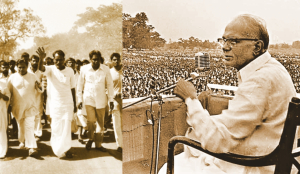
The Emergency of 1975-77 remains one of the darkest chapters in the history of independent India. Civil liberties were suspended, political opponents were imprisoned, the press was censored, and democratic institutions came under unprecedented pressure. Yet, amid the silence of fear and conformity, a few voices refused to bend. Among them stood Chandrashekhar, a leader whose commitment to democratic values transcended political convenience and personal safety.
Long before the Emergency was formally imposed on June 25, 1975, Chandrashekhar had sensed the dangers of concentrating excessive power in the hands of the executive. Though he belonged to the Congress Party at the time, he was known for speaking his mind and challenging authority whenever he believed democratic principles were at stake. He reportedly advised Prime Minister Indira Gandhi against taking any drastic and undemocratic step that could damage the Congress Party and leave a permanent scar on India's democratic legacy. His warning was prophetic. The Emergency would eventually become one of the most controversial decisions in modern Indian political history. The arrest of veteran socialist leader Jayaprakash Narayan, popularly known as JP, deeply disturbed Chandrashekhar. JP had emerged as the moral force behind a nationwide movement demanding accountability, transparency, and democratic reform. For Chandrashekhar, the imprisonment of such a towering national figure represented not merely the arrest of an individual but an assault on democratic dissent itself. When the crackdown began, Chandrashekhar openly protested. The Government attempted to soften his detention by offering special treatment. Haryana strongman Bansi Lal reportedly suggested that a Government guest house could be converted into a place of confinement for him. Chandrashekhar rejected the offer outright. He believed that accepting privileges while thousands of political workers and opposition leaders languished in ordinary prisons would amount to compromising his principles. Instead, he chose to be lodged in a regular jail in Punjab. His decision was both symbolic and courageous. It demonstrated that resistance to authoritarianism could not be selective. If democracy was under attack, the struggle had to be shared equally by leaders and ordinary citizens alike.
Before leaving for prison, Chandrashekhar informed his family of his conscious decision to oppose the Emergency. He understood the risks involved. The future was uncertain, and nobody knew how long the Emergency would last. In a poignant moment, he is remembered as telling his wife that he might not return soon. The statement reflected not fear but a realistic assessment of the political climate and the sacrifices that lay ahead.
His wife, Dooja Devi, responded with remarkable courage and patriotism. Rather than urging caution, she freed him of any concern for domestic obligations. Her message was clear: for the sake of the nation, he should consider himself released from family responsibilities and remain steadfast in defending democratic values. It was a powerful expression of sacrifice that mirrored the resolve of countless families whose loved ones were imprisoned during that turbulent period.
I vividly recall a deeply emotional telephonic conversation with Chandrashekhar ji while he was facing the heat of the administration, at that time, I was with his family members at Pinjore Gardens, Chandigarh. As he prepared for incarceration, he spoke about the uncertainty that awaited him and the need for someone to look after his family in his absence. The gravity of the moment was overwhelming. With tears in my eyes, I assured him that I would serve to the best of my capacity and stand by his family whenever needed. It was not merely a personal commitment; it was a tribute to a leader who had chosen principle over comfort and courage over compromise.
Throughout the Emergency, Chandrashekhar remained unwavering in his opposition to authoritarian rule. His imprisonment only strengthened his moral authority. Unlike many politicians who adjusted themselves to the prevailing winds of power, he stood firm in defence of constitutional freedoms, political pluralism, and the right to dissent. History eventually vindicated those who resisted. Public anger against the suspension of democratic rights grew steadily. When elections were finally held in 1977, the people of India delivered a decisive verdict.
The Emergency was withdrawn, and the Congress government suffered a historic defeat. Democracy, though bruised, emerged stronger. For Chandrashekhar, the struggle was never about personal ambition. It was about preserving the soul of the Republic. His conduct during the Emergency transformed him into one of the most respected democratic voices of his generation. The episode also demonstrated that genuine leadership is measured not by the offices one occupies but by the principles one refuses to surrender. The Emergency remains a cautionary tale for every generation of Indians. It reminds us that democracy survives not merely through institutions but through the courage of individuals willing to defend them. Chandrashekhar's resistance, sacrifice, and unwavering faith in democratic values ensured that when freedom was tested, he stood on the right side of history.
The Writer was political advisor to the former prime minister, Late Chandrashekhar; Views presented are personal.