
The discipline of dissent: When protest meets the state
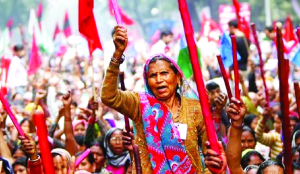
Protest is essential to a healthy republic, but so are restraint, verification and responsibility. The real test, therefore, is not whether citizens protest or governments respond, but whether both sides can resist the easy certainties of anger and authority—and find a way from confrontation to justice
A protest looks like two different events depending on where you are standing. From the street, it is often the last language left to people certain they have not been heard. From the government’s side of the aisle, the same event raises other questions too, that of law, of evidence, of public safety, and of the rights of those who never joined the dispute. For those who work at the anvil of due process, these are not incidental questions; they are the work itself. Experience in public service teaches a person to hold both pictures at once, and to grant each its due. That double vision is not indecision; it is the genesis of fair, undramatic judgement. A government that stops listening loses touch with the people it serves; a movement that stops examining itself endangers the cause it carries. The difference is that the state must weigh not one grievance but all of them together, and it is judged, rightly, by how well it holds that balance.
This difficulty has sharpened over time, when an online post lifts in a crowd, a sentence loses its context, an AI image travels as truth. By evening, the incident has a slogan, the slogan a hashtag, and the hashtag has dressed itself as a movement. There is something genuinely democratic in that speed: the unheard can reach millions without any institution certifying their pain. Yet the same speed that carries a real concern can carry an error just as far. The task is not to choose between the courage of protest and the patience of verification, but to hold both together. Mahatma Gandhi fused the two in a single word, i.e., satyagraha, the holding-firm to truth. He never treated truth as an obstacle to struggle, but as the reason it was worth winning.
Seen across the longer arc of history, protest is not the failure of democratic politics but a part of it. Elections, courts and administration each do indispensable work, but none is built to register the immediacy of a grievance shut out at every formal door. Protest enters there. Writing from a Birmingham jail, Martin Luther King called its purpose constructive tension i.e., not disorder for its own sake, but a pressure that makes an urgent wrong impossible to keep overlooking. But that legitimacy carries a price. A disciplined, peaceful protest is, in fact, the hardest form of dissent there is, harder than the riot, which asks only anger, because it asks a crowd to absorb provocation without returning it. The great movements spent years preparing ordinary people to a demanding ethical standard, tested against their own code long before any police line had cause to act. It is this capacity for self-government, more than any slogan, that separates a movement from a mob.
Conscience is where it begins. Thoreau’s claim, after a night in jail for refusing a tax he believed sustained slavery and an unjust war, was that legality and justice are not the same thing, and that a citizen cannot hand his moral judgement to the law and consider it settled. That principle cuts inward too: institutions are strengthened, not endangered, when officials have the nerve to name an error rather than hide behind procedure. Yet conscience alone is not enough, a person can be sincere and still be wrong.
Here John Rawls offers a discipline. Civil disobedience, for him, is a public and conscientious appeal to principles the community already professes - of equal liberty, fair opportunity, due process - undertaken within a fidelity to law, and its practitioners accepting the legal consequences of their act. A protest on such terms says more than "I am angry." It says a principle meant to protect all of us has been broken.
Closer home, Ambedkar pressed a harder question. In the Constituent Assembly, he warned against what he called the "grammar of anarchy," arguing that once a people have the ballot, the court and the freedom to petition, there is no warrant left for the older methods of the barricade. That caution carries particular weight for a republic built on exactly those avenues. It reconciles with King on one condition i.e. the moral case for disruptive protest grows only as the ordinary channels are, in truth, blocked. Where the constitutional door genuinely opens, the wiser course is to walk through it, and a mature state keeps it not merely ajar but visibly, dependably open.
The whole matter rests on one honest question: are the channels we point to actually open, and actually used?
Listening asks more of an institution than it first appears: even a government that grants the meeting and issues the reply can, without meaning to, let the real claim slip past into a familiar category, often because the right words for what is actually being said do not yet fully exist.
The philosopher José Medina calls this gap epistemic injustice: when a group lacks the words to make its experience intelligible, even a willing listener can mistake something new for something already known, and a real concern arrives without a settled name. It is worth watching for, because anger, read rightly, is often less a claim in itself than a signal of how long the matter went unnamed. But the duty runs both ways, a movement that asks this patience of the state must extend the same rigour to its own account, or forfeit the standing to ask for either.
There is also a harder question of what protests can actually do, and here the caution falls on the movement as much as the state. Erica Chenoweth and Maria Stephan found nonviolent campaigns succeed roughly twice as often as violent ones, winning by sheer breadth of participation. But numbers are the easy part.
A networked crowd, as Zeynep Tufekci says, can turn visible within days and still suffer a "tactical freeze," i.e., unable to negotiate because no one holds the standing to accept an offer. In Egypt in 2011, a leaderless mobilisation removed a government in eighteen days, then found no cadre to hold what followed, and armed forces filled the vacuum. Yet the second act need not fail: a government that meets agitation with patience, rather than a wish to end it, can still draw even a viral crowd to an orderly resolution - as lately seen, when agitation and government met, and found settlement rather than standoff.
None of this is an accusation against either side; it is a plea that both carry their share. A government does well to remember that its own genuine complexity (the tangle of statutes, jurisdictions and many hands) can look, from outside, like evasion; and so the answer is not to apologise for that complexity but to make it legible i.e. to locate responsibility, to explain itself in plain language, and to see behind a crowd not merely a question of order but, often, a policy that needs mending or a trust that needs rebuilding. That is competence, not weakness. Equally, a democracy belongs as fully to the worker who cannot reach his site, or the patient who cannot reach hers, as to those who marched. The state that governs for all, and the movement that remembers all, are answerable to the same public. So, before we share a clip, we might ask whether it is complete; before condemning a person, whether responsibility has been established; before assuming the worst of an institution, whether it was given the chance to answer. The network can assemble a crowd in an afternoon; it cannot manufacture trustworthy knowledge or the patience that carries a grievance to settlement. That still asks for character, of citizen and official alike. When a movement disciplines its anger into clear, lawful demands, and a government, secure enough not to stand on prestige, chooses to hear and act, the outcome is not a defeat for authority but an affirmation of it. A democracy is not made stronger when protest disappears, nor when every protest is presumed right. It is made stronger in exactly such moments, when citizens are reminded of the responsibility that gives their demands weight, and the state, by listening, renews the trust on which its own authority rests.
A democracy is not made stronger when protest disappears, nor when every protest is presumed right. It is made stronger in exactly such moments, when citizens are reminded of the responsibility that gives their demands weight
Kanishk Chaudhry writes on spirituality, public policy and governance. He is the author of two books, on power sector reform and the Insolvency and Bankruptcy Code; Views presented are personal.