
The decade that will decide everything
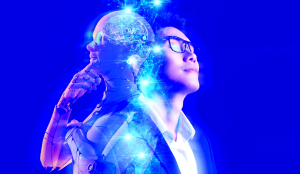
Artificial Intelligence will not wait for us to be ready. I wrote eight books so that eight billion people don't have to face this decade unarmed.
Every generation believes it lives at a turning point. Ours actually does.
Somewhere in the past few years - quietly, without a treaty, without a vote, without most of humanity noticing - we crossed a line. Machines began to write, to reason, to persuade, to comfort, to create. Not perfectly. Not consciously. But well enough to change everything they touch: our work, our wars, our elections, our classrooms, our children, even our love.
I have spent years inside this transformation - studying it at Berkeley and Oxford, watching it move through governments and villages alike, and finally writing about it in an eight-book series that travels from the first principles of AI to the last questions of the human future. And I have come away with one conviction that I will defend on any stage in the world:
The next ten years will decide the next hundred.
Let me be blunt about what is at stake.
Truth is at stake. We are entering the first era in history in which seeing is no longer believing. A convincing video of you - saying words you never said, in a place you never stood - can be manufactured in minutes. In "AI and the War for Truth," I call this what it is: a war. Not a metaphorical one. A war for your mind, your identity, and a reality you can call your own. Wars are not won by spectators. Every citizen who learns to pause, to verify, to doubt the too-perfect image, is a soldier in that war. Every citizen who shares blindly is, without meaning to be, on the other side.
Work is at stake. I hear two lies about AI and jobs, told with equal confidence. The first lie: everything will be fine. The second: everything is finished. Both are alibis for doing nothing. The truth, which I map career by career in "20 Careers That Will Win by 2033" and "Win the AI Decade," is harder and more hopeful: the decade will be brutal to those who compete with machines and generous to those who compound with them. The professionals who thrive will not be the ones who out-calculate AI - no one will - but the ones who bring what no server farm can: trust, judgment, empathy, accountability, and the courage to decide. Skills, not degrees, will be the new currency. Adaptability, not certainty, will be the new security.
"Enslavement, if it ever comes, will not arrive with chains. It will arrive with convenience."
The human heart is at stake. This surprises people. It should not. Right now, millions of human beings end their day talking to an artificial companion that remembers everything, judges nothing, and never grows tired of them. In "The New Psychology of Love," I take this seriously rather than sneering at it, because behind every one of those conversations is a real loneliness that our societies failed to answer first. But I also draw a hard line. A machine can simulate affection; it cannot risk anything for you. It cannot sacrifice, cannot forgive at a cost to itself, cannot choose you over its own interest - because it has none. If we forget the difference between being loved and being well-predicted, we will have lost something no algorithm can restore.
Equality is at stake - and this, for me, is personal. I have stood in classrooms where brilliance sat on broken benches. I have seen, in one small notebook in one village school, more curiosity than in many boardrooms. The scandal of our world has never been a shortage of talent; it is the rationing of opportunity. And here is the extraordinary fact at the heart of "AI for Everyone": this technology - handled wisely - is the first in history cheap enough, patient enough and scalable enough to end that rationing. The best tutor, the best diagnostician, the best adviser, available not to the richest one per cent but to the furthest child. AI could be the great equaliser of the twenty-first century. Or it could become its most efficient engine of privilege. Nothing in the code decides which. We decide.
And finally, human agency itself is at stake. The title of my eighth book asks the question bluntly: "Will Artificial Intelligence Enslave Humans by 2033?" Readers expect science fiction. What they find is something more unsettling: a mirror. The realistic danger is not a robot uprising. It is a human sitting-down - a slow, comfortable resignation in which we let systems choose our news, our routes, our purchases, our opinions, and eventually our values, because choosing is effort and the machine is so very helpful. Enslavement, if it ever comes, will not arrive with chains. It will arrive with convenience, and we will thank it.
I refuse that future. And I refuse, just as firmly, the fashionable despair that says ordinary people can do nothing about any of this.
They can. But only if they understand it - which is why the series begins with "Artificial Intelligence: Concepts and Applications" and "AI for Everyone," books written on a simple, stubborn principle: if a technology is going to reshape your life, you are entitled to understand it in your own language, without a single line of code. Understanding AI in this decade is not a technical hobby. It is a civic duty, as basic as literacy was a century ago. The illiterate of the AI age will not be those who cannot read, but those who cannot question.
"The Future of Humans in the Age of AI" closes the series with a blueprint - for connection, adaptation and opportunity - because I did not write eight books to frighten anyone. Fear is a poor teacher. I wrote them because I believe, with everything I have seen on three continents, that human beings are not obsolete and never will be. We are the species that asks why. No machine has ever wondered. No machine has ever cared. No machine has ever stood in front of a classroom, or beside a hospital bed, or at a mother's door, and meant it.
History will not remember this decade for what machines learned to do. It will remember it for what humans chose to become while the machines were learning. That choice is not being made in Silicon Valley or in server farms. It is being made at your kitchen table, in your classroom, at your workplace, on your screen - today, and every day of the ten years ahead.
The machines are ready. The only question left - the question these eight books were written to answer - is a far older one. Are we?
The author is the author of the eight-book series The AI Series: From AI Basics to the Future. An alumnus of the Goldman School of Public Policy, University of California, Berkeley, and the Saïd Business School, University of Oxford, he writes on Artificial Intelligence, society and the human future. The series is available worldwide; Views presented are personal.