
The culinary traditions of Rohini Vrat
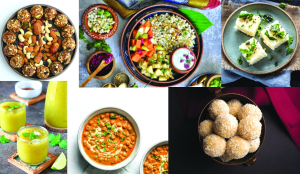
Rohini Vrat is a significant Jain religious observance associated with spiritual discipline, self-control, fasting and inner purification. Observed primarily within the Jain community, especially among Svetambara traditions, the vrat is linked to the auspicious Rohini Nakshatra in the lunar calendar and is regarded as a path toward spiritual development and ethical living. Over time, the observance has also shaped a distinctive culinary tradition in which food is prepared with great care, simplicity and adherence to the principles of non-violence and purity. The cuisine associated with Rohini Vrat is, therefore, not centred on festivity or opulence but on mindful nourishment, modest consumption and the belief that the manner in which food is prepared and consumed forms an important part of its spiritual character.
The origins of Rohini Vrat are rooted in the wider tradition of vrat, or sacred observances undertaken to cultivate moral and spiritual conduct and detachment from worldly excess. Jain scriptures and later religious commentaries describe such fasts as a means of refining both thought and action, while strengthening the principles of ahimsa and truthfulness. The association of the vrat with the Rohini Nakshatra reflects the importance traditionally given to cosmic timing and auspicious celestial alignments in Indian metaphysical practices. Its continuing significance lies in the way it connects divinity with ordinary acts of living, transforming food from a matter of consumption into an expression of ethical consciousness and mindful living.
Observed by Jain families across the country, Rohini Vrat is linked with devotion to Vasupujya Bhagwan, the twelfth Tirthankara, who is revered as a symbol of purity, renunciation and victory over worldly attachment. Families across the country may prepare food differently according to regional customs and practices, but the governing ideas remain similar. Ingredients are chosen with care, preparation is kept simple, and food is approached with gratitude. Most households avoid onion, garlic and root vegetables, not only on vrat days but as part of a wider practice shaped by non-violence and sensitivity toward life forms. For strict observers, the timing of food is equally important, with many families avoiding meals after sunset. These practices vary, but the underlying spirit remains the same. Food must remain clean, pure and simple. Within this disciplined framework, the savoury foods prepared on the occasion are varied and easy to digest. Sabudana khichdi is one of the most familiar examples from the wider fasting repertoire. Tapioca pearls are washed, soaked until soft and cooked gently with roasted peanuts, a little ghee and mild seasoning. Grated bottle gourd or cucumber is added to preserve softness. Sama rice khichdi and moraiyo pulao offer similar comfort through small millet-like grains that cook quickly and sit lightly on the stomach. They are simmered with cumin, ghee and rock salt and sometimes with bottle gourd or pumpkin. Rajgira roti and singhara atta cheela bring greater substance to the plate without moving away from the fasting idiom. Amaranth flour is patted into soft rotis and cooked on a tawa, while water chestnut flour may be whisked into a batter and prepared as a thin cheela. Farali dhokla, made with vrat-appropriate flours or sama, adds a steamed preparation to the same family of foods. Together, these dishes show how fasting cuisine can be nourishing without becoming heavy.
Vegetable-based preparations give the vrat meal a gentler savoury character, especially when they are cooked without onion, garlic or elaborate masalas. Lauki sabzi is one of the most suitable dishes for such a day. Bottle gourd is peeled, chopped and cooked slowly in its own moisture with ghee, cumin and mild seasoning until it becomes soft and delicate. Pumpkin sabzi brings a natural sweetness that needs little assistance from spice. Its pieces soften over a low flame into a warm, lightly sweet preparation that pairs well with rajgira roti or sama rice. Raw banana curry is also favoured. The bananas, used as a vegetable in the absence of potatoes, are steamed or boiled, peeled and then cooked with cumin, curd, crushed peanuts or coconut. Makhana curry makes for another delectable soft dish where nuts are roasted lightly in ghee and then simmered briefly in a curd-based or milk-based gravy to absorb the flavour. These dishes are not elaborate festive curries but their value lies in the way they offer satiety without disturbing the reflective mood of the day.
There is also a practical side to fasting food that households uphold. A devotee who has observed the vrat requires nourishment that restores strength but without overwhelming the digestive system. For this reason, preparations such as rajgira thalipeeth, kuttu poori, cucumber peanut koshimbir and simple curd accompaniments may appear in more flexible homes or around parana, the ceremonial breaking of the fast after the completion of the vrat prayers. Rajgira thalipeeth is made by mixing amaranth flour with grated bottle gourd, coriander, cumin and a little curd or water, then patting it on a hot pan until the outside turns lightly crisp. Kuttu poori, prepared from buckwheat flour, is richer and therefore better understood as an occasional post-vrat preparation rather than the central food of the day. Cucumber peanut koshimbir balances such items with freshness. Chopped cucumber is mixed with roasted crushed peanuts, curd and mild seasoning, creating a cooling accompaniment that requires almost no cooking. When these foods are included, their purpose should remain clear. These dishes are meant to help the body reinvigorate from fasting to nourishment.
The sweet side of the Rohini Vrat food culture is also approached with moderation. Makhana kheer and sabudana kheer are among the most popular preparations for their soothing and nourishing nature. Makhana is roasted lightly before being simmered in milk until tender, while sabudana is soaked and cooked slowly until its pearls become translucent and the milk thickens around them. Cardamom, a little sugar or jaggery, and a few nuts are added, ensuring that the sweetness is kept gentle. Singhara sheera is made by roasting water chestnut flour in ghee until fragrant, then cooking it with warm water or milk until it gathers into a smooth, comforting form. Rajgira ladoo provides sweetness in a compact way, using puffed amaranth bound with warm jaggery syrup. Coconut ladoo and dry fruit paag offer similar nourishment, though they are richer and are taken in small quantities. These sweets complete the meal with care rather than excess. Fruit-based and curd-based sweets bring another dimension to the menu. Shrikhand, made from strained curd mixed with sugar, cardamom and sometimes saffron, is cooling and smooth, yet usually served in modest portions. Fruit chaat may be the simplest and most natural sweet preparation of all. Seasonal fruits such as banana, apple, papaya, pomegranate, grapes and melon are cut fresh and served plain or with the lightest seasoning according to family custom. In many homes, fruits are not treated as secondary items but as central fasting foods because they require little intervention and keep the meal close to nature. Their presence also reflects a larger principle of the vrat. The less the kitchen manipulates food, the closer the devotee remains to simplicity.
Beverages connected with Rohini Vrat and similar fasting observances are equally important because hydration is essential in the warm season. Boiled water has special significance in many Jain households and may be consumed within permitted hours according to family traditions. Tender coconut water gives natural hydration, while lemon sherbet offers freshness when prepared with simplicity and without an overload of sugar. Chaas, made by diluting curd with water and churning it lightly, supports digestion and cools the body, while aam panna is prepared from raw mango, and households adapt it according to their recipes and comfort. Sattu sharbat, where accepted, provides strength in a simple form and warm elaichi milk provides another gentle option, especially after a period of fasting. These drinks serve as supportive accompaniments to the simple meals meant to soothe, nourish and refresh.
For Jain monks and nuns, the observance of Rohini Vrat is approached with an even greater degree of spiritual rigor and discipline. Their participation is centred primarily on prayer, meditation, scriptural study and prolonged fasting, reflecting the monastic ideal of detachment from physical comfort and material dependence. Food, when taken, is governed by strict ethical and religious principles. Jain monks traditionally do not cook for themselves or store food, instead accepting limited alms offered by devotees under carefully prescribed conditions intended to minimise harm to living beings and avoid attachment or desire. Meals are typically simple, sattvic and consumed in small quantities, without indulgence or elaborate preparation. Many avoid eating after sunset entirely, while certain monks may undertake complete fasts during the observance. In this tradition, food is viewed not as pleasure or personal choice, but as a necessity approached with mindfulness, gratitude and spiritual discipline.
Seen in this way, the cuisine around Rohini Vrat reveals a different understanding of food. It is not built around abundance, spectacle or a compulsory festive platter. It is guided by the ethics of selection, preparation, timing and moderation. What is avoided becomes as meaningful as what is prepared. Food is cooked before sunset and consumed within prescribed hours. Ingredients are reduced to the essentials. The meal may consist of fruit, milk, boiled water, a small bowl of khichdi, a soft roti, a cooling accompaniment or a modest sweet at the end of the fast. Each household may observe different practices, but the moral character remains. Food must remain aligned with non-violence and restraint.
Rohini Vrat thus represents a distinct culinary occasion where food is determined by religious guidelines, sunrise, lunar timings or the completion of rituals. It asks the kitchen not to impress but to purify. It reminds us that Indian cuisine is not only the story of elaborate meals, royal dishes, regional delicacies and celebratory abundance but also the story of discipline, fasting, simplicity and ethical nourishment. Within this tradition, a bowl of sama rice khichdi, a piece of rajgira roti, a small serving of makhana kheer or a glass of boiled water can carry as much cultural meaning as a grand feast, because the value lies not in quantity but in intention.
In conserving such observances, I believe we preserve far more than traditional recipes. We preserve a civilisational understanding of food as conduct, where nourishment is guided by compassion and self-command. Rohini Vrat reminds us that cuisine can do more than satisfy the body. It can encourage reflection, discipline desire and inspire morality. At a time when abundance is often celebrated as achievement, this quiet day teaches us that simplicity, when held with faith, can become one of the highest forms of richness. It is therefore our shared responsibility to honour, document and carry forward such traditions, so that future generations inherit not only the taste of Bharat, but also the values that have long given meaning to its food.
The writer is Secretary, Cuisine India Society; Views presented are personal.