
The challenge of human-elephant coexistence
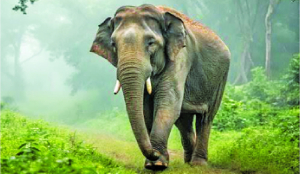
According to the first DNA-based census released by the Ministry of Environment, Forest and Climate Change, India has 22,446 wild elephants. There are fewer than 500,000 elephants in total worldwide (approximately 415,000 African elephants and 40,000 to 50,000 Asian elephants), and India is home to more than 60 per cent of the world’s wild Asian elephant population.
The Ministry of Environment, Forest and Climate Change, Government of India, in collaboration with the Government of Andhra Pradesh, is organising an event in Visakhapatnam on August 12, 2026, to celebrate ‘World Elephant Day 2026’. Incredible elephants are symbols of wisdom, strength, and prosperity in Indian and many other cultures. But this day should inspire us not only to celebrate but also to ask serious questions - are awareness and celebrations alone enough? As we observe Elephant Day this year, there is a need to think seriously beyond organising photography competitions, awareness campaigns, and cultural programmes.
Elephants are under serious threat from the loss of their habitat and continue to face many threats. Habitat loss due to fragmented forest areas, human-elephant conflict, poaching, and climate change are the main challenges. In the IUCN Red List of Threatened Species, the African elephant is classified as Critically Endangered, while both the African savanna elephant and the Asian elephant are listed as Endangered.
The cost of human-elephant conflict is very heavy. Thousands of people have lost their lives in India in recent years. In Assam, more than 1,147 people have died over the past decade, including 138 deaths recorded in 2025 alone, and 53 people have been killed so far in 2026. In Jharkhand, 22 people died in just 21 days between December 2025 and January 2026. In one incident, an elephant trampled seven people in West Singhbhum in a single night, including a family of five. In Odisha’s Dhenkanal district, a wild elephant killed three people while they were collecting minor forest produce from the forest. Several deaths have also occurred in the Nilgiri region of Tamil Nadu — including attacks on women working in tea plantations and elderly villagers. In the early days of August 2026 alone, reports emerged of approximately nine people being killed in several human-elephant encounters in India, including in Uttarakhand. These incidents show how deep and persistent the conflict is.
Yet, there are some successful examples of community-based coexistence that are noteworthy, and there is hope if we replicate these stories while celebrating Elephant Day. Some of these, to quote, are:
i) The “Hati Bandhu” (Friends of Elephants) initiative has been successful in Hatikuli Ronghang village, located on the Nagaon-Karbi Anglong border in Assam. Villagers have grown Napier grass, paddy, jackfruit, bananas, and other crops on vacant land for elephants. Around 200-800 bighas of land have been dedicated to elephant fodder. The result — crop damage has decreased drastically, and there have been no human or elephant deaths in the past eight years. In this regard, we must agree that elephants are very conscious and intelligent animals and become angry with humans for their loss of habitat, and if they know that humans are helping them, like in this village of Assam, they will not harm them. I am reminded of an incident I read in a book by the late Vinod Rishi, former Additional DG Wildlife under the Ministry of Environment and an eminent wildlife expert. In his latest book, he stated that in 1974, an elephant killed a village Pradhan and his servant (the servant tried to shoot the elephant and injured the enraged elephant, which trampled and killed both of them) while he was posted in Siliguri in West Bengal. But when he went to the village to discuss the compensation, he was surprised that people were opposed to any compensation for them, as the Pradhan was a notorious animal killer and used to supply animal meat to visiting senior officials in Siliguri. But what caused him great surprise was the fact that while returning, he noticed the same elephant standing in the cremation ground near the bank of the river and preventing his family from collecting the ashes, and ultimately threw them into the river flowing. It shows that the elephant had marked him for revenge and knew his exploits.
ii) In Nepal’s eastern border village of Bahundangi, farmers have started growing crops that elephants do not like (tea, bay leaf, lemon), begun beekeeping, and formed rapid response teams. There have been no deaths in the area since 2015.
iii) Hanging solar fencing in the Manas National Park area of Assam has provided protection to dozens of villages. Crop losses decreased, and human deaths in fenced areas remained zero.
These examples prove that when local people are involved, alternative livelihoods are provided, and space is made for elephants, conflict can be reduced. Now the question is: what should be done for harmonious living? The authorities need to:
a) work for habitat conservation and ensure protection of corridors;
b) community-managed solar fences, bee fences, and early warning systems;
c) elephant-resistant crops and alternative employment;
d) prompt and transparent compensation; stopping the exploitation of captive elephants;
e) the villagers as well as foresters must emulate the Assam village by creating food crops inside and outside the forests; and
f) last but not least, strong law enforcement, research, and education.
World Elephant Day should, therefore, be a symbol not just of a one-day celebration, but of a year-round commitment. The safety of both elephants and humans will be possible only when we focus on landscape-based land-use policies, community participation, and long-term solutions. The message should remain clear — there is a need to move beyond celebration and take concrete action so that giant elephants and human beings can live peacefully alongside each other. People should understand the importance of elephants and other wild animals of their own accord and act like people in Assam and Nepal. At the same time, they should help the Forest Department so that the ecosystems of which elephants are an integral part can be protected. To quote Lord Buddha, “Awaken. Be a witness to your thoughts. The elephant pulls itself out of the mud. In the same way, you too should pull yourself out of your laziness.” This profound statement reflects the regal essence of the elephant in Indian tradition, connecting inner wisdom with the majestic presence of this animal of India’s national heritage. The elephant is India’s national heritage animal, symbolising grace, strength, and ecological memory. It is worshipped as Lord Ganesha, the remover of obstacles and god of wisdom. Let us all pledge to protect elephants while preserving their grace.
The writer is Former Director General of the ‘Indian Council of Forestry Research and Education’ He is presently Chairman of the ‘Centre for Resource Management and Environment’; Views presented are personal.