
The captain who would not fall
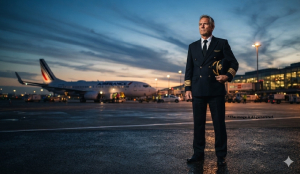
A terrorist tried to turn an aircraft into a weapon. A brave Indian captain stood like a wall between his passengers and a certain catastrophe
On the morning of September 30, flydubai flight FZ1073, a Boeing 737 MAX carrying 174 people from Dubai to Tel Aviv, sent an emergency alert shortly after take-off. By evening, every passenger was safe. That outcome owes much to one Indian: Captain Smit Machchhar.
Here is what has been reported. Machchhar, 39, a Dubai-based pilot with 13 years of flying experience, was stabbed in the cockpit by his co-pilot, who stands accused of trying to seize the aircraft and crash it. The jet pitched into a dive. Bloodied and on the floor, the captain, according to the Israeli Prime Minister’s Office, summoned the last of his strength to release the cockpit door. Passengers and crew rushed in, dragged the attacker from the controls and bound him.
One passenger pulled back on the controls to level the aircraft. Pilots travelling aboard then landed it at Tabuk in Saudi Arabia. An Israeli doctor on board stemmed the captain’s bleeding. India’s embassy in Riyadh says he is in stable condition in hospital and that it is in touch with his family. Pilots train for engine failures and storms; none trains to be hunted inside his own cockpit. Wounded and helpless, Machchhar’s last deliberate act was to open a door and let help in. India should honour him formally.
The consequences are already spreading. flydubai has suspended all flights to and from Israel while investigators work. Israel says it will tighten identity and security checks on every pilot flying into the country, foreign carriers included. Its Foreign Ministry has called the episode an attempted terrorist attack on Israelis, the UAE and the Abraham Accords, and the two countries’ foreign ministers have pledged to cooperate against extremist elements. The motive is not yet established; Israeli media report no sign so far that the accused acted on anyone’s orders. A harder question hangs over aviation itself: how are the people who fly us vetted? The UAE’s aviation regulator did not respond to Reuters when asked. India needs no lessons on what a hijacked aircraft means. The seizure of Indian Airlines IC-814 in December 1999, and its flight to Kandahar, remains a national scar. Terror has no flag, faith or cause that can excuse it.
Whether it is the work of an organised network or a lone fanatic, it targets the defenceless; here, that included parents travelling with young children. It must be condemned in every form and against every victim, without selectivity and without the quiet qualifiers that dress murder as grievance. Equally, we must refuse collective blame. The fight is against violence, not against any nation or faith.
Governments must share intelligence, vet crews rigorously and harden cockpits against insider threats. Due process must deliver swift, certain justice to those responsible. And the rest of us should remember a name.