
Semicon 2.0 to target at least 200 chip design startups, companies: Vaishnaw
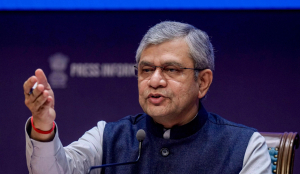
The government will target at least 200 startups and companies designing chips in India under the next phase of the country's semiconductor mission, Semicon 2.0, Union Minister for Electronics and Information Technology Ashwini Vaishnaw said on Thursday.
Addressing the inaugural session of SEMICON India 2026, Vaishnaw said chip design would be the first of the six pillars of Semicon 2.0, with the government significantly expanding its ambitions after more than 105 startups attempted chip design under the previous phase.
Of these, around 20 secured venture capital funding totalling about Rs 800 crore, he said.
"That was just the beginning. This time our ambition is much bigger. We would be targeting at least 200 startups and companies which design chips in India across the spectrum of semiconductor requirements," Vaishnaw said.
He said Semicon 1.0 had helped build the foundation for a domestic semiconductor industry by nurturing talent and developing the wider ecosystem.
"Now, we have to build the building over this foundation," he said, outlining the six pillars of Semicon 2.0 -- chip design; machines and materials; fabrication units; advanced packaging; research and development; and talent.
The second pillar will cover the broader ecosystem for capital equipment, maintenance facilities, chemicals and gases. More than 28 countries are participating in SEMICON India 2026, Vaishnaw said.
Recalling guidance given by Prime Minister Narendra Modi five years ago at the start of the semiconductor programme, Vaishnaw said, "Don't think short term, think long term. Don't think fab, think ecosystem."
The third pillar will focus on setting up more display, memory, silicon, compound and logic fabrication units, which Vaishnaw said would have a multiplier effect across the semiconductor ecosystem.
The fourth pillar will seek to scale up advanced packaging facilities, building on a 3D packaging facility being established in Odisha.
"We would like to have much more progress in the advanced packaging because that is a very important part of the entire value chain," he said.
Under the fifth pillar, the government will promote industry-driven applied research and development projects in collaboration with academia. Vaishnaw invited industry participants to suggest projects for such collaborations.
On talent development, he said the government had already trained 70,000 design engineers in four years against the 10-year target of 85,000 under Semicon 1.0.
More than 400 universities across the country now have access to advanced Electronic Design Automation tools from companies including Cadence, Siemens and Synopsys, he said. The Semiconductor Laboratory in Mohali is being used for taping out student-designed chips.
Under Semicon 2.0, the government will also target developing one lakh skilled technicians, cleanroom personnel and factory-floor workers for direct employment in upcoming semiconductor manufacturing units in India, he said.
Vaishnaw described the semiconductor mission as a long-term journey and said the foundation being built would contribute to India's goal of becoming a developed nation, or Viksit Bharat, by 2047.
SEMICON India 2026, themed "Silicon to Systems: Building the Ecosystem", was inaugurated by Prime Minister Narendra Modi at the Yashobhoomi Convention Centre in New Delhi on Thursday.
The government approved Semicon 1.0 in December 2021 with an outlay of Rs 76,000 crore. Twelve semiconductor manufacturing units were subsequently approved with a cumulative investment of more than Rs 1.64 lakh crore.
Semicon 2.0 was approved in July 2026 with a total outlay of Rs 1,27,500 crore.