
SC steps in on women’s safety in Capital
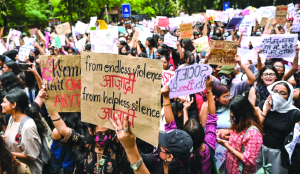
The court also sought scrutiny of fast-track and POCSO courts and sexual-offender databases
The Supreme Court on Monday passed a slew of directions while taking cognisance of news reports of crimes against minor girls and women across the Delhi-NCR while directing the Delhi Police Commissioner to constitute dedicated police teams to conduct an immediate survey and inspection of vulnerable pockets. The SC directed the commissioner to constitute dedicated police teams for each police district, headed by an officer not below the rank of deputy superintendent of police within a period of four weeks.
“The audit shall be based upon National Crime Records Bureau (NCRB) data, local intelligence, past and present complaints received, previous incidents and other objective indicators to identify locations prone to such crimes. These teams shall identify locations where poor lighting, lack of surveillance, insufficient patrolling, abandoned structures, poor access control or other deficiencies may increase the risk of crime. A district-wise vulnerability map shall be prepared and shared across adjoining police stations to ensure that information on recurring patterns of crime and habitual offenders is not confined to individual police-station jurisdictions,” the Bench of Justices JB Pardiwala and K Vinod Chandran said.
The SC directed that appropriate patrolling and security arrangements shall be deployed at all identified public parks and vulnerable areas at all times, particularly during evening and early morning hours.
A designated officer shall be responsible for each such location, and the authorities shall prescribe a mechanism for periodic inspection, the SC said.
“An immediate lighting and CCTV audit shall be carried out across all public parks and vulnerable zones to eliminate blind spots. Non-functional CCTV cameras and lighting infrastructure shall be repaired or restored in an expeditious manner. Additional lights and CCTVs to be installed wherever inadequacy is sensed or reported by citizens. A similar audit shall be undertaken in respect of Metro stations, bus stops, bus terminals, railway stations and other major public-transport facilities, particularly those falling within or adjoining identified vulnerable zones,” it said.
The Bench directed concerned authorities to utilise the existing citizen grievance-redressal mechanism, including the CM Jan Sunwai Portal, as an additional source of information for identifying deficiencies in public-safety infrastructure.
The SC also directed the registrar general of the Delhi High Court to submit within four weeks, comprehensive information regarding the present status and functioning of the fast track special courts and exclusive POCSO courts in Delhi.
The Bench sought a comprehensive status report on the measures presently undertaken to ensure adequate safety and security arrangements in public places frequented by women and children.
The report shall indicate whether such arrangements remain equally effective during peak hours, late evening hours and early morning hours, when public spaces may have reduced visibility and footfall, it said.
The Bench also sought a report on the manner in which the National Database on Sexual Offenders (NDSO) is presently being utilised by the Delhi Police.
“We would require the authorities to indicate whether the database is being regularly accessed for antecedent verification and identification of repeat or habitual sexual offenders...,” the bench said, while also seeking a report on the manner in which the Ministry of Home Affairs (MHA) is utilising the Investigation Tracking System for Sexual Offences (ITSSO).
“The authorities shall place on record the manner in which ITSSO is being utilised in Delhi, including the mechanism for monitoring investigations which are required to be completed within the statutory period, the officers responsible for such monitoring, the frequency with which cases are reviewed and the remedial steps taken where an investigation is delayed.
“The report shall also indicate whether senior officers receive alerts or periodic reports in cases where the prescribed timelines are not being adhered to,” it said.