
SC allows Oil India to withdraw plea, file fresh petition over ERD project beneath Assam national park
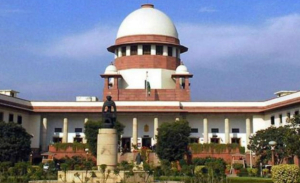
The Supreme Court on Wednesday allowed Oil India Ltd (OIL) to withdraw its plea challenging the Centre’s rejection of its proposal for Extended Reach Drilling (ERD) to extract hydrocarbons beneath Assam’s Dibru-Saikhowa National Park and permitted it to file a fresh petition.
A bench comprising Chief Justice Surya Kant and Justices Joymalya Bagchi and V Mohana passed the order after senior advocate Rakesh Dwivedi, appearing for OIL, said the matter was urgent and sought an early hearing.
Dwivedi told the bench that all permissions for the project had been obtained but the Centre considered itself bound by the Supreme Court’s April 26, 2023 order prohibiting mining in national parks and wildlife sanctuaries and within one kilometre of their boundaries.
“This is not mining,” Dwivedi submitted, explaining that the drilling infrastructure would remain outside the national park. The proposed wells would go around 4,000 metres underground before proceeding horizontally to reach hydrocarbon deposits beneath the protected area.
The CJI said the registry could not list the interlocutory application because of an earlier direction in the long-running TN Godavarman Thirumulpad vs Union of India case restricting such applications.
“If there is a fresh cause, file a fresh petition and we will entertain it,” the CJI said.
The bench subsequently allowed OIL to withdraw the application with liberty to file a fresh petition.
The dispute relates to the Centre’s refusal to approve the diversion of 0.069 hectares of forest land for the ERD project in Tinsukia district. OIL has challenged the Forest Advisory Committee’s decision and the subsequent MoEFCC action refusing approval.
The company argues that ERD cannot be equated with conventional mining. It says the drilling pads would be located outside Dibru-Saikhowa National Park, while the drilling would take place several kilometres below the surface to access hydrocarbon reserves beneath the park.
OIL has also relied on a 2017 Supreme Court order which, it says, permitted sub-surface hydrocarbon extraction beneath the national park through ERD, subject to environmental and wildlife safeguards.
The Centre's decision followed the Supreme Court’s April 2023 directions restricting mining in protected areas and within one kilometre of their boundaries. OIL maintains that those directions do not apply to its proposed ERD operation.
The company said the project is significant for the country's energy requirements and claimed the proposed extraction could meet nearly three per cent of India's oil requirement.
OIL had earlier received environmental clearance in May 2020 for extension drilling and testing of hydrocarbons at seven locations beneath the national park. It now plans to challenge the Centre’s refusal through a fresh petition before the Supreme Court.