
Sanchez sidesteps Spain-US dispute at NATO
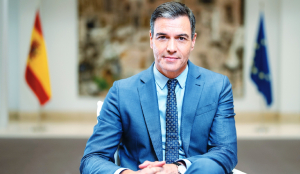
Spanish Prime Minister Pedro Sanchez on Friday refused to be drawn into a dispute with the United States over reports that the Pentagon is weighing whether to punish members of NATO who fail to support American operations in the Iran war.
Among those in the firing line is Spain, which has refused to allow US forces involved in the war to use bases on its territory or airspace. Spain says that US-Israeli actions in the Iran war contravene international law.
France and the UK also refuse to give US forces free rein to use their territory for the bombing campaign.
The Pentagon is reported to be mulling whether to suspend Spain from NATO, according to an unidentified US official referring to a US Defence Department email, and quoted by the Reuters news agency.
“Well, we do not work with emails,” Sanchez told reporters at a European Union summit in Cyprus. “We work with official documents and positions taken, in this case, by the Government of the United States.”
“The position of the Government of Spain is clear: absolute collaboration with the allies, but always within the framework of international legality,” he said.
The email also suggested reassessing US support for the United Kingdom’s claim to the Falkland Islands, near Argentina, which are also known as Islas Malvinas.
NATO operates by consensus, and all 32 member countries must agree for it to act. The trans-Atlantic alliance’s founding treaty has no mechanism for suspending or ejecting any of the members, although nations may leave of their own accord one year after notifying the other allies.
As an organisation, NATO has no direct role in the Iran war except to defend its own territory. US President Donald Trump has been angered by what he sees as the failure of some NATO members to back American actions in the Iran war and to help police the Strait of Hormuz, a major trade route. He has questioned the purpose of US membership in the military organisation.EU foreign policy chief Kaja Kallas appeared perplexed by the US criticism, given that the United Kingdom and France are leading an effort to help secure trade in the strait once the war is over.