
Rethinking how India fights addiction
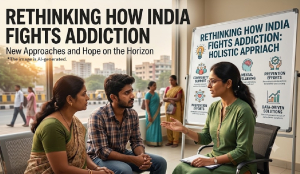
A recent case of a young boy, high on methamphetamine ("ice"), gouging out his own eyes in a hospital emergency room shocked people everywhere. It forces an uncomfortable question: what pushes young people toward such destructive substance use?
The numbers are sobering. AIIMS Delhi's 2019 National Drug Dependence Treatment Centre survey, the most comprehensive of its kind in India, found that 14.6% of Indians use alcohol, with 19% of those users falling into dependence. Over 5.7 crore Indians use cannabis. Opioid use runs nearly three times the global average, and heroin has now overtaken opium as the country's dominant opioid for the first time.
Yet our instinct as a society is often to shun these young people rather than help them, treating addiction as a moral failing instead of the medical and psychological crisis it actually is. Addiction rarely happens overnight. It begins as casual, recreational use, then slowly becomes a habit, then a physical dependence, where the body starts demanding the substance just to function normally. Tolerance builds, requiring larger doses for the same effect. Because most drugs are illegal, users are often pushed into crime to sustain their supply. Too many end up dying alone and in pain, having lost everything along the way.
Psychologists note that many people who become addicted carry insecurity and low confidence rooted in family or personal struggles. Strikingly, most know exactly what the drug is doing to their mind, memory, and relationships, yet knowing isn't enough to break free.
This is addiction's cruel paradox: the very thing destroying them is the thing they lean on to cope. Underneath, there is often deep shame. Many secretly want to quit but fear withdrawal, the emptiness it would leave behind, or losing the only social circle they have, other users.
This is where meditation deserves far more attention than it currently gets. Studies on incarcerated substance users found that those trained in meditation had lower relapse rates and better outcomes after release than those given only standard treatment. Meditation appears to rewire key brain pathways, building self-awareness and the mental space to pause before acting on a craving, the difference between reaching for a cigarette and reaching for calm. Introducing meditation in schools as a regular subject, rather than an occasional workshop, could give children that tool early, before dependence ever takes root.
The government's Nasha Mukt Bharat Abhiyaan has made real progress on visibility, reaching over 25 crore people, with more than 14 crore individuals and 4 lakh educational institutions formally enrolled.
That scale matters. But awareness campaigns alone do not treat dependence. They need to be paired with accessible de-addiction centers, school-level intervention, and sustained family engagement, support systems that catch a habit while it is still just a habit and not yet a dependency.
In the long run, a culture that values inner stillness over instant pleasure is our strongest defense against substance abuse. We have a choice: invest in the mental and emotional well-being of our youth now, or pay for it later in broken families and wasted potential. To every young person reading this: choose the harder, quieter path. The peace you are searching for in a high was never really there to begin with; it was always something you had to build within yourself. Say no to drugs, and yes to meditation.
The writer is a popular columnist and a spiritual teacher; Views presented are personal.