
Reserve Bank of India move to list Upper-Layer NBFCs raises an old question in a new form
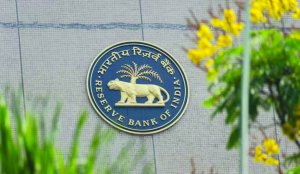
The Reserve Bank of India’s decision to require fifteen Upper-Layer NBFCs to list their shares has revived an old debate in a new form. The conversation around Tata Sons Private Limited is only the most visible part of it. The deeper question is this: when a regulator wants better governance from the entities it supervises, is mandating a stock exchange listing the only instrument to reach for?
The answer is not obvious, and it deserves more careful thinking than it has received. Listing is, at its core, a capital markets mechanism. It helps a company raise money from the public. It also gives existing shareholders a way to convert their holdings into tradeable instruments. In that sense, the capital market allows public savings to participate in private enterprise. The governance requirements that come with listing serve a narrower purpose. Disclosure, transparency, board oversight, and related-party restrictions are meant to protect investor funds.
RBI’s purpose in directing Upper-Layer NBFCs to list is not likely to be capital raising. Some of these entities are already well-capitalised. They may have no commercial need for public funds. The objective appears to be governance. The idea is that listing will impose disciplines that improve how these institutions are run. That is a reasonable instinct. But it is also an indirect way to reach the goal.
How the equating happened
SEBI’s mandate has always been to protect investors, and it has used governance as the principal instrument to do so. With the original Clause 49 of the listing agreement in 2000, SEBI effectively became the benchmark for corporate governance in India. Other regulators followed, modelling their frameworks on what SEBI had built for listed entities. Listing, which exists for capital, came to be treated as synonymous with governance, which exists for trust. The two are related, but they are not the same thing.
Whose decision is it?
The decision to list, in ordinary corporate law, belongs to the shareholders of a company. A company cannot migrate from privately held to publicly listed without the consent of at least three-fourths of its shareholders by value. Minority shareholders can ask, but they cannot compel. Majority shareholders can resist, and their resistance is legally protected. When a regulator mandates listing, it overrides this shareholder prerogative. This is not, in principle, an objection to the regulator’s authority, regulators can and do mandate compliance with all manner of obligations when public interest justifies it. The question is whether listing is the appropriate instrument, or whether the same governance objective can be achieved through less invasive means.
Is there an alternative?
The cleanest alternative is to require Upper-Layer NBFCs to comply with governance provisions of SEBI’s LODR Regulations directly, without insisting on listing. This is not hypothetical. Stock exchanges themselves were required to comply with LODR governance norms even when they were unlisted. Companies that raise substantial funds through debt securities are required to follow LODR governance provisions.2 The toolkit for imposing listed-company disciplines on unlisted entities already exists.
Along with the above, Upper-Layer NBFCs can be asked to submit secretarial audit reports and annual secretarial compliance reports directly to RBI. These third-party assurance documents would give the regulator a continuing, independent view of how each entity is actually governed, without the structural consequences that follow from a listing.
What listing brings with it
When an entity is required to list, it acquires the entire architecture of public-market obligations, several of which have nothing to do with governance. Confidentiality obligations around price-sensitive information. Supervision by additional regulators. Mandatory disclosure of material events as they occur. Majority-of-minority voting on transactions where promoters and related parties cannot vote. The objective is governance, not listing.
None of this is to argue against governance. Upper-Layer NBFCs play a meaningful role in the Indian financial system, and the case for holding them to the highest governance standards is straightforward. The case for using listing as the route to those standards is less so. The instruments are available. Governance provisions from LODR can be applied, and secretarial audits, compliance reports can be mandated. The governance outcome can be achieved without forcing entities whose business purpose is not capital formation into the capital markets.
Both RBI and the affected entities are working toward the same end. The conversation worth having now is about which instrument best serves it, and the Indian regulatory toolkit has more in it than this single choice suggests.
The writer is managing partner, Makarand M Joshi & Co; Views presented are personal.