
Reconfiguring diplomacy in a disorganised global order
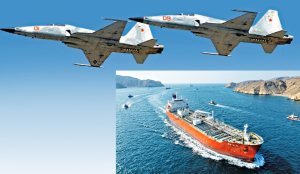
The real question is not whether middle-power-style diplomacy works; it is whether the world is still structured in a way that allows it to work
Lately, it feels like the world isn’t just unstable; it’s becoming harder to even manage that instability. Wars aren’t staying where they begin. They spill over into everything else, energy markets, supply chains, alliances, and domestic politics. One conflict quietly triggers another crisis somewhere else. And what’s unsettling is not just that this is happening, but that there doesn’t seem to be any system left that can actually contain it.
For a long time, global politics, however messy, still operated within some structure. Big powers competed, but there were limits. Institutions existed to slow things down, create space for negotiation, or at least prevent things from spiralling too far. Even disagreements had a kind of rhythm to them.
That rhythm is gone. Now, power doesn’t necessarily bring control. It often just accelerates events. Military strength can start something, but not always finish it. Economic pressure can hurt but not necessarily change behaviour. Alliances, which once meant predictability, now come with hesitation and second-guessing. You can see it everywhere: partners unsure of each other, responses that feel reactive rather than thought through.
And maybe the biggest shift is this: trust has thinned out. Not disappeared completely, but just enough to make everything harder. In this kind of environment, countries that aren’t superpowers but aren’t small players either suddenly matter a lot more. What we usually call middle powers.
They don’t dominate the system. But they’ve always had one advantage: they can talk to everyone. They can build bridges, form coalitions, and move across camps without immediately being seen as a threat. In a more stable world, that was useful. In today’s world, it’s becoming essential. But here’s the problem. That role only works when the system allows for flexibility. When you can engage multiple sides without being forced to pick one. When the space for dialogue still exists. Right now, that space is shrinking.
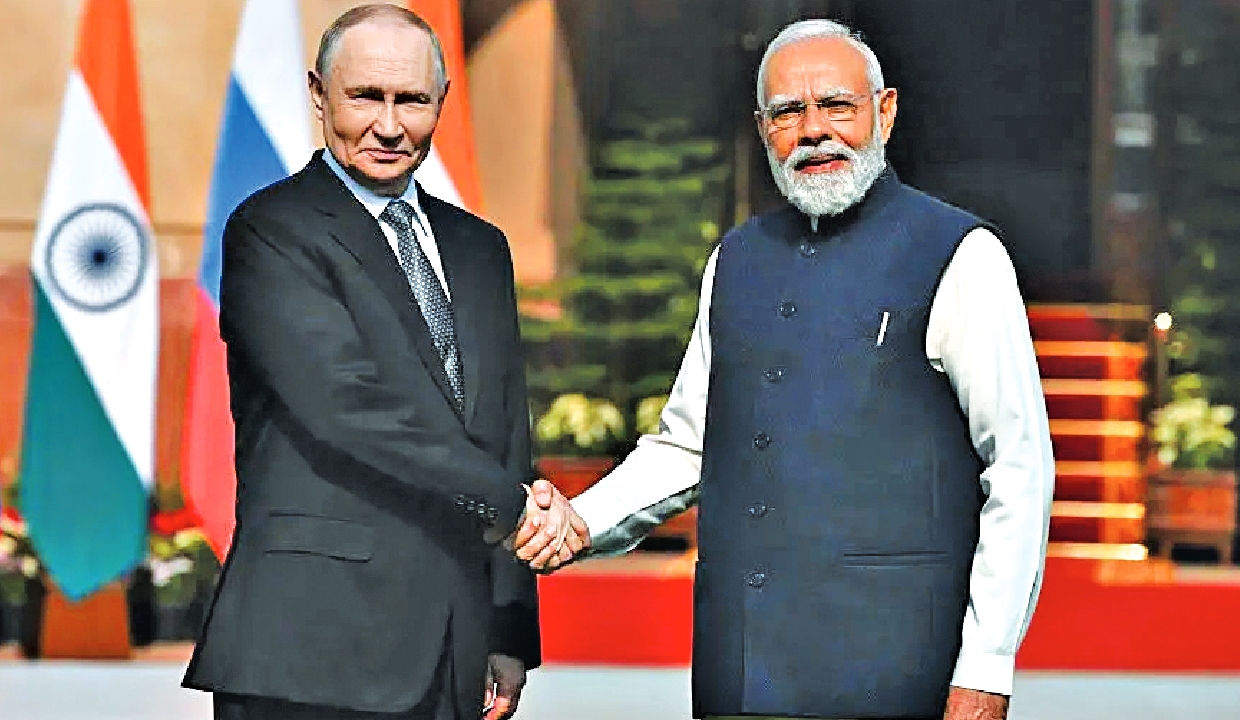
As conflicts harden and positions become more rigid, the expectation to “take a side” becomes stronger. The room for balancing, hedging, or even just staying engaged across divides starts to close. And when that happens, countries that rely on this flexibility are put in a difficult position. India sits right in the middle of this.
On one hand, it has every reason to want stability. Its economy is deeply tied to global flows, energy, trade, and technology. Its diaspora is spread across regions that are directly affected by conflict. Disruptions elsewhere don’t stay “elsewhere” for long. On the other hand, India’s strength has been its ability to engage widely. It has relationships across competing power centres. It has managed to build partnerships without locking itself too tightly into any one bloc. That’s not indecision; it’s been a deliberate strategy.
But strategies like this depend on the system staying at least somewhat open. And that’s where the tension is growing. As the world becomes more polarised, the cost of staying in the middle increases. Not necessarily because India wants to change course, but because the environment around it is changing. The pressure to align, subtly or directly, is becoming harder to ignore.
What’s also changing, quietly but significantly, is the way all of this is communicated and understood. Middle power diplomacy is no longer just about what countries do, but how they position themselves across overlapping crises. The lines between issues have blurred. Climate is no longer just climate; it is energy, it is development, and it is migration. A war is not just a security issue: it is a food supply, inflation, and humanitarian response. Everything is connected, and everything moves faster than before.
In this kind of environment, new players are stepping in, not necessarily as dominant forces, but as connectors, building smaller, issue-based alliances that cut across traditional blocs. These aren’t always formal groupings, and they don’t always come with grand declarations, but they reflect a shift in how cooperation is being imagined. Less ideological, more functional.
But this also raises an uncomfortable question: where does that leave South-South cooperation? For years, it has been seen as a space of solidarity and shared priorities. But in a more disorganised global order, even that space is under strain. Countries across the Global South are dealing with very different pressures: debt, climate vulnerability, conflict exposure, and their responses are not always aligned. The idea of a unified voice becomes harder to sustain when the challenges themselves are so uneven.
And yet, this is precisely where its relevance lies. Not as a bloc, but as a flexible platform, one that can adapt to crisis, respond to volatility, and create room for cooperation where formal systems are failing. Because if the global order is becoming more fragmented, then the ability to communicate across that fragmentation, clearly, consistently, and with intent, becomes just as important as diplomacy itself.
And maybe this is where the real shift is happening: diplomacy is no longer just about negotiations between governments; it is also about managing perception in real time. Every crisis today is public, immediate, and constantly evolving. Narratives form faster than responses. A delayed statement, a poorly framed position, or even silence can be interpreted as alignment, indifference, or weakness. Communication is no longer a follow-up to diplomacy; it is part of the act itself.
For middle powers, this becomes even more critical. Their strength lies in being able to engage across divides, but that balance is fragile. What they say, how they say it, and when they say it can either preserve that space or collapse it. Strategic ambiguity, which once worked quietly in the background, now has to be actively maintained and explained. At the same time, domestic audiences, digital platforms, and global media ecosystems are all feeding into how foreign policy is shaped. Diplomacy is no longer insulated. It is watched, interpreted, and contested in real time. It is about control: of narrative, of timing, and of intent.
So the real question is not whether middle-power style diplomacy works. It’s whether the world is still structured in a way that allows it to work. Because if that space disappears, we don’t just lose flexibility, we lose one of the few ways the system still holds together. That’s why the way forward can’t just be about reacting to each crisis as it comes. There has to be a shift in how diplomacy is practised.
One part of that is moving away from rigid, all-or-nothing partnerships towards more focused, issue-based cooperation. Countries don’t need to agree on everything to work together on specific problems, whether it’s energy security, digital systems, or education. Smaller, targeted coalitions might not look dramatic, but they’re often more effective. Another part is thinking less in terms of solving every crisis and more in terms of absorbing them. Because the reality is, not every conflict is going to be resolved quickly. Building resilience, economic, technological, and institutional, becomes just as important as traditional diplomacy.
And then there’s the question of shaping the rules themselves. A lot of the future of AI, digital governance, and global education systems is still being defined. Countries that step in early to shape those norms will have far more influence than those who simply adapt later. None of this is a perfect solution. It’s not even a clean one. But maybe that’s the point. We’re no longer operating in a world where everything can be neatly managed.
The idea that there are clear referees, clear rules, and clear outcomes, it doesn’t hold the way it used to. And in that kind of world, diplomacy isn’t about control anymore. It’s about staying connected enough, flexible enough, and prepared enough to keep things from falling apart completely. Because if no one is really in charge of the system anymore, then the responsibility quietly shifts to those who can still move across it without breaking it. And that’s a much heavier role than it sounds.
The author is a commentator and writer on Cinema, branding, media management, and geo-strategic communication. Inputs provided by Zoya Ahmad and Vaishnavie Srinivasan; Views presented are personal.