
Railway Ministry approves India’s First Hydrogen-Powered Train between Jind and Sonipat
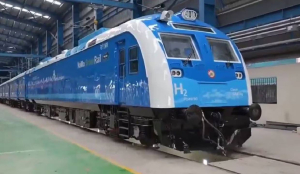
The Railway Ministry on Tuesday approved the operation of India’s first hydrogen-powered 10-coach DEMU train between Jind and Sonipat under the Northern Railway zone, marking a significant milestone in the country’s push for green transportation.
According to officials, the train will run at a maximum speed of 75 kmph and use hydrogen fuel cells to generate power instead of conventional diesel or electric traction systems.
The hydrogen-powered train has a total power output of 1,200 kilowatts and will operate using Distributed Power Rolling Stock (DPRS) technology, where power is distributed across multiple coaches instead of being concentrated in a single locomotive.
The approval was granted after technical clearance from the Research Designs and Standards Organisation (RDSO) and safety testing conducted by the Commissioner of Railway Safety (CCRS).
The Railway Ministry’s sanction letter directed Northern Railway to ensure full compliance with all safety, operational and maintenance conditions prescribed by RDSO, CCRS and other statutory authorities, including the Petroleum and Explosives Safety Organisation (PESO).
Officials noted that hydrogen infrastructure, including storage and dispensing systems, would require regular monitoring and maintenance. The ministry also highlighted the importance of periodic cleaning of leak detectors and flame sensors to ensure fail-safe operations.
Authorities clarified that commercial operations will not begin immediately, as several compliance checks and verification procedures are still pending before the train becomes fully operational.
Maintenance facilities for the train have been established at Shakurbasti in Delhi. Officials said that during maintenance movement, the hydrogen system will remain switched off and the train will be hauled in a “dead condition” by a diesel locomotive.
The ministry has also made specialised training and competency certification mandatory for staff involved in hydrogen refuelling and onboard operations.
The project is expected to strengthen India’s clean energy goals and reduce carbon emissions in the railway sector through the adoption of environmentally friendly fuel technology.