
Private sector investment moving at steady pace: Economic Affairs Secretary
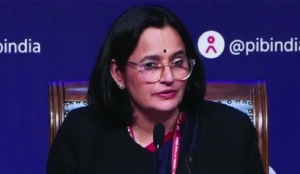
Private sector investment is witnessing steady and sustained growth, driven by the Government’s continued capital expenditure push, Economic Affairs Secretary Anuradha Thakur said on Friday.
Quoting a recent analysis, she said it shows that private sector investment, which the CII 2023 survey had indicated green shoots were emerging, now exhibits that private investment is moving at a “steady and stable pace upwards”. Public capex has increased more than fivefold over the last decade from Rs 2 lakh crore in 2014-15 to 10.7 lakh crore in 2025-26, she said at the National Council of Applied Economic Research’s India Policy Forum 2026 event here. The Government has projected public capital expenditure at Rs 12.2 lakh crore for the current fiscal in the Budget.
“Various indicators have shown, including the number of projects off-take, number of projects which are stalling, which is apparently at a decade low, which is a good thing. Public investment continues to play a catalytic role by crowding in private investment,” she said.
India’s long-term growth will be determined by how effectively public and private capital is deployed to create productive assets, globally competitive industries, quality jobs and transformative innovations, she pointed out. “Equally important is improving access to finance, particularly for micro, small and medium enterprises, which remain the backbone for manufacturing,” the secretary added.
Talking about the global economy, Thakur said it is navigating a period of extraordinary uncertainty.
Geopolitical tensions, energy market volatility, fragmented trade patterns, and technological disruptions are all reshaping the global landscape, she said. Against this backdrop, she said, “We see that India continued to stand as a place for growth and stability over the past three years; the economy has grown at an average rate of 7 per cent while preserving macroeconomic stability”.
Despite a very challenging global environment, she said, India offers strong domestic demand. On foreign capital flows, Thakur said that gross FDI reached a record high last year. But, she said, it “is certainly not enough for a country like ours.
We would like more, and we are constantly engaging at the policy level on how to do that...I think we need to do a lot more on outreach as well”.
With regard to overseas direct investment (ODI), she said there have been a lot of investments by companies outside India resulting in outflow of the US dollar.
It is a good thing and indicates maturity of the Indian private sector. She emphasised the need for wider and deeper capital mobilisation, with domestic savings also efficiently channelised into productive sectors of the economy. “India has made remarkable progress in expanding its pool of domestic financial resources. Household financial savings have become increasingly diversified, with greater participation in equity markets and mutual funds, alongside traditional financial instruments,” she said.
Stressing that innovation has become the central point, Thakur said it needs to increasingly become the principal driver of long-term growth. Economic growth is increasingly driven by knowledge and technology rather than just the accumulation of labour and capital alone, she said, adding that India has built one of the world’s largest startup ecosystems, and has established global strengths in information technology, pharma, DPI, and an expanding range of frontier technologies.
The next stage of development requires stronger investment in research and development, greater collaboration between universities and industries, she said.
While public policy can create an enabling environment, sustained productivity, growth, and technological progress are driven by private sector initiative.
Private investment not only expands productive capacity, but also finances research and development, adoption of advanced technologies, modernisation of production processes, and integration into global value chains, she said.
In this sense, she said, capital formation and innovation are mutually reinforcing, and high investments enable firms to innovate, while innovation improves productivity and generates returns.