
Police seek extension of CAPF deployment till October 20
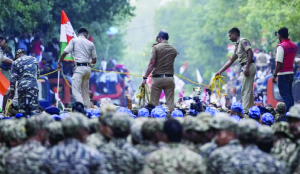
Delhi Police has asked the Central Armed Police Forces (CAPF) to remain in the city until October 20 due to possible protests over the Special Intensive Revision (SIR) of electoral rolls. According to sources, they want 273 CAPF companies to stay after the previous deployment ended on Monday. Earlier, 301 companies were approved - 221 on October 6 and 80 more on October 8. Of those 80, 28 had not arrived by Monday.
The request to the Union Ministry of Home Affairs (MHA) highlights the need to maintain law and order at key sites like Jantar Mantar, the Election Commission, Parliament House, and India Gate.
Protesters have targeted Chief Election Commissioner Gyanesh Kumar and raised concerns about problems in the revision process in parts of Delhi. Groups like the Cockroach Janta Party, the Bhim Army, student organisations, and other political groups have been involved. Over the weekend, the city had heavy security, with many officers on duty, 45 metro stations closed, and strict border checks.
Authorities detained thousands of protesters, including leaders from the Cockroach Janta Party and former chief ministers. As a result, the capital took on a fortified atmosphere as officials prepared for more protests.
Updating electoral rolls is a regular process meant to keep voter lists accurate by removing ineligible names and adding new ones. When done quickly or on a large scale, it can spark arguments about who is included or left out and whether the process is fair. In a crowded city with many political groups, these updates often lead to organised protests.
Demonstrations at well-known places let people express their views and put pressure on officials. Police talk about the ‘possibility of protests’ and ‘potential situations’ as part of their usual planning, especially when protests have already happened, and more could follow.
Bringing in more CAPF forces is a common way for Indian cities to handle large or multiple public gatherings. These companies give officials a flexible team that can move between locations, so local police are not stretched too thin. The fact that hundreds of companies were called shows authorities expected protests at several key locations, possibly at the same time. Some companies not arriving on time highlights the challenges of moving so many people quickly.
Extending the deployment period gives all forces time to arrive, adjust shifts, and maintain a steady presence during this tense period.
Detaining protesters, including political leaders and former chief ministers, shows that authorities are trying to balance allowing protests with keeping order. Indian law allows peaceful protests but also lets officials act if they think public order is at risk.
Closing metro stations and checking borders over the weekend was meant to slow large crowds and cut off outside support. Whether these actions are fair depends on how big and peaceful future protests are. Police say these steps are meant as precautions, not punishments.
For the police and the MHA, the main job is to keep enough officers on duty without worsening the situation or leaving areas unprotected. Asking for an extension until October 20 sets a clear end date so they can review the situation after this busy period.