
Operation Gangstran Te Vaar: Punjab Police’s targets organised crime
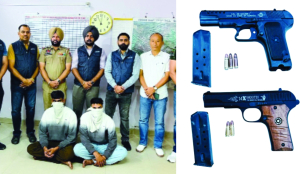
On 20 January 2026, the Punjab Police began Operation Gangstran Te Vaar after thorough planning. Instead of being a short-term, publicity-focused crackdown, this campaign was a long-term, intelligence-based effort that aimed at all parts of organised crime, including shooters, financiers, harbourers, passport fixers, foreign handlers, and prison networks.
The operation aimed to break up criminal groups rather than make headlines. Goals included verifying associates of absconders across the State, gathering intelligence from jails, taking action against travel agents who issue fake passports, and working with central agencies to put pressure on foreign-based operators through RCN and BCN mechanisms. From 20 January to 5 July 2026, the scale of the problem and the police response became clear.
Over 166 days, police conducted 87,039 raids, averaging more than 524 per day. They arrested 44,666 people connected to gangs, including 43,925 who were already wanted for serious crimes. Police also caught 1,230 proclaimed offenders. Preventive detention orders were given to 18,871 people, while 18,192 others were checked and released after review. Altogether, the operation involved 81,729 people, including 78,956 wanted individuals or their close associates.
These numbers show a clear strategy. By handling arrests, preventive detentions, and verification drives separately, the Punjab Police focused on mapping criminal networks rather than simply filling jails. Checking 16,705 wanted people and 1,487 associates or relatives suggests the police are trying to close loopholes that let gangsters use others to hide their activities.
The focus on gathering intelligence from inside jails and conducting follow-up interviews shows that many gang leaders still run their operations from prison.
Breaking these command channels is as important as making arrests on the street. The items seized highlight the seriousness of the problem. Police found 828 firearms, 14 hand grenades, 2.5 kg of explosives, and 57 drones, which shows that border smuggling now uses more advanced methods.
The drug haul was substantial. Beyond weapons and prison networks, the operation also targeted the money behind organised crime. Police seized large amounts of drugs: 635.62 kg of heroin, 400.88 kg of opium, 5,485.83 kg of poppy husk, over 22 million tablets, and significant amounts of ganja and ice.
Police also confiscated more than `3.18 crore in cash and drug money, along with gold and large amounts of illegal liquor. These seizures help cut off the flow of funds. A key part of the operation is its structure. By holding regular meetings and joint actions with neighbouring states and central agencies, the Punjab Police has moved beyond traditional boundaries. This broader approach helps the police focus on foreign handlers, check immigration histories, and coordinate Look-Out Circulars and Red Corner Notices. It shows that many Punjab-based gangs now receive their orders and money from outside India.
Taking action against travel agents who arrange fake passports closes a loophole that once allowed key members to escape as police pressure increased. The large number of verifications and releases shows that police are being selective in their approach.
“Punjab Police’s Gangstran te Vaar campaign is showing strong results. We are working step by step to find and break up gang networks that put our youth and society at risk. This effort goes beyond law enforcement. It is a shared mission to take back our communities, protect families, and create a safer, brighter future for the next generation,” said DGP Punjab, Gaurav Yadav.
Real progress will depend on using intelligence to secure convictions that disrupt gang leadership. Arresting 741 associates and relatives, along with key gang members, shows an effort to weaken support networks. The bigger challenge will be to keep up pressure on gang funding and recruitment. Overall, “Operation Gangstran Te Vaar has shown that the Punjab Police have both the ability and the strategy to run a large-scale campaign against organised crime. The first six months have shown strong action; now the real challenge is to build on these gains.