
No more excuses: Supreme Court’s right to walk verdict comes into play for monsoon havoc
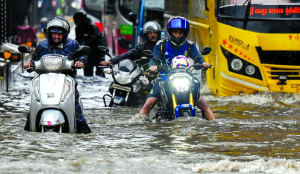
Every monsoon, major Indian cities face a familiar crisis: waterlogged streets, collapsed infrastructure, massive traffic gridlocks, and tragic losses of life. While extreme weather sets the stage, the recurring chaos heavily exposes the systemic failures of local civic bodies.
Historically, when a city floods and someone drowns, the state easily passes the buck, blaming “unprecedented rainfall” or an “act of God.”
However, the recent landmark Supreme Court judgment (Maniyar Iliyaz v. P. Ayyappan, June 19, 2026) has emerged as a massive game-changer. The case arose from the heartbreaking death of a 5-year-old child who was run over by a tanker because there was no footpath, forcing him and his father to walk directly on the dangerous main road.
By declaring the “Right to Walk” on safe, demarcated footpaths as a Fundamental Right under Article 19(1)(d) (Right to Movement) and Article 21 (Right to Life), the Supreme Court provided the exact legal bridge needed to hold civic bodies accountable for monsoon havoc.
The connection between that judgment and the current crisis created by the rains is direct and profound. The Supreme Court effectively shattered the traditional state defence of natural inevitability by ruling that providing a safe environment is a “Positive Mandate” of the State.
This means municipal bodies cannot just wait for a disaster to happen and dismiss it as an unavoidable accident. By elevating basic civic infrastructure to the status of a Fundamental Right, the Supreme Court has made it clear that the state has an absolute duty to ensure its public spaces are safe.
When the monsoons arrive, the predictable failure to manage stormwater drains, clear debris, and secure open hazards is no longer just poor governance; it is a direct violation of our fundamental right to stay safe and alive. The Supreme Court’s mandate on civic safety makes it crucial for citizens to audit the massive financial resources allocated to local representatives.
Every year, thousands of crores are disbursed across three distinct tiers of governance, meant specifically for the development of the immediate neighbourhood, assembly, and parliamentary constituency.
At the absolute grassroots, a local Municipal Corporator is allocated Ward Development Funds by the city’s municipal corporation. When streetlights fail, open potholes trigger accidents, or local blockages cause waterlogging on a specific street, the Corporator has a direct, dedicated fund to fix them instantly.
Moving up, every Member of the Legislative Assembly (MLA) receives the MLA LAD fund (Vidhayak Nidhi), which ranges between Rs 2 crore and Rs 5 crore annually, depending on the state. If an entire neighbourhood lacks a proper stormwater drainage network, or if a primary connecting road lacks a safe footpath, the MLA has the direct financial capacity to build it.
At the national level, a Member of Parliament (MP) is allocated Rs 5 crore every single year under the MPLADS scheme. Managed by the District Magistrate, these funds are designed for long-term, large-scale public safety installations and major civic interventions spanning the entire parliamentary constituency. This is where public money meets a strict legal requirement. In the past, citizens could only request that politicians spend these development funds, and there was no way to force them.
Now, because the Supreme Court has made civic safety a fundamental right, spending these funds is no longer a political favour-it is a strict legal duty. Consequently, this Supreme Court verdict (Maniyar Iliyaz v P Ayyappan) does not just stop in New Delhi; it opens a massive door for every State High Court across the country.
Because the apex court has elevated civic safety to a Fundamental Right, High Courts no longer have to wait for the slow wheels of state governments to turn. They now have the explicit constitutional backing to step in, take control, and demand immediate answers from local municipal corporations.
Armed with this judgment, High Courts can transition from being passive observers to active monitors of city administration. Judges can now issue direct, legally binding orders to municipal commissioners-demanding weekly progress reports on desilting, sealing open potholes, and fixing waterlogging hotspots before the heavy rains even begin. Failure to comply is no longer just an administrative delay; it is a direct contempt of a constitutional mandate.
Furthermore, this ruling empowers ordinary citizens and resident welfare associations to bypass local municipal offices entirely. Instead of filing endless, ignored complaints with local wards, citizens can approach their state High Courts via Public Interest Litigations (PILs). The courts can then use this Supreme Court precedent to appoint independent oversight committees, bypassing inefficient bureaucracy to ensure that public safety funds are actually spent on making the cities flood-resilient.
Ultimately, this judgment transforms the relationship between the citizen and the state. It takes away the civic bodies’ favourite excuse-that they lack the budget or the time. By giving High Courts, the teeth to monitor local governance on a micro-level, the judiciary has ensured that administrative negligence is finally treated as a constitutional violation, forcing the State to either fix the infrastructure or face severe judicial consequences.
Every year, the predictable cycle of loss, destruction, and fear brought by the monsoon shatters the ordinary citizen’s faith in the governance system. When a simple walk to the market or a routine commute to work becomes a life-threatening gamble, it breeds a deep-seated cynicism toward public institutions. A modern, aspiring nation cannot allow its citizens to live in dread of the weather, especially when the resources to build safe spaces are readily available. To preserve this crucial public trust, the state must move past reactionary crisis management and embrace proactive, climate-resilient urban planning.
Ensuring that funds are utilised transparently, engineering standards are strictly modernised, and independent judicial and civic oversight remains unyielding is no longer optional. Only through a combination of honest implementation and continuous vigilance can we transform our cities from hazardous water traps into safe, resilient habitats that respect and protect human life.
The writer is a senior journalist covering legal affairs; Views presented are personal.