
New BJP govt will end threat culture: Governor
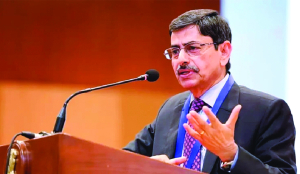
Promising to dismantle the “threat culture” and corruption syndicates allegedly nurtured under the previous regime, West Bengal Governor RN Ravi on Thursday outlined the BJP government’s governance roadmap, coupling a tough border and national security pitch with promises of industrial revival, welfare delivery and administrative transparency.
Delivering the customary address on the opening day of the first budget session of the newly elected assembly, Ravi asserted that voters had delivered a decisive mandate for change after “one and a half decades” of fear and despair. “The people of West Bengal have given a clear mandate for a new government. They have rejected the atmosphere of fear and frustration prevailing in the state for a long time,” he said.
The 36-minute address, which set the tone for the BJP government’s first budget session since ending the TMC’s 15-year rule, sought to present the Suvendu Adhikari administration as one focused on restoring law and order, curbing corruption and tightening border security.
“The new government has launched a crackdown on anti-social elements who were given protection by the previous regime. The government will also do away with the threat culture and corruption syndicates,” Ravi said. Drawing one of the sharpest political contrasts with the previous dispensation, the governor accused the former regime of allowing criminal syndicates, extortion rackets, illegal coal and sand mining networks, trafficking and crimes against women and children to flourish. “My government will take all necessary measures to restore the rule of law and people’s trust in the state’s institutions,” he said.
A key theme running through the address was illegal infiltration, an issue repeatedly highlighted by BJP leaders, including Prime Minister Narendra Modi and Union Home Minister Amit Shah, during the assembly election campaign.
Ravi expressed concern over what he described as demographic changes in border districts caused by unchecked infiltration over the years. “The influx of illegal infiltrators along the long, porous international border over the last decades has severely impacted the demographic balance in our state. The fulfillment of needs of the rightful citizens has been compromised because of presence of large number of illegal infiltrators here with active indulgence of some vested interest groups within the state itself,” he said.
Without naming the previous government, he alleged that sections within the state had facilitated the process, and said the new administration was committed to identifying and deporting illegal foreigners. “My government is committed to stopping illegal infiltration and taking strict action to identify and deport illegal foreigners,” he said.
The governor said the process of handing over land to the BSF for border fencing had already begun, and described strengthening border infrastructure as an essential component of national security. He also underlined the significance of the upcoming Census exercise, scheduled to begin on August 1, amid the debate over demographic changes in border areas.
Ravi said the government was also acting against illegal encroachments and reclaiming government land for productive purposes, including industrial development.
Projecting the BJP government as a dispensation committed to clean governance, he said curbing institutional corruption remained a top priority. He referred to the reopening of old cases and the setting up of two commissions to investigate allegations of corruption and crimes against women.
The governor reiterated the government’s “zero tolerance” approach towards atrocities against women, and promised steps to improve women’s representation in the police force, while strengthening mechanisms to combat trafficking and gender-based crimes.
Alongside the law-and-order narrative, Ravi devoted substantial attention to the government’s economic agenda, presenting industrialisation as a central pillar of its development strategy.
He said unused and underutilised land would be recovered and made available for industrial projects, while a high-level task force headed by the chief secretary was working to facilitate land acquisition and investments.
“My government wants to take West Bengal to the forefront of industrial development and the top most destination for industry,” he said.
The governor highlighted plans for industrial parks, including preparations for an industrial hub at Singur, and spoke of efforts to expand coastal shipping, inland waterways, fisheries and energy projects, including ONGC-linked initiatives in Ashoknagar.
He also assured full cooperation to railway and Metro Rail expansion projects, describing infrastructure development as critical for economic growth.
On the education front, Ravi announced measures such as regular Teacher Eligibility Tests (TET), implementation of the PM SHRI School scheme, improvement of student-teacher ratios and modernisation of libraries.
He said the government had made singing of ‘Vande Mataram’ mandatory in schools and would work towards establishing an IIT and an AIIMS in north Bengal.
Seeking to address concerns over employment, Ravi said the state would promote startup hubs and create opportunities for young people so that talented students no longer felt compelled to leave Bengal in search of jobs.
The governor highlighted welfare measures such as the Annapurna Yojana, free bus travel for women and “transparent” implementation of the Pradhan Mantri Awas Yojana, with widows and senior citizens receiving priority in housing allocation.
Touching upon the long-standing Darjeeling issue, Ravi said the government would engage with all stakeholders to find a solution to demands relating to Gorkhaland.
As the BJP government prepares to present its maiden budget on June 22, the governor’s address offered a glimpse into the administration’s political and policy priorities — from border security and demographic concerns to anti-corruption measures, welfare delivery and industrial resurgence — while signalling a decisive break from the narrative of the previous regime.